Scriptures That Inspire Work for Diversity, Equity, Inclusion, and Justice
Altheia Richardson
Network of ELCA Colleges and Universities
Angie Hambrick
Pacific Lutheran University
Caryn Riswold
Wartburg College
Colleen Windham-Hughes
California Lutheran University
Deanna Thompson
St. Olaf College
Marcia Bunge
Gustavus Adolphus College
Robert Clay
Luther College
Intersections No. 61 · Spring 2025
In this prolonged moment of unsettling for higher education, our work at NECU has been inspired and fortified by sacred texts that have formed us and continue to shape and sustain us. Below is a short list of biblical verses with which we intentionally worked in shaping So That All May Belong: Lutheran Roots for Diversity, Equity, Inclusion, and Justice.
Undeniably, this is not a comprehensive list. Importantly, it may not yet include the sacred texts, poetry, or teaching that inspires you. Let us know what grounds and sustains you. We welcome conversation, and we are eager to publish more sources of inspiration and grounding from our colleagues in NECU.
Diversity is intentionally woven into creation and is good for human community
Genesis 1:27: “So God created humankind in God’s own image, in the image of God humans were created.”
This verse speaks to the inherent diversity in humanity, created intentionally by God. Each person reflects the image of God, and this diversity of gender, culture, and identity is a reflection of the Creator’s design.
1 Corinthians 12:12-14: “For just as the body is one and has many members, and all the members of the body, though many, are one body, so it is with Christ… For the body does not consist of one member but of many.” See also Romans 12
Paul’s analogy of the body highlights that diversity within a community is a source of strength, not division. Just as the human body is composed of different parts, all with unique roles, a community is stronger when it values the diverse contributions of its members.
Galatians 3:28: “There is neither Jew nor Gentile, neither slave nor free, nor is there male and female, for you are all one in Christ Jesus.”
This verse emphasizes the spiritual equality of all people. Though human beings come from different backgrounds, in Christ, all are equally valued and welcomed. This connects to creating inclusive spaces that honor the inherent worth of every individual.
Equity manifests in concern for the specific needs of our communities
Proverbs 31:8-9: “Speak up for those who cannot speak for themselves, for the rights of all who are destitute. Speak up and judge fairly; defend the rights of the poor and needy.”
This passage reflects the call to stand up for marginalized individuals and advocate for equity. It encourages identifying and addressing disparities, particularly for those who are unable to advocate for themselves, in line with equity’s goal of eliminating structural barriers.
Isaiah 1:17: “Learn to do right; seek justice. Defend the oppressed. Take up the cause of the fatherless; plead the case of the widow.”
Isaiah calls for actively seeking justice and supporting those who are marginalized or oppressed. This parallels equity’s focus on recognizing and addressing the systemic barriers that prevent full participation for historically underrepresented groups.
2 Corinthians 8:13-14: “Our desire is not that others might be relieved while you are hard pressed, but that there might be equality. At the present time, your plenty will supply what they need, so that in turn their plenty will supply what you need.”
Paul emphasizes the concept of giving based on need, which aligns with equity’s goal of providing targeted support to individuals and communities according to their circumstances. It reflects the idea of sharing resources so that all can thrive.
Inclusion is a practice of making room for each and for all to belong
James 2:1-4: “My brothers and sisters, believers in our glorious Lord Jesus Christ must not show favoritism… Have you not discriminated among yourselves and become judges with evil thoughts?”
James challenges the community to confront favoritism and discrimination, which aligns with the call to challenge bias and work for equity and inclusion. It encourages treating all people with dignity.
Ephesians 4:2-3: “Be completely humble and gentle; be patient, bearing with one another in love. Make every effort to keep the unity of the Spirit through the bond of peace.”
This passage calls for humility, patience, and love in community interactions, which is essential for fostering open, respectful dialogue. It encourages understanding and unity, even in the presence of differing perspectives and experiences.
Acts 4:34-35: “There were no needy persons among them. For from time to time those who owned land or houses sold them, brought the money from the sales and put it at the apostles’ feet, and it was distributed to anyone who had need.”
This early Christian community demonstrates the practice of inclusive distribution of resources, ensuring that everyone’s needs are met. This models equity by recognizing that different individuals may require different levels of support in order to thrive.
Justice seeks flourishing and proceeds with mercy and compassion
Micah 6:8: “He has shown you, O mortal, what is good. And what does the Lord require of you? To act justly and to love mercy and to walk humbly with your God.”
This foundational verse ties together the concepts of justice, mercy, and humility—key components of equity. It calls for an active commitment to justice, which includes addressing systemic barriers and ensuring fairness for all people.
Proverbs 31:8-9: “Speak up for those who cannot speak for themselves, for the rights of all who are destitute. Speak up and judge fairly; defend the rights of the poor and needy.”
This proverb calls for advocating for those who are unable to advocate for themselves, a direct parallel to the justice work of dismantling barriers and advocating for fairness within Lutheran higher education.
Luke 4:18-19: “The Spirit of the Lord is on me, because he has anointed me to proclaim good news to the poor. He has sent me to proclaim freedom for the prisoners and recovery of sight for the blind, to set the oppressed free, to proclaim the year of the Lord’s favor.”
Jesus’ mission to bring good news to the poor and to set the oppressed free speaks directly to the idea of justice as creating conditions where all people, especially those in marginalized communities, can flourish. This verse aligns with the Lutheran focus on creating equitable, inclusive, and just opportunities for all.
-
 Editorial
From the Publisher
Lamont Anthony Wells
5 min audio
Wells introduces So That All May Belong: Lutheran Roots for Diversity, Equity, Inclusion, and Justice as a theological and institutional articulation of NECU’s commitments, and previews four accompanying essays that frame vocation as a societal responsibility rooted in justice and not solely an individual pursuit.
-
Editorial
From the Editor
Colleen Windham-Hughes
5 min audio
Windham-Hughes uses Fred Rogers’ neighborhood as a living embodiment of a Lutheran understanding of vocation — seeing dignity in each person, offering one’s gifts generously, and trusting that the well-being of the neighborhood is intrinsically connected to the well-being of every neighbor.
-
Institutional Focus
So That All May Belong: Lutheran Roots for Diversity, Equity, Inclusion, and Justice
Altheia Richardson, Angie Hambrick, Caryn Riswold, Colleen Windham-Hughes, Deanna Thompson, Marcia Bunge, Robert Clay
22 min audio
The full NECU statement grounds DEIJ work in Luther’s 16th-century reforms and Lutheran theological claims about the image of God, equal dignity, and the limits of human knowing — offering definitions, Lutheran roots, and calls to action for diversity, equity, inclusion, and justice, with belonging as the outcome of DEIJ at work.
-
Institutional Focus
So That All May Belong: Lutheran Roots for Diversity, Equity, Inclusion, and Justice [abridged]
Altheia Richardson, Angie Hambrick, Caryn Riswold, Colleen Windham-Hughes, Deanna Thompson, Marcia Bunge, Robert Clay
8 min audio
A condensed version of the NECU statement that consolidates Lutheran theological grounding for DEIJ and a single combined call to action for Lutheran colleges and universities — offered as a shareable summary alongside the complete document.
-
Article
Vocation at Full Stretch: Reflections on Follow Your Bliss and Other Lies about Calling and its Use among College Students
Jason A. Mahn
43 min audio
Mahn engages Bonnie Miller-McLemore’s Follow Your Bliss and Other Lies about Calling as required reading in a sophomore religion course, showing how her categories of missed, blocked, conflicted, fractured, unexpected, and relinquished callings empower young adults to perceive embodied, unplanned, and often painful dimensions of life as essential parts of vocation — and help close the gap between mission-driven and tuition-driven realities.
-
Article
How Mister Rogers’ Neighborhood Reminds Us About Work
Than Oo
5 min audio
Drawing on a Season 15 arc of Mister Rogers’ Neighborhood in which residents redirect pool funds to fix a plumbing problem, Oo finds in Fred Rogers’ vocation-honoring storytelling a reminder that limited resources are an invitation to creativity, perseverance, and optimism in higher education.
-
Reflection
Ecotones of Faith
Tracy Paschke-Johannes
7 min audio
Paschke-Johannes draws on the ecological metaphor of the ecotone — the life-teeming transitional space between two ecosystems — to claim that we are not called to minister in the world of the past or one fifty years hence, but to nurture the kairos moments God is creating in the freshwater-to-saltwater present.
-
Article
Finding the Miracle in the Intersection of Mission and Limitations: Lessons from Latin America
Kat Peters
14 min audio
Peters draws on her time interning with Lutheran World Relief and leading a study abroad program in Central America — including a Costa Rican women’s farm cooperative whose ecotourism project was “unprofitable” but life-giving — to argue that the intersection of God’s preference for struggle and God’s desire for abundant life is itself the miracle higher education can claim amid scarcity.
-
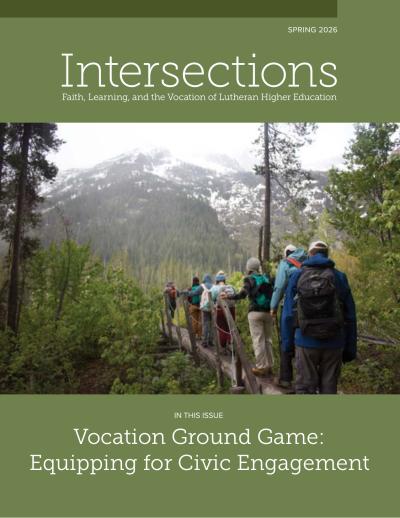 Editorial
From the Publisher & Editor
Colleen Windham-Hughes, Lamont Anthony Wells
No. 63 · Spring 2026
6 min audio
Wells and Windham-Hughes frame vocation as “ground game” — the practical, public living-out of faith through civic engagement — and introduce the issue’s focus on how Lutheran higher education equips students to repair the world.
-
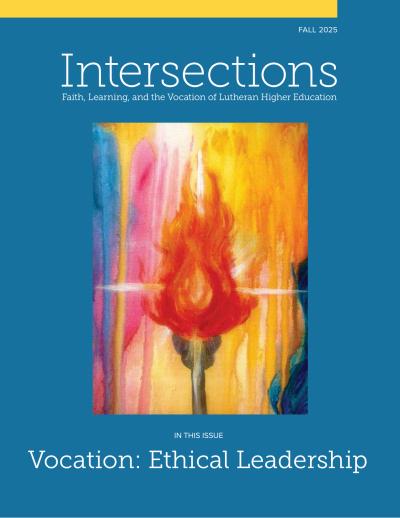 Editorial
From the Editor
Colleen Windham-Hughes
No. 62 · Fall 2025
5 min audio
Windham-Hughes plays on the shared Latin root of “education” and “seduction” (ducere, to lead) to warn against the No-saying seductions of giving up or condemnation, and to call educators to the riskier Yes of showing up to build third-space communities of truth-telling and hope.
-
 Article
Committed to Paradox
Caryn Riswold
No. 60 · Fall 2024
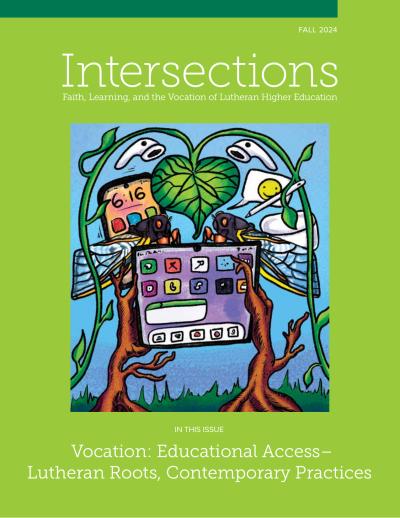
Riswold lifts up paradox — saint and sinner, lord and servant, Rooted and Open — as a distinctive Lutheran root that lets institutions honor the complicated truth of who their students are and embrace the messy, ever-reforming work of access and accessibility as a theology of the cross.
-
Editorial
From the Editor
Colleen Windham-Hughes
No. 60 · Fall 2024
Windham-Hughes welcomes newcomers and seasoned colleagues to the conversation, lifts up Mary Elise Lowe’s three Lutheran “whys” for educational access, and commends Rev. Jen Rude’s “Sacred Pause” practice as a way to humanize one another and make opening access both easier and more joyful.
-
 Editorial
From the Editor: Vocation as Action in the Affirmative
Colleen Windham-Hughes
No. 59 · Spring 2024
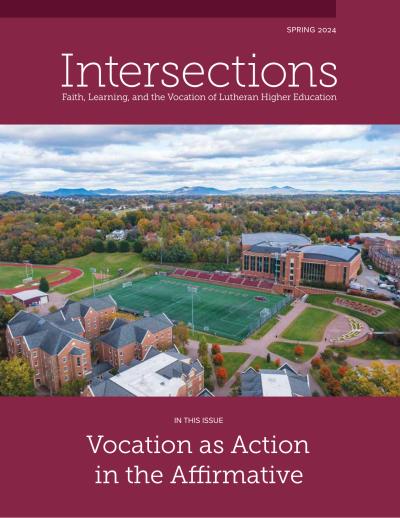
Windham-Hughes frames vocation as practicing “at the borders of our incompetence” — every small yes to the callings we experience, every effort made in the direction of life, is action in the affirmative — and previews the issue’s essays on diversity, transformation, AI, championship team culture, and dreaming big within and beyond our limitations.
-
Article
Team Culture is Key to Success: Learning from Student-Athletes
Colleen Windham-Hughes
No. 59 · Spring 2024
On a December weekend in “Championship City” Salem, Virginia, both California Lutheran’s Women’s Soccer Team and St. Olaf College’s Men’s Soccer Team won NCAA Division III national titles. Windham-Hughes talks with coaches, faculty mentors, and student-athletes about how off-the-field team culture — built on trust, relationships, and shared why — translates onto the pitch and into liberal arts and sciences education.
-
 Article
Cultivating Transformative Responsible Dialogue: Community of Moral Deliberation and Lutheran Higher Education
Per Anderson
No. 35 · Spring 2012
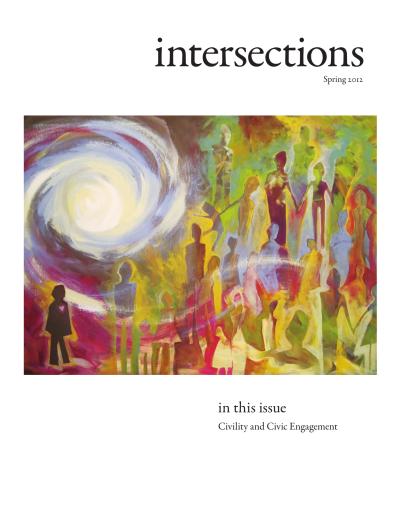
Anderson proposes that ELCA colleges and universities embrace a project of “transformative responsible dialogue” that advances the ELCA’s commitment to be a “community of moral deliberation” and answers the LIFT Report’s call for a culture of faithful discernment. Drawing on Michael Meyer’s “liberal civility,” Martha Nussbaum, Hans Jonas’s responsibility ethic, Patrick Keifert’s ecclesiology of strangers, and Kathryn Tanner on culture, he argues that liberal education at our schools can form students whose dialogue knits together civility, responsibility, and Christian openness to the other.
-
 Editorial
From the Editor
Robert D. Haak
No. 28 · Fall 2008
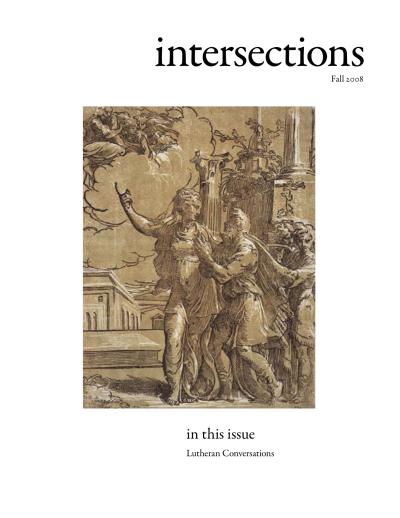
Haak frames the issue around “Lutheran conversations,” centered on the exchange between Robert Benne and Tom Christenson at Wartburg College’s ongoing campus conversation about what it means to be a “college of the church,” alongside Mark Wilhelm’s historical and social context, Lake Lambert’s sermon, and Bishop Mark Hanson’s short piece reprinted from The Lutheran—and points readers to the Lutheran Academy of Scholars seminar at Harvard as a place to continue the conversation.
-
 Editorial
From the Editor
Tom Christenson
No. 13 · Winter 2002
Christenson previews a varied issue—Darrell Jodock’s Bernhardson inaugural lecture, Ernie Simmons’ Valparaiso conference talk on student/parent attitudes, two South Africa travel pieces by Brian Wallace and Corin Wesner, and reviews of Richard Hughes’s and Robert Benne’s recent books—and tells the story of “the church lady from hell,” a mid-fifties returning student who condemned everyone in the class with “God and I think…,” to ask what a religious tradition without a sense of humor would look like.
-
Article
Freedom, Humor, and Community: A Lutheran Vision for Higher Education
Darrell Jodock
No. 13 · Winter 2002
Jodock’s inaugural lecture for the Bernhardson chair at Gustavus Adolphus develops three interlocking themes drawn from the Lutheran tradition as a deeper grounding for the liberal arts college than contemporary American assumptions. A sense of humor rests on Luther’s discovery that God takes the initiative—Luther could call himself a beggar, joke about the epistle of James, and credit Wittenberg beer for the Reformation—and underwrites the freedom of inquiry that John Updike traces to Grace Lutheran Sunday School in Shillington. Community, grounded in Augsburg Confession VII and Luther’s 1524 letter to the German city councils, makes the college a community of discourse pursuing wisdom rather than “the same old blockheads.” Freedom is both “freedom from” and “freedom for,” illustrated by Nechama Tec’s Polish Holocaust rescuers and by Jodock’s Holocaust-class corporate role-play in which students voted to build a factory in a death camp rather than risk losing their board seats—a vivid case for educating toward “a passion for justice.”
-
 Article
What Could the Lutheran Colleges and Universities Contribute to the ELCA Discussion of Sexuality—But What Would They Actually Contribute?
Robert Benne
No. 22 · Spring 2006
Benne hopes that Lutheran colleges might model fair moral discourse on sexuality by gathering a balanced mix of what James Davison Hunter calls “orthodox” and “progressive” voices from religion and social-science faculties, with the Great Tradition treated as the default position. He doubts this is what would actually happen: citing Klein, Stern, and Western’s research showing a ten-to-one liberal-to-conservative ratio in social-science and humanities associations, he suspects Lutheran faculties skew further left than other private colleges and would simply reinforce the ELCA’s already-progressive seminary and churchwide leadership.
-
 Article
Money, Sex and Power: An Exploration of Some Controversial Issues in the Public Witness of the Church
Pamela K. Brubaker
No. 21 · Summer 2005
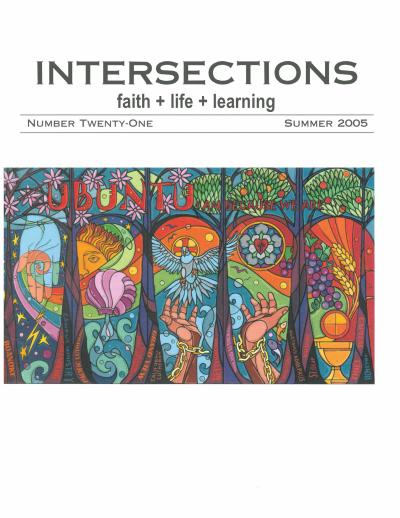
Brubaker explores two controversial issues in the church’s public witness—homosexuality and economic life—and the challenges they present for both church and college. Drawing on Beverly Harrison, Elizabeth Bounds, Ron Thiemann, Linell Cady, Marcia Bunge, Richard Hughes, Darrell Jodock, Ernest Simmons, Karen Bloomquist, Garth Kasimu Baker-Fletcher, and Larry Rasmussen, and on episodes at California Lutheran University around “Harmony Week” and Bishop Paul Egertson’s participation in Anita Hill’s ordination, she argues that colleges related to the ELCA are called to educate for “critical citizenship” by hosting rigorous, bold, and unfettered debate—including debate over the neo-liberal globalism that she names a form of economic fundamentalism.