To celebrate being fully vaccinated (and my wife’s birthday), my wife and I took a brief road trip to visit fully vaccinated friends outside of Louisville, Kentucky. During the drive, I heard an NPR news report about a podcast composed of diary entries written by teenagers during COVID-19. A few of the teenagers read their own entries for the report. The readings expressed many feelings and described many experiences, but their diary entries seemed to focus on the anxiety they felt over having acted in self-interested or self-protective ways in response to the pandemic, instead of acting for the welfare of others. One teenager wrote in her diary of guilt about simply stepping outside. She knew that even a walk—for which she longed—during the height of the pandemic’s shelter-in-place orders might exacerbate spread of the disease in her community.
I do not know whether any of the diarists were Christians or whether their moral perspective had been shaped by Christian teaching, as absorbed from their families’ culturally Christian history. I do know, however, that their comments reminded me of the fraught history of Christians struggling to live out the ethic of love espoused by Jesus.
The Christian story includes a long history of missteps in the name of loving service to others. Some early Christians falsely understood that self-giving required a form of self-loathing, almost equating Christianity with masochism. Christians have at other times haughtily delivered assistance to others mindlessly or sometimes arrogantly. Think here of the concept of noblesse oblige or the soiled clothing left at Salvation Army donation boxes.
It is not only Christians who have been challenged by the call to love others for the sake of the common good. A fictional example of the struggle all around us is the character of Doug Forcett in the television sitcom The Good Place. In The Good Place, people lived unaware that a point system for doing good for others determined their placement into the “good place” or the “bad place” after death. The exception was Doug. He had figured out the system and was famous among the bad place demons for doing so. But as a result, Doug struggled in life with how to do enough “good.” He lived a life of self-giving to the point that he was terrified to do anything for his own benefit because it might land him in the bad place. The theme is not an uncommon one as folks try to actualize the call to love others.
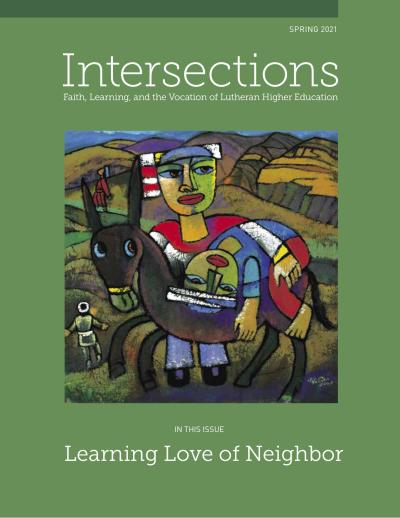
How does one embrace and actualize a loving, working concern for others with integrity and even with joy? Most persons in Christian and other religious or moral traditions have struggled honestly with the ideal of having a loving, working concern for others and the common good, like the teenagers who recorded their struggles in diaries during the pandemic. This is certainly true of the persons at NECU institutions during 2020 and 2021. The pandemic compels us all to consider how to put into action practices that enable our institutions to function without putting the common good of the wider community at risk. Reflecting on the experience will help build a better future, and this issue of Intersections is a step on the way.
-
 Article
Teaching as an Expression of a Love Ethic
Abbylynn Helgevold
Drawing on Kierkegaard’s Works of Love and Kevin Gannon’s teaching manifesto, Helgevold describes how an ethic of upbuilding love—love that presupposes goodness in students—reshapes inclusive pedagogy at Wartburg College, from syllabus language to how she addresses plagiarism and attendance.
-
Reflection
Keeping Close from a Distance: Pandemic Reflections of a Library Coordinator
Carla Flengeris
Flengeris reflects on a year of running Luther College’s library at the University of Regina from her basement and mourns the loss of the hourly walks through the stacks—the “roving reference” that, she realizes, were never disruptions to her work but were the work itself.
-
Article
Preaching in Christ Chapel on Yom HaShoah: Reflections on Interfaith Relations at a Lutheran College
Sarah Ruble
Ruble shares her 2019 Holocaust Remembrance Day homily preached before the cross in Christ Chapel at Gustavus Adolphus, then reflects on whether “professional Christians” on Lutheran campuses might practice a non-mutual, witnessed confession before colleagues of other traditions as a check on Christian self-deceit.
-
Article
Down and Out: First Year Students Encounter Lutheran Theology
Lindsey Leonard
Leonard describes how Wartburg’s IS 101 first-year seminar wove the Dalai Lama, Paul Kingsnorth, Chimamanda Ngozi Adichie, and Mary Robinson’s Climate Justice into the Fall 2020 reader so the “COVID class” could encounter Lutheran theology’s call to serve the neighbor across the pandemics of disease, racism, and climate change.
-
Article
(Re)Defining Vocation: Gladly Challenging a Vocational Giant
Andrew Tucker
Tucker challenges Frederick Buechner’s famous definition of vocation as “where your deep gladness and the world’s deep hunger meet,” arguing that gladness reflects a privileged perspective and proposing instead that vocation be defined as “any meaningful, life-giving work you do for the world.”
-
Article
Vocation Outside of Career: Discovering Purpose through Comics
María Evelia Emerson
Emerson recounts building an Augustana Vocational Discernment course around G. Willow Wilson’s Ms. Marvel series, using Kamala Khan’s juggling of family, friendship, faith, and superhero identity to help sophomores see vocation as not what they do for a living but how they want to live.
-
Article
Leadership in a Pandemic: Grace-Filled Lessons in Unprecedented Times
Marc Jerry
Reflecting on his first year as president of Luther College at the University of Regina, Jerry argues that the best preparation for leading through a long crisis was not his economics or strategy training but seminary and pastoral formation—and that NECU institutions are called to a post-pandemic ministry of kindness, grace, and community.
-
Book Review
Unconventional Wisdom and Talking about God: A Review of Beckstrom’s Leading Lutheran Higher Education in a Secular Age
Ann Rosendale
Rosendale reviews Brian Beckstrom’s Leading Lutheran Higher Education in a Secular Age, recommending its diagnosis of the gap between espoused and perceived Lutheran identity at ELCA schools and its prescription—Trinitarian Missiological Ecclesiology and a campus-wide willingness to talk explicitly about God.
-
Reflection
Shelter in Place: Reflections from March 22, 2020
Jason A. Mahn
On the fourth Sunday of Lent in 2020, Mahn meditates on the etymology of “shelter” (from shield) and on an email from a former student in Boston whose mutual-aid organizing models a Lutheran understanding of vocation: the upending of ego by divine love that frees us, finally, to see and serve the neighbor.
-
 Article
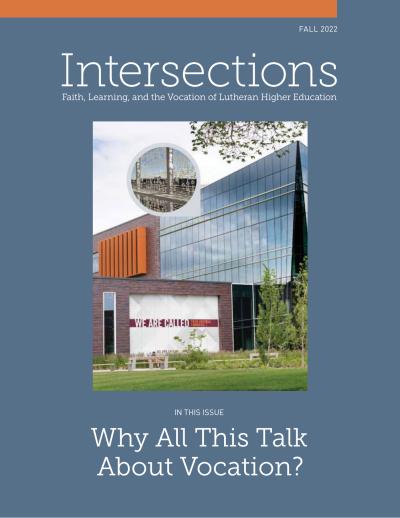
Why All This Talk About Understanding the Mission of NECU Member Institutions as a Vocation?
Mark Wilhelm
No. 56 · Fall 2022
In his valedictory keynote, retiring NECU Executive Director Mark Wilhelm argues that Lutheran higher education is, properly understood, vocation-based education — outlining four core practices recovered over the past fifty years and naming the constructive and corrective work still to be done, including a fuller embrace of DEIJ and of the diverse vocations of NECU’s 27 institutions.
-
 Editorial
From the Publisher
Mark Wilhelm
No. 55 · Spring 2022
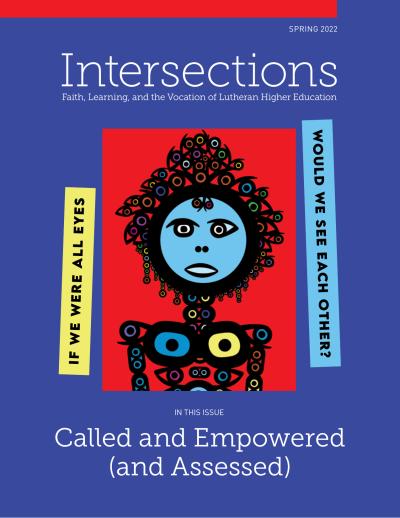
Wilhelm announces his planned retirement on January 31, 2023, after serving as the founding executive director of the Network of ELCA Colleges and Universities, and gives thanks for the privilege of helping NECU articulate a shared vision for Lutheran higher education in twenty-first-century North America.
-
 Editorial
From the Publisher
Mark Wilhelm
No. 52 · Fall 2020
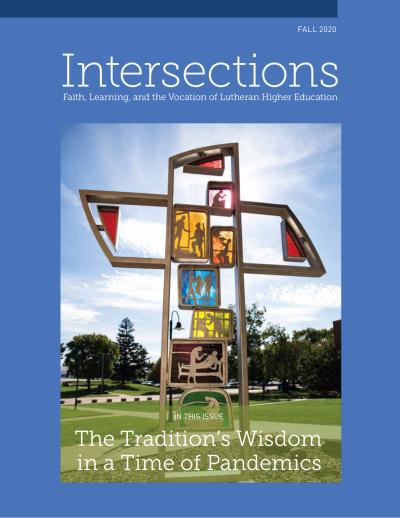
Wilhelm argues that the “hackneyed” expressions of higher education — “you are not just a number,” “the college experience,” “risen to the challenge” — tell the simple truth about NECU institutions even as the Covid-19 pandemic has pushed budgets, employees, and campus life to the breaking point.
-
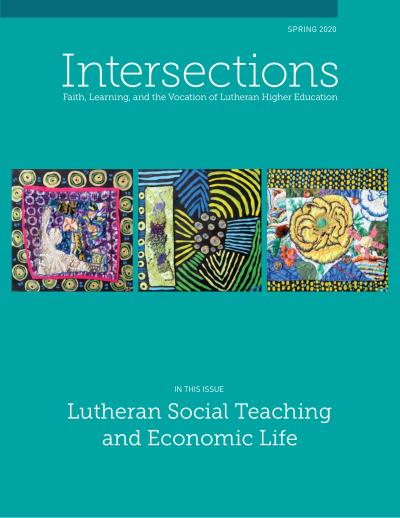 Editorial
From the Publisher
Mark Wilhelm
No. 51 · Spring 2020
Wilhelm frames the issue by tracing how Lutheran educational ideals — once a primary source of contemporary higher education — were masked in the United States, and introduces a NECU initiative that uses the case of business ethics to explore Lutheran social teaching as an academic resource.
-
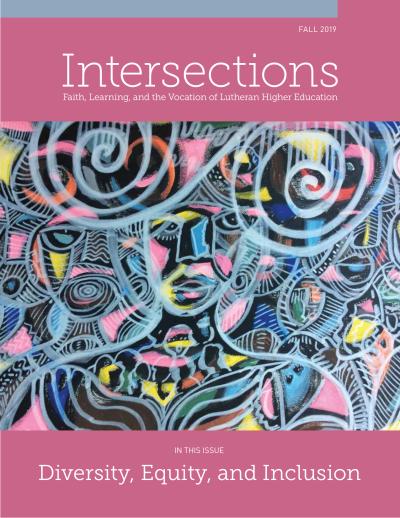 Editorial
From the Publisher
Mark Wilhelm
No. 50 · Fall 2019
Wilhelm frames the issue by noting that a federal court’s vindication of Harvard’s race-conscious admissions process is a win for higher education’s commitments to diversity, equity, and inclusion — and argues that for Lutheran higher education, the commitment to diversity is an old and foundational claim, rooted in Christianity’s openness to all and reflected in the four diverse gospels of the New Testament.
-
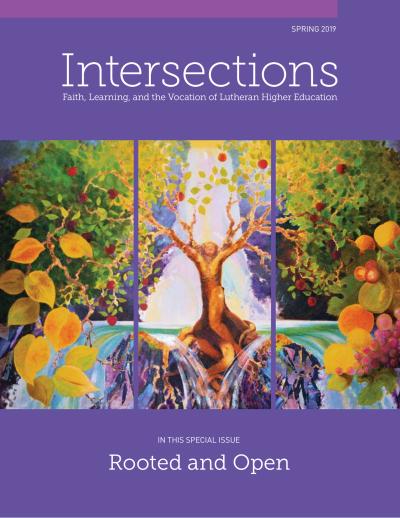 Article
Rooted and Open: Background, Purpose, and Challenges
Mark Wilhelm
No. 49 · Spring 2019
Wilhelm traces Rooted and Open’s seventy-year backstory — from Conrad Bergendoff’s 1948 call for a Lutheran philosophy of education through the recovery of the vocation tradition — and describes the document’s process, purpose as a teaching and study resource, and the embodiment, contextual, and cultural challenges it implies for NECU institutions.
-
 Editorial
From the Editor
Robert D. Haak
No. 25 · Spring 2007
Haak frames the issue around the question of what holds the twenty-eight ELCA colleges together amid their geographic, economic, and theological diversity, introducing Mark Hanson’s address to the assembled college presidents, Randall Balmer’s outsider perspective on the commonalities of Christian liberal arts, José Marichal and Pamela Brubaker on diversity rooted in community and globe, Storm Bailey’s argument that being Lutheran is precisely what makes us embrace diversity, and Jaime Schillinger’s St. Olaf chapel reflection on the formative power of worship and liturgy.
-
 Editorial
From the Publisher: Staying Connected
Mark Wilhelm
No. 38 · Fall 2013
Wilhelm frames Intersections as a tool for maintaining relationships among leaders in ELCA higher education, welcomes the journal’s new editorial advisory board, and points readers toward the 2014 Vocation of a Lutheran College conference at Augsburg and a special interfaith understanding conference at Augustana with Eboo Patel and Presiding Bishop Elizabeth Eaton.
-
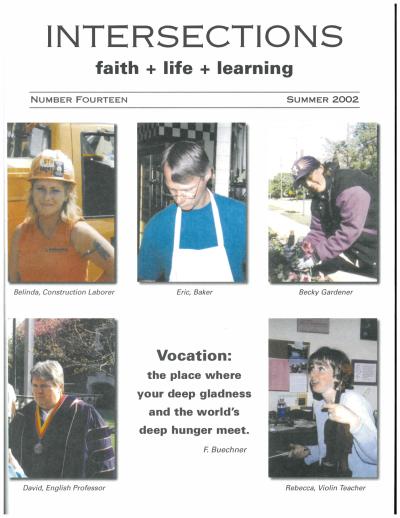 Article
Vocational Discernment: A Comprehensive College Program
Darrell Jodock
No. 14 · Summer 2002
Jodock, whose Gustavus Adolphus was one of twenty colleges to receive a Lilly “Theological Exploration of Vocation” grant in 2000, defines vocation not as occupation but as a self-understanding that nests the self in community. Reading Robert Putnam’s Bowling Alone on the collapse of secondary communities alongside Luther’s ethic of community benefit and five Lutheran principles (graciousness, Christian freedom, community, God active in the world, the theology of the cross), he walks through Gustavus’s three-level design—a definition of vocation open to other faith traditions, “middle principles” drawn from Sharon Parks’s Common Fire, and a long menu of programs coordinated by a new Center for Vocational Reflection—hoping that, in the language of Holocaust studies, graduates will be “resisters” and “rescuers” rather than bystanders.
-
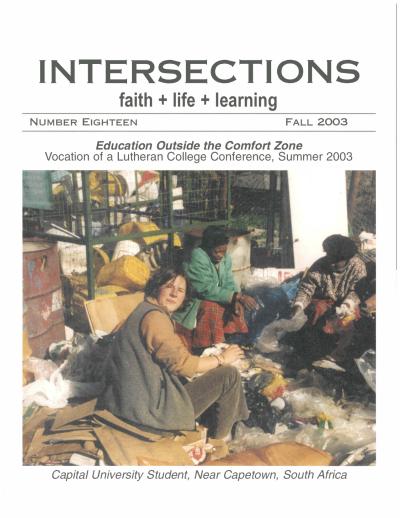 Article
The Search for a Just Peace in a Globalized World
Munib A. Younan
No. 18 · Fall 2003
Younan, Lutheran Bishop in Jerusalem, grounds Palestinian Christian identity in Incarnation theology and a Lutheran theology of grace and the cross, then surveys the Evangelical movement’s nineteenth-century legacy in the Middle East—the 1864 Arabic Bible, ELCJ schools, women’s ordination, and the Middle East Council of Churches. Engaging Edward Said’s critique of Samuel Huntington, he calls for international and local mutual-recognition agreements (including the Jerusalem Lutheran-Anglican agreement and a Lutheran-Reformed agreement in the Middle East), four marks of interfaith dialogue, and a sharp distinction between Lutheran “Evangelical” identity and the Dispensationalist evangelistic Right whose Israel-Palestine scenarios he names a heresy. He closes by proposing concrete scholarship, faculty exchange, and sabbatical partnerships between U.S. Lutheran colleges and the ELCJ’s churches, schools, and Dar al-Kalima Lutheran Academy.
-
 Article
Scarred Epistemologies: What a Theology of the Cross Has to Say about the Gay Marriage Ban
Jacqueline Bussie
No. 22 · Spring 2006
Responding to Robert Benne’s claim (citing Gilbert Meilander and Wolfhart Pannenberg) that one cannot defend gay marriage on biblical or confessional grounds, Bussie reads three theses of Luther’s Heidelberg Disputation alongside Moltmann’s Crucified God and Martin Luther King Jr.’s Letter from Birmingham Jail to argue that the theologia crucis—with its insistence on calling the thing what it is, its acknowledgment of scarred epistemologies and simul justus et peccator, and its refusal to domesticate God—exposes the Ohio Defense of Marriage Act as scapegoating, selective literalism, and an unjust law that the Christian conscience must reject.
-
 Response
Finding the Words: The Trouble of Being California Lutheran University
Pamela M. Jolicouer
No. 6 · Winter 1999
Jolicoeur, provost and vice president for academic affairs at California Lutheran, recounts the marketing problem of a university whose middle name is Lutheran in a Southern California religious landscape where the operative modifier is “Christian” (Pepperdine, Azusa Pacific) and tests Christenson’s three themes against her own “alumni magazine test”—the Jesuit standard set by Santa Clara. She concludes that freedom, gift, and vocation, though not uniquely Lutheran, are the words she can actually use: with prospective faculty, with the constituent church bodies who pressed for “Christian” in the new CLU mission statement (compromise: “rooted in the Lutheran tradition of Christian faith…”), and with the “C student” alumna headed for a Ph.D. in psychology whose consciousness of her own gifts had evaporated.