[Jesus said], “The water that I give them will become in them a spring of water gushing up to eternal life.” The woman said, “Sir, give me this water…” (John 4: 14-15)
They’re crowded into my small office: a mother and son on a college visit. They’ve done this before—he’s a straight-A student—so they know the drill. I explain our Creative Writing program, they ask questions. Give them my e-mail address, shake hands, wish them luck.
But today something different happens.
The conversation’s winding down, and I ask casually how many children the family includes.
The tone changes. As if the ground had suddenly shifted.
First, there’s silence. We hear the chatter and call of students going to class, the slap of their flip-flops because it’s spring. Then the mother says, “Well, I did have three. But our daughter passed away.”
Recently?
“Two years ago.”
I’m sorry, I say. So sorry.
Her eyes rim slowly with shining. The son doesn’t say anything, puts a hand on her jeaned knee. He’s told me he’s interested in music, plays a little guitar, and I see in his fingers, the strong and certain touch, the way he shapes music.
He’s not hushing her with that touch, as many seventeen-year-olds would. He’s joining her. She was a Down Syndrome child, the mother explains. Had been in the hospital, on life support, comatose. “But then all of a sudden she sat up and held out her arms and then she died. I know she was seeing the Blessed Virgin,” the mother says. “I know she was.”
A little leery of visions so explicit, especially when they’re blessed virgins, I nod.
“She couldn’t speak much,” the son says. “My sister. But she loved birds, always loved birds. She’d make them with her hands—like this—” Briefly he takes his hand off his mother’s knee to illustrate, spreading both hands apart, the fingers winging out. “And I think,” he says to her, “that she was making a bird for you—to make you happy.” He looks back at me. “People who don’t believe in spiritual things don’t know very much, do they?”
This story has stayed with me, played with my imagination. It’s got all the elements I like in stories: layers, tone shifts, ambiguity, the wonder and pain and inexplicability of life. And an opening up of that well of water that will never let anyone go away thirsty. A possibility to be contemplated, to be taken seriously.
“Such an identity enhances our ability to educate self and other, strengthens us in our quest to take our place and so to help students take their places in the world with discernment, confidence, and ‘dauntless love.’”
We need to identify, claim, and proclaim our wells of living water, Darrell Jodock insists in his essay “Vocation of the Lutheran College and Religious Diversity” (Intersections Spring 2011). Because unless and until we acknowledge those wells that nourish us, we cannot really understand and take seriously the wells from which others draw their nourishment. Blessed Virgins looking down from heaven aren’t my spiritual vocabulary. But they were hers. And I know that, as I claim my own tradition, I not only must but can and want to see more clearly, more respectfully, into the depths of hers. Jodock claims that such reciprocal seeing is essential to the kind of education Lutheran colleges can offer. Without it, we can’t have authentic diversity. For diversity recognizes, respects, and ultimately celebrates the many wells we visit on our spiritual journeys.
And for me as an educator, it’s about more than in-depth interfaith conversations. It’s what such conversations can do to create an institutional vision, a bone-deep (or well-deep) identity, one that substitutes a tolerantly dismissive “whatever” for an intentionally engaged “what.” I believe that such an identity enhances our ability to educate self and other, strengthens us in our quest to take our place and so to help students take their places in the world with discernment, confidence, and “dauntless love.”
Maybe we do this sort of work obliquely—tell the truth but tell it slant, as Emily Dickinson famously said. Certainly for anyone in the arts, this kind of truth-telling is what fills our days and ways. Writers and artists and teachers have given us elegant, eloquent apologia for their disciplines. As Professor Allison Wee’s luminous essay “Valuing Poetry” (Intersections Spring 2013) asserts, “Poetry [she refers to the specific genre; I extend the term to mean any form of literary art] can help us live, and live well, in the face of death….It can offer much comfort. It can remind us of everything good and beautiful in the world. It can remind us that we are not alone in our pain and suffering, even at times when no one else can be present with us. It can give voice to our voiceless longings; it can give shape to our deepest and most complex feelings and give us means to reach out to others when otherwise we might be left mute and isolate.”
And yet, magnificent as is this creedal statement, I find myself wanting more. And I believe that “more” is the water from the wells of my faith tradition. Carla Arnell, English professor at a non-church-related college, suggests in “Don’t Eschew the Pew” (Chronicle of Higher Education, Oct. 14, 2013) that to focus on the particulars of a religious tradition, to observe its rhythms and rituals, its seasons and stories, can help us understand and share our humanity on a deeper level even than art can provide. Too often “spiritual” detached from “worship” can lead to making ourselves the center of the experience. How can I find comfort and beauty? How can I find communion in my suffering? How can I find words to reach others in their pain? Finally, how can I enrich my life? These are, of course, questions that religion addresses. But the “spiritual but not religious” perspective can make such questions and answers intensely private. It can also shrink our sense of community. We may reach out, but selectively: to those who share our vision and vocabulary. However, if I see myself as a loved child of a God who gives me everything I need, then I can’t help seeing others that way, even those who differ radically from me. And I am enjoined by that seeing to reach out to them where they are.
“If I see myself as a loved child of a God who gives me everything I need, then I can’t help seeing others that way, even those who differ radically from me.”
To drink from the well of our Lutheran faith produces a curiously paradoxical flavor (to perhaps belabor the metaphor): it shapes experience in the formal ways that poetry does, arranging and ordering the chaotic. Yet it also demands that the chaos be fully admitted, that the messiness and aggravation of our lived-out human story be embraced rather than metaphorized: that quirky and precious and exasperating quotidian, where I kneel at the altar and dip bread into the cup just given to the person beside me whose political views I deplore, but whose generosity rebukes my own stinginess. Only then, on my knees, can I really become part of the vast mystery of God’s love for my own flawed self as well as for the other, only then can I become one with the other, only then share shalom.
A friend and former student joins a couple of his undergraduate professors for a celebratory dinner: he’s just released his debut book of poetry. He’s 62. For his entire professional life he’s been an attorney practicing corporate law in a firm so wealthy and prestigious that they sent a physician to his home to conduct his annual physical exams. In his mid-fifties he found himself thirsting for something other, something more than the commute, the elegant suburban home—even more than the deeply secure marriage and the successful children. Legalities were arid, the canyoned pavements he walked in the city were like stones to his feet. He felt, perhaps, as alien from himself and his world as that very different alien, the woman who came to the well at noonday to draw the water that would not last.
Would reading poetry have been enough to quench his thirst? Frankly, I don’t think so. For what turned him to poetry, to studying with patience and persistence, then to writing with breathtaking authority and beauty, was the living water that welled up, week after week, service after service, story after story, as he observed the rituals of his faith tradition. This is the tradition which we can affirm. Perhaps, if it is ours, we are obliged to affirm it, to open students’ eyes to the possibilities of this tradition, not just as an aesthetic or even a generic spiritual experience, but as a power that gives life to art. By doing so, we both strengthen and flex our own understanding of our tradition. And make it more possible to explicate that tradition honestly and helpfully to the people we learn and teach among—however far-flung they may be.
“What turned him to poetry, to studying with patience and persistence, then to writing with breathtaking authority and beauty, was the living water that welled up, week after week, service after service, story after story, as he observed the rituals of his faith tradition.”
The two students, past and present, had looked deeply into the wells, dipped deeply, from places of dryness. The water there didn’t always necessarily sparkle. Sometimes it was very dark.
But they looked long enough to see the stars at the bottom.
I have no prescriptions for how the sharing and affirming of this vision can occur. That would be presumptuous, I think, and more than a little oxymoronic in a piece about open conversation. Each person who drinks from a well of living water will find her own way of doing so. I like to use stories.
And so here’s the final episode in the story I opened with, about the visiting prospective student. As he was leaving my office, he observed, in a kind of wonder, “This is the first time anyone on any of our college visits has talked about faith.” And, when he showed up in my class the following year, he reminded me of our conversation. And we shared the story again.
Shared the water from our wells.
-
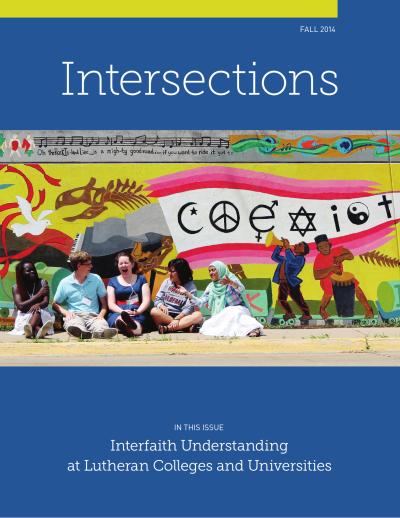 Editorial
From the Publisher
Mark Wilhelm
Wilhelm draws a parallel between the rediscovery of vocation and the rediscovery of interfaith understanding in Lutheran higher education, arguing that previously under-emphasized aspects of the Lutheran tradition point us to interfaith work and that an authentic Lutheran college or university will make interfaith understanding a feature of its mission.
-
Editorial
Guest Editorial
Kristen Glass Perez, Richard Priggie
Glass Perez and Priggie introduce the issue by recounting the campus conversations and the June 2014 Interfaith Understanding Conference at Augustana College that gave rise to it, framing the central question, “What does it mean to be Interfaith at a Lutheran College?,” as a living example of the praxis of being a Lutheran college in the twenty-first century.
-
Article
Vocational Re-Formation for a Multi-Religious World
Elizabeth Eaton
ELCA Presiding Bishop Elizabeth Eaton frames vocational formation for a multi-religious world as one of the most significant challenges facing the church and the liberal arts today, calling ELCA colleges and universities to live into Darrell Jodock’s “third path” that is both deeply rooted and dialogical.
-
Article
Why Interfaith Understanding is Integral to the Lutheran Tradition
Jason A. Mahn
Mahn returns to the root of the Lutheran tradition — church, theology, and pedagogy — to argue that interfaith encounter is not the vanishing point of Lutheran identity but central to it, beginning with confession of Luther’s anti-Judaic legacy, working through the typology of exclusivism / inclusivism / pluralism, and showing how the kenotic Christ and the theologian of the cross open Lutherans to authentic encounter with religious others.
-
Article
What it Means to Build the Bridge: Identity and Diversity at ELCA Colleges
Eboo Patel
Through the contrasting stories of two college students — Cassie’s identity relativism and April’s soft fundamentalism — Patel diagnoses Peter Berger’s twin pathologies of modernization and argues that ELCA campuses, anchored in Bonhoeffer and the Lutheran capacity to “have faith without laying claim to certainty,” are uniquely equipped to be places where the light falls: bridges of cooperation that nurture both strong religious identity and benevolence toward others.
-
Reflection
Danya Tazyeen
Danya Tazyeen
Tazyeen, a Pakistani-American Muslim student at Augustana College, reads Qur’an 49:13 — that God made us into peoples and tribes “that you may know one another” — as a charge to break down fear with open dialogue and to see one another as flawed and relatable fellow human beings.
-
Article
Building on a Firm Foundation: ELCA Inter-Religious Relations
Kathryn M. Lohre
Lohre traces the ELCA’s twenty-year arc of inter-religious work — from the 1994 Declaration to the Jewish Community and the Lutheran-Jewish Consultative Panel, through the post-9/11 Lutheran-Muslim Panel and the Shoulder to Shoulder Campaign, to fledgling dialogue with Sikhs and the dharmic traditions — and frames Lutheran inter-religious engagement as the strengthening, not the dilution, of Lutheran vocation.
-
Article
Building an Interfaith Bridge
Belle Michael
Drawing on the holiday of Shavuot, the Book of Ruth, and Martin Buber’s I-Thou, Rabbi Belle Michael picks up Patel’s bridge metaphor and identifies three building blocks for it: experiences with people of different ethnic and religious groups, genuine and long-lasting relationships, and the holy curiosity to ask the questions we are otherwise afraid to ask.
-
Reflection
Gifty Arthur
Gifty Arthur
Reading John 10:3 as a Ghanaian Christian student at Luther College, Arthur reflects on how Luther’s Journey Conversations have deepened her own spirituality precisely by giving room for students to share the personal experiences and beliefs at the center of their own traditions.
-
Article
Journey Toward Pluralism: Reimagining Lutheran Identity in a Changing World
Jacqueline Bussie
Bussie chronicles Concordia College’s Forum on Faith and Life initiative — assessing campus climate, building a President’s Interfaith Advisory Council, and drafting a one-sentence statement that Concordia practices interfaith cooperation “because of” (not “guided by”) its Lutheran identity — to argue that simul justus et peccator thinking equips Lutheran institutions to hold loyalty to tradition and reverence for others together as one piece.
-
Reflection
David Kamins
David Kamins
Kamins, a Jewish student at Muhlenberg College, reads Rabbi Joseph Soloveitchik’s The Lonely Man of Faith alongside his own journey at the Interfaith Understanding conference on the eve of Shavuot, finding in the dual figures of Adam I and Adam II a way to remain firmly grounded in his faith community while going out to learn from those around him.
-
Article
What's in a Name?
Matthew J. Marohl
St. Olaf College Pastor Matt Marohl tells the story of designing The Undercroft’s prayer and meditation room with a campus meditation group whose members began as “Matt” and ended — as their mutual respect grew — calling him “Pastor Matt,” a counterintuitive movement toward a more formal address that signals what intentional Lutheran-Christian hospitality looks like in practice.
-
Reflection
Annie Schone
Annie Schone
Schone, raised in a small conservative Central Illinois congregation, recounts how Augustana’s Interfaith Understanding group and Interfaith Youth Core gave her the first chance to befriend Muslim, Unitarian Universalist, and atheist peers, and how she hopes to bring the joy of those friendships back to her home church through the power of storytelling.
-
Article
Journey Conversations
Amy Zalik Larson, Sheila Radford-Hill
Larson and Radford-Hill describe Luther College’s Journey Conversations Project, a four-phase contemplative practice — quiet, listen, speak, respond — rooted in the Lutheran call to be true to one’s own faith while welcoming all faiths or none, and illustrate its fruit through faith journey stories from Luther students Sukeji Mikaya (South Sudan), Habibullah Rezai (Afghanistan), and Gifty Arthur (Ghana).
-
Reflection
Tom Natalini
Tom Natalini
Natalini, a Susquehanna University senior raised Lutheran, schooled Mennonite, and seasoned by a meditative encounter in India, reflects on his journey through churchgoing, philosophy, near-Jewish conversion, and Buddhist practice to a stance he calls patience — neither Christian, Jew, Buddhist, seeker, nor “none.”
-
 Editorial
From the Publisher: Navigating Affirmative Action, DEI Policies, and Lutheran Vocational Identity
Lamont Anthony Wells
No. 59 · Spring 2024
Wells surveys the converging pressures on NECU institutions — the unsettled landscape of affirmative action, political and academic scrutiny of DEI work, and the preservation of distinctively Lutheran vocational identity — and previews how the issue draws on affirmative practices, sociological viewpoints, and theological responses to navigate a path forward.
-
 Response
Feeling at Home: Dimensions of Faculty Life
Jane Hokanson Hawks
No. 2 · Winter 1997
Hawks of Midland Lutheran College responds to Bouman by reflecting on her path from a Lutheran childhood through the BSN at St. Olaf and thirteen years at four non-church-related institutions to her present home at Midland, where teaching at a Lutheran institution finally feels “right.” Bouman’s framing of the five themes as the Lutheran argument about what it means to be human helped her ad-hoc committee articulate the spiritual role in Midland’s new faculty mentoring program (recently funded by the Lilly Foundation), and grounds her work as a nurse educator confronting the daily humanness of grief, joy, ethical dilemmas, and care across cultural and religious difference.
-
 Editorial
From the Editor
Jason A. Mahn
No. 39 · Spring 2014
Mahn reports on the working group “People of Wondrous Ability: Introducing Faculty and Staff to Lutheran Higher Education,” shares creative ways campuses are introducing colleagues to the charisms of the Lutheran tradition, and frames the issue as a set of reflective reviews that move from national trends to homegrown conversations about the state of college.
-
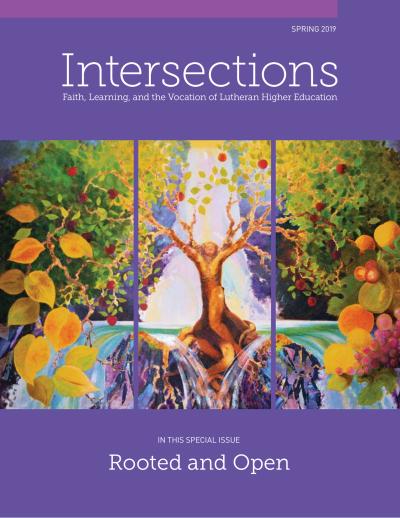 Article
Marked by Lutheran Higher Education
Martha E. Stortz
No. 49 · Spring 2019
Stortz offers an “operating manual” to Rooted and Open by tracing how the writing team moved from descriptive marks of the institutions to aspirational verbs that mark people — “called and empowered, to serve the neighbor, so that all may flourish” — and shows how each mark generates educational priorities theologically grounded in the radical mystery of God, the wild generosity of God, and the God who became one of us.
-
 Article
Even Lutheranism Can Be Cool Now: Changes in Religion and American Culture
Mark Wilhelm
No. 28 · Fall 2008
Wilhelm names two major changes in the role of religion in American culture—the rise of a rhetoric of religious individualism, exemplified by “Sheilaism” in Robert Bellah’s Habits of the Heart, and a proliferation of religious options driven by the democratization of authority, the end and beginning of ethnicity, the success of ecumenism, and the information revolution—and draws implications for Lutheran-related higher education, including support for Stephen Prothero’s call for core religious literacy and a confident reclaiming of each college’s religious heritage as a platform for engaging the religious diversity of America.
-
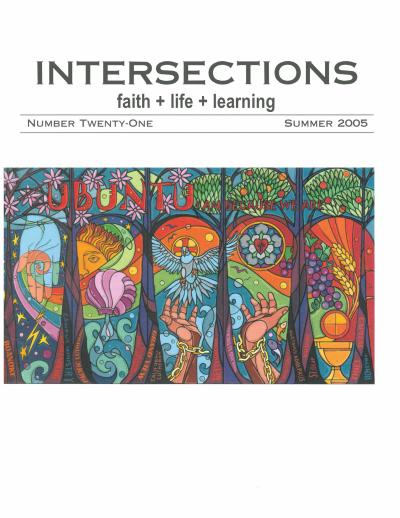 Article
The Church in Education? Education in the Church? Ten Theses on Why These Questions Matter
Leonard G. Schulze
No. 21 · Summer 2005
Writing in the months before the August 2005 Churchwide Assembly that will decommission DHES, Schulze frames his vision for the division as ten Lutheran-style theses, each followed by Luther’s catechetical question “What does this mean?” He argues that critical thinking and moral deliberation are in the Lutheran gene pool; that Luther’s devotion to learning was an expression of Christian vocation; that the rise of the research university and the binary public meaning of “evangelical” have marginalized church-related colleges; that DHES has been wrongly perceived as marginal; and that the reformed concept of vocation must drive the soon-to-be-created program unit for Vocation and Education. An appendix reproduces the 2005 DHES strategic planning overview.