As someone who works at my own alma mater, I’ve spent much time thinking about what it means to call this place “home.” As a young woman from a small, rural community in Nebraska, moving to a small town in Kansas didn’t feel like a huge stretch. In fact, I remember telling people that was something that drew me here. By student population, Bethany College was about the same size as my high school at the time. I was excited to be 3 hours away from home and in a different state, knowing I could feel at home here. Although I’m not Swedish, I look much like some of the first students at this institution as a white, Lutheran, farm kid.
While there was certainly great diversity represented when I was a student, that only accelerated over the 8 years I was away following graduation. In this community, we know the story of our founding well. Founded in 1881 by white, Swedish Lutheran settlers, Bethany College came into being to provide access to education for the Swedes who immigrated to this place. Very early on, the education of women was also a priority. These are stories Bethany College and the wider Lindsborg community tell through festivals, traditions, and our local culture. As I think about this legacy, I wonder what this means to the students who call this place home today.
One of our own NECU students shared, “I don’t want to feel like I’m being welcomed into your home. I want to feel like this is my home, like I belong.” As students return to our campus this fall, this articulation of belonging has stuck with me.
It is good and lovely that our NECU institutions have been home to so many of us. And…there is room to do some wrestling with our welcoming and the stories we tell. What do these Swedish, Lutheran, immigrant roots mean for our students who come from 38 states and 21 countries, who represent 35 faith traditions and a wide breadth of ethnic and cultural diversity? At Bethany, we’ve begun to think about these questions, but these experiences aren’t yet part of our institutional story.
Dr. Mindy Makant (Lenoir-Rhyne University) was on campus recently leading some vocational reflection with faculty and staff. While she invited us to think about our vocational stories, she shared, “We don’t have a choice about the story of the past, but we do get to decide how we tell that story forward.” We get to choose how who we have been shapes and informs who God is calling us to be.
By telling these stories forward, claiming them, and living them, we can decide to make space for our students in their fullness. By doing so, we are celebrating them and making space for their stories, too.
-
 Editorial
From the Editor
Colleen Windham-Hughes
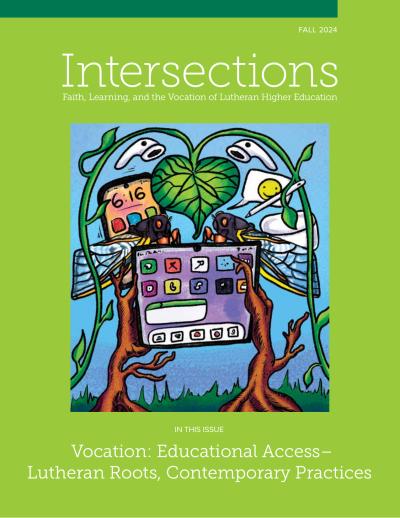
Windham-Hughes welcomes newcomers and seasoned colleagues to the conversation, lifts up Mary Elise Lowe’s three Lutheran “whys” for educational access, and commends Rev. Jen Rude’s “Sacred Pause” practice as a way to humanize one another and make opening access both easier and more joyful.
-
Editorial
From the Publisher: Reflections on the 2024 Vocational Leaders in Higher Education Conference
Lamont Anthony Wells
Wells reflects on the 2024 VLHE Conference theme — “Educational Access: Lutheran Roots, Contemporary Practices” — tracing today’s commitment to inclusivity back to Martin Luther’s radical 16th-century insistence that both boys and girls be educated, and previews NECU’s expanded engagement of student leaders alongside faculty and administrators.
-
Article
Access, Accessibility, & Change: A Call for Trustworthy Leadership in Higher Education
Emma Jones
Jones surveys the converging pressures on higher education — cost, the enrollment cliff, shifting demographics, and declining public confidence — and uses Reichheld and Dunlap’s four factors of trust (transparency, capability, reliability, humanity) to call campus leaders to rebuild trustworthy leadership from the inside out.
-
Article
Creation, Justice, and Communio: Lutheran Insights Empowering Educational Access
Mary Elise Lowe
In her VLHE keynote, Lowe names three Lutheran commitments — continuing creation, neighbor justice, and communio — as the “why” that empowers ELCA colleges and universities to pursue equitable access for students often left behind by persistence and graduation gaps.
-
Article
Committed to Paradox
Caryn Riswold
Riswold lifts up paradox — saint and sinner, lord and servant, Rooted and Open — as a distinctive Lutheran root that lets institutions honor the complicated truth of who their students are and embrace the messy, ever-reforming work of access and accessibility as a theology of the cross.
-
Article
2024 VHLE Conference: "Rooting Access" Panel Talking Points
Guy Nave
Nave reads “access” across Deuteronomy 23, Ruth, Isaiah 56, Acts 10, and Matthew 15:21-28 as an ongoing biblical conversation that evolves from exclusion to ever-widening welcome — and presses ELCA institutions to shift their focus from “student readiness” to “institutional readiness.”
-
Article
Affirming, Entrusting, and Acting: A Baptismal Grounding of Affirmative Action in Lutheran Higher Education
Peter Carlson Schattauer
Schattauer draws on the Lutheran baptism liturgy — where the gathered assembly publicly affirms what it is for and is entrusted with responsibilities for justice and peace — to argue that NECU institutions create truly inclusive communities by affirming commitments, naming responsibilities, and acting in ways that embody both.
-
 Institutional Focus
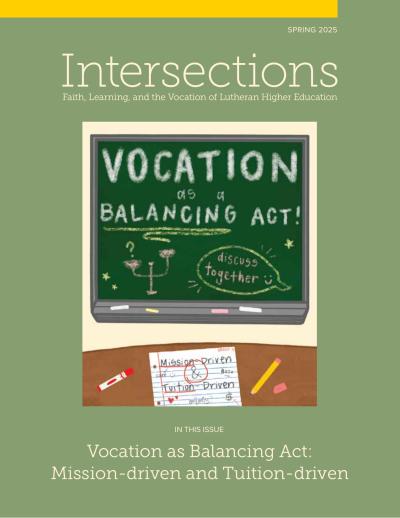
So That All May Belong: Lutheran Roots for Diversity, Equity, Inclusion, and Justice
Altheia Richardson, Angie Hambrick, Caryn Riswold, Colleen Windham-Hughes, Deanna Thompson, Marcia Bunge, Robert Clay
No. 61 · Spring 2025
22 min audio
The full NECU statement grounds DEIJ work in Luther’s 16th-century reforms and Lutheran theological claims about the image of God, equal dignity, and the limits of human knowing — offering definitions, Lutheran roots, and calls to action for diversity, equity, inclusion, and justice, with belonging as the outcome of DEIJ at work.
-
 Article
Lutheran Higher Education and the Public Intellectual
Ernest L. Simmons
No. 26 · Fall 2007
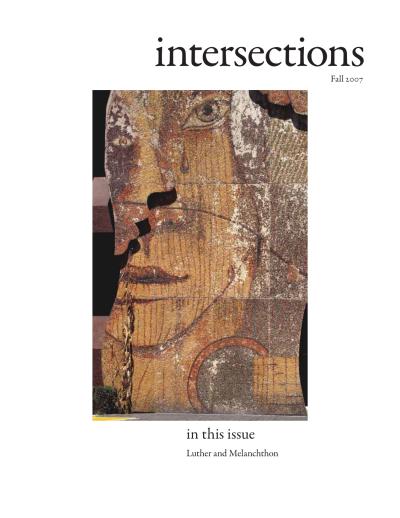
Simmons argues that college faculty and administrators are, like it or not, public intellectuals, and that Lutheran higher education’s dialectical understanding of Christ and culture is well suited to support four functions of the public intellectual: articulating constructive critique of received social explanation (especially the “collage identity” described by Renate Schacht); presenting a transcendent theological perspective through the theology of the cross that takes seriously God’s hiddeness, the presence of ambiguity, and the reality of suffering; pursuing the common good amid the demise of the “commons” through H. Richard Niebuhr’s “Christ and Culture in Paradox”; and educating for citizenship through Christian vocation by connecting the practical and existential dimensions of the question “Why are you here?”
-
 Article
ELCA Social Teaching for the Classroom?
Roger A. Willer
No. 51 · Spring 2020
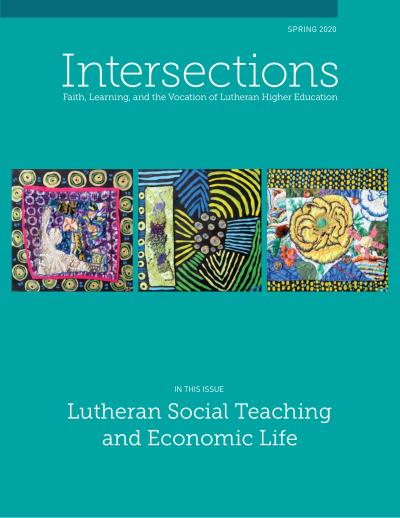
Willer argues that the body of ELCA social teaching, taken as a whole, constitutes an actual social ethic — relatively comprehensive, responsibly consistent, and remarkably cogent — whose mode of responsibility ethics commends it as a classroom resource for any discipline that wrestles with moral questions.
-
 Article
The Diversity Dilemma: Dealing With Difference
Kathy Fritz
No. 8 · Winter 2000
Fritz reports from Newberry College—83% Caucasian, 16% African-American, 22% Lutheran, the smallest college in NCAA football—on a 1998–1999 year of crisis in which the Board of Trustees Executive Committee asked the president to resign over financial issues, the president fired three vice presidents, four trustees including the chair and treasurer resigned, and the controversial “veterinary technology” major became a flashpoint between the president’s recruitment-driven vision and the faculty’s commitment to “preparation for LIFE.” Turning to ethnic diversity, she frames three sociological approaches—“feed them all” to reduce conflict, the “3 A’s” (academics, athletics, arts) to create common identity, and Aguirre and Turner’s case for “weak ethnic identification” against the post-Yugoslavia failures of strong pluralism—and grounds the search for institutional unity in St. Paul’s body-of-Christ imagery from 1 Corinthians 12 and Ernest Simmons’s claim that diversity yields “creative adaptations that assist mutual survival.”
-
 Article
The Vocation Movement in Lutheran Higher Education
Mark Wilhelm
No. 43 · Spring 2016
Wilhelm offers a brief history of the “vocation movement” in ELCA higher education, arguing that it arose as Lutheran leaders moved beyond institutional markers (percentages of Lutheran students, faculty, and board members) and the collapse of ethnic, separatist Lutheranism to re-ground their schools’ identity in a 500-year-old intellectual tradition that educates the whole person for vocation and the common good — an educational ideal open to persons of any religious or non-religious conviction.
-
 Article
Reforming Lutheran Higher Education: Ecclesiological Reflection and Theological Leadership
Brian Beckstrom
No. 46 · Fall 2017
Beckstrom diagnoses an “identity crisis” at ELCA colleges and universities rooted in inherited Enlightenment assumptions and a thin functional ecclesiology, and proposes that a Trinitarian, perichoretic understanding of God offers an ecclesiological foundation that holds together unity and diversity in a pluralistic, post-Christian context.