From the Publisher: Navigating Affirmative Action, DEI Policies, and Lutheran Vocational Identity
Intersections No. 59 · Spring 2024
In the ever-evolving landscape of higher education, institutions across the United States find themselves at a crossroads, addressing critical issues that will shape their futures. In recent years, the Network of ELCA Colleges and Universities (NECU) has leaned into our foundational roots to strengthen our resolve in addressing multiple challenges. Among these, the debates surrounding affirmative action, Diversity, Equity, and Inclusion (DEI) policies, and the preservation of religious and vocational identities, such as that of the Lutheran tradition, stand out as particularly pressing.
Affirmative Action in Flux
The landscape of affirmative action in higher education is currently in a state of uncertainty. Recent legal challenges and Supreme Court rulings have prompted many institutions to reevaluate their admissions policies. The crux of the debate lies in balancing the desire for diverse student bodies with the legal constraints on considering race as a factor in admissions. As a result, universities are exploring alternative approaches to achieve diversity, such as increasing outreach to underserved communities and emphasizing holistic review processes that consider a wide range of applicant experiences and attributes. In this publication of Intersections, we draw from varied perspectives of engaging affirmative practices, sociological viewpoints, and theological responses.
DEI Policies Under Scrutiny
Diversity, Equity, and Inclusion (DEI) initiatives have become central to the mission of many higher education institutions. Each NECU institution has experienced positive results and significant success in myriad ways of achieving diversity on its campuses. These practices and policies aim to create a more inclusive and supportive environment for all students, particularly those from historically marginalized groups. However, several NECU schools are facing challenges from various quarters about DEI efforts, including political pressures and debates over academic freedom and free speech. Across the tumultuous landscape, Lutheran institutions are navigating these complexities by fostering open dialogues, adapting their approaches to be more inclusive of diverse perspectives, and ensuring that DEI efforts are integrated into the fabric of their academic and administrative structures.
Amidst these broader trends, Lutheran-affiliated institutions are grappling with how to maintain their distinctive vocational identity. The Lutheran tradition emphasizes a holistic approach to education, integrating faith, learning, and service. In a time when higher education is increasingly focused on career preparation and immediate job outcomes, Lutheran institutions are striving to preserve their commitment to forming individuals who are not only skilled professionals but also thoughtful citizens and ethical leaders. This involves fostering a campus culture that encourages spiritual growth, critical thinking, and engagement with the world’s complex social and ethical issues.
As NECU institutions navigate these challenges, they are also embracing opportunities for innovation and transformation. Our strategic plan opens us to an alignment with strong liberal arts education in concert with competitive STEM programming that meets the needs of this present age and the future to come. Our efforts to augment technology play a pivotal role in reshaping teaching and learning, with the rise of online education and digital resources expanding access and enabling new pedagogical approaches.
Partnerships between several NECU colleges and employers are becoming more common, providing students with practical experience and a smoother transition to the workforce. For instance, Tim McCarthy (Wittenberg University ’02), has served as the first Professional-in-Residence for his alma mater. McCarthy, former owner of the Raising Cane’s Ohio franchise, volunteers a significant amount of his time to help guide students through the transition into career exploration as a young professional. Drawing from the core values taught in Lutheran education institutions, He hopes to encourage budding entrepreneurs and social entrepreneurs to continue their development of community and national projects that serve the common good as sources of America’s future success.
In conclusion, the state of higher education is marked by a dynamic interplay of challenges and opportunities. Affirmative action, DEI policies, and the preservation of Lutheran vocational identity are just a few of the issues that NECU institutions are addressing as they strive to fulfill their missions in a rapidly changing world. This coming summer at the Vocation of Lutheran Higher Education Conference (VLHEC), we will grow deeper in our collective understanding of each of these topics as we navigate a path forward that will require a commitment to embracing diversity, fostering inclusivity, and maintaining a clear sense of purpose and amplifying the Lutheran identity. I hope to see you at VLHEC in Minneapolis, July 8-10, 2024.
-
 Editorial
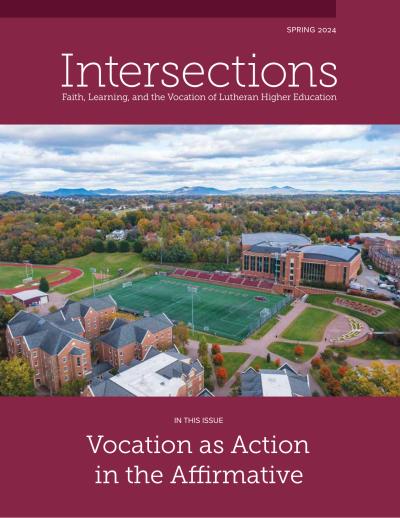
From the Editor: Vocation as Action in the Affirmative
Colleen Windham-Hughes
Windham-Hughes frames vocation as practicing “at the borders of our incompetence” — every small yes to the callings we experience, every effort made in the direction of life, is action in the affirmative — and previews the issue’s essays on diversity, transformation, AI, championship team culture, and dreaming big within and beyond our limitations.
-
Article
Forming the Division for Access, Equity & Belonging at Susquehanna University
Amy Davis, Dena Salerno, María L. O. Muñoz, Nina Mandel, Scott Kershner
Five Susquehanna University colleagues trace the institution’s 166-year arc from a Missionary Institute founded to remove barriers to education through the formation of a new Division for Access, Equity & Belonging in 2023, arguing that access rooted in Lutheran origins must continue to drive policy revision, infrastructure, and belonging for minoritized communities today.
-
Article
On Recruiting Diverse Students, Rooted in Mission
Eric Rowell, Jason A. Mahn
Jason Mahn interviews Eric Rowell, Assistant Director of Admissions and Diversity Outreach at Augustana College, about how recruiting students from a wide variety of backgrounds — rooted in Augustana’s Lutheran commitment to vocation and educating across difference — remains essentially unchanged in the wake of the Supreme Court’s 2023 decisions on affirmative action.
-
Article
What Our Lutheran Heritage Entails for Lutheran Colleges and Affirmative Action
Mark Ellingsen
Ellingsen argues that the Lutheran Two-Kingdom Ethic — far from leading to political reaction — supports the church-relatedness of ELCA colleges and obligates them to keep affirmative action alive, even reading a Chief Justice Roberts “loophole” in Students for Fair Admissions v. Harvard as an open door for Black community partnerships, ELCA congregations, and Lutheran colleges to act in the affirmative.
-
Reflection
On the Power of Transformation and Becoming Human
Ken Yanai Flores
Flores, a Cal Lutheran sophomore, reflects on personal and institutional transformation as the slow work of shedding the armor of trauma responses, engaging discomfort rather than turning away, and trusting that the work of becoming more human — more empathetic, knowledgeable, and free — will be reflected in our institutions as well.
-
Article
The Critical Role of Lutheran Higher Education in the Age of Artificial Intelligence
Jose Marichal, Maya Goehner, Tyler Haug
A Cal Lutheran political science professor and two of his students draw on Rooted and Open to argue that Lutheran higher education is uniquely positioned to stake out a middle path between AI utopianism and AI doom — cultivating a “healthy sense of human limit,” resisting data colonialism, and forming students to see the neighbor rather than the enemy as the world becomes increasingly synthetic.
-
Article
Team Culture is Key to Success: Learning from Student-Athletes
Colleen Windham-Hughes
On a December weekend in “Championship City” Salem, Virginia, both California Lutheran’s Women’s Soccer Team and St. Olaf College’s Men’s Soccer Team won NCAA Division III national titles. Windham-Hughes talks with coaches, faculty mentors, and student-athletes about how off-the-field team culture — built on trust, relationships, and shared why — translates onto the pitch and into liberal arts and sciences education.
-
Article
Low-Hanging Fruit, Moonshots, and Coffee: Dreaming Big Within and Beyond Our Limitations
Jeremy Myers
Myers shares the process used by Augsburg’s Christensen Center for Vocation to help teams move from a shared experience to next steps — an Ignatian-rooted Awareness Examen followed by naming low-hanging fruit, moonshots, and the coffee conversations that build the coalition to make it all happen.
-
 Editorial
From the Publisher & Editor
Colleen Windham-Hughes, Lamont Anthony Wells
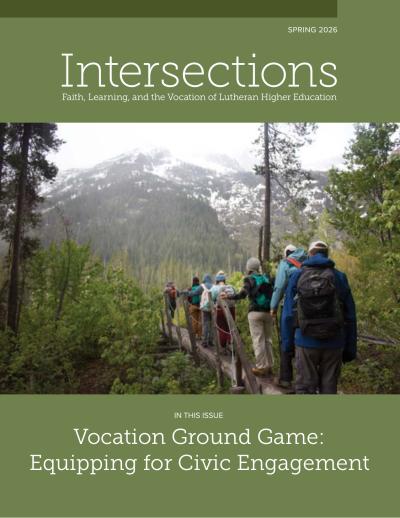
No. 63 · Spring 2026
6 min audio
Wells and Windham-Hughes frame vocation as “ground game” — the practical, public living-out of faith through civic engagement — and introduce the issue’s focus on how Lutheran higher education equips students to repair the world.
-
 Editorial
From the Publisher
Lamont Anthony Wells
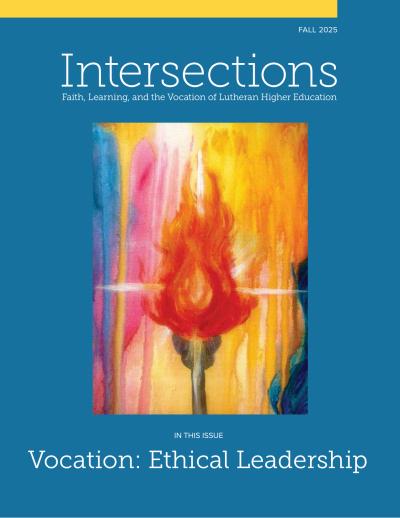
No. 62 · Fall 2025
5 min audio
Wells frames the issue as a record of the 2025 VLHE Conference at Augsburg under the theme “Ethical Leadership in a Changing World,” arguing that vocation is never solitary but a collective, public witness of ethical formation, theology and care, flourishing and belonging, and leadership rooted in God’s grace.
-
Article
Fostering Moral Imagination and Inclusivity: The Role of Ethical Leadership in ELCA Colleges and Universities Amid Societal Challenges
Lamont Anthony Wells
No. 62 · Fall 2025
12 min audio
Wells argues that “moral imagination” — the capacity to envision ethical alternatives, empathize across difference, and respond creatively to injustice — is the heart of ethical leadership in NECU institutions, and that anchoring leadership in this principle positions Lutheran higher education to cultivate socially responsible citizens.
-
 Editorial
From the Publisher
Lamont Anthony Wells
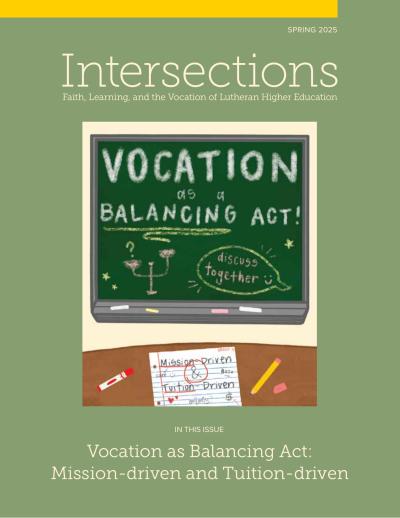
No. 61 · Spring 2025
5 min audio
Wells introduces So That All May Belong: Lutheran Roots for Diversity, Equity, Inclusion, and Justice as a theological and institutional articulation of NECU’s commitments, and previews four accompanying essays that frame vocation as a societal responsibility rooted in justice and not solely an individual pursuit.
-
 Editorial
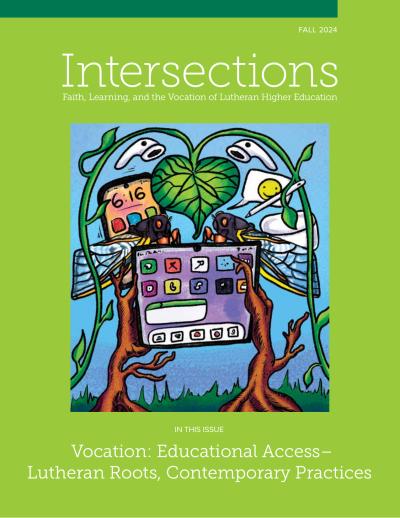
From the Publisher: Reflections on the 2024 Vocational Leaders in Higher Education Conference
Lamont Anthony Wells
No. 60 · Fall 2024
Wells reflects on the 2024 VLHE Conference theme — “Educational Access: Lutheran Roots, Contemporary Practices” — tracing today’s commitment to inclusivity back to Martin Luther’s radical 16th-century insistence that both boys and girls be educated, and previews NECU’s expanded engagement of student leaders alongside faculty and administrators.
-
 Editorial
Maintaining Our Lutheran Identity: A Source of Strength
Lamont Anthony Wells
No. 58 · Fall 2023
Wells reflects on the well-being of staff, faculty, and administration in Lutheran higher education across four pillars — rest, creativity and innovation, religious diversity and pluralism, and the preservation of Lutheran identity — and addresses the painful reality of Finlandia University’s closure as a reminder of the network’s shared mission.
-
 Article
A Church, the Human Condition, and the Fissured Face of Peace
D. M. Yeager
No. 22 · Spring 2006
Yeager, a member of the ELCA Task Force for Studies on Sexuality, reflects on lessons for the church’s educational mission in the wake of the 2005 Churchwide Assembly. Drawing on Macquarrie’s The Concept of Peace, Polanyi on the personal coefficient of knowledge, Hannah Arendt’s The Human Condition, and responses to the task force report from Roy Harrisville III and Larry Rasmussen, she proposes “the fissured face of peace”—peace as the absence of hostility rather than disagreement—and maps how Arendt’s five conditions of human existence (life, earth, natality, mortality, worldliness, plurality) might shape Lutheran colleges’ curricula in history, epistemology, and the sociology of knowledge so that graduates can disagree without hostility and embrace the slow work of reformation.
-
 Editorial
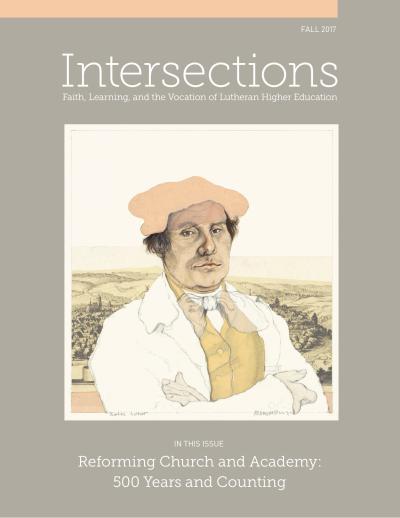
From the Editor
Jason A. Mahn
No. 46 · Fall 2017
Mahn returns to Luther’s opening thesis on whole-life repentance to argue that the deepest critique of the indulgence economy — and of our own American meritocracy — is the very assumption that grace and human striving can be measured, exchanged, and earned.
-
 Article
Impelled to Pluralism: Thoughts About Teaching in a Lutheran University
Jim Huffman
No. 17 · Summer 2003
Huffman traces his personal journey through three stages of faith—the “comfortable Christ” of his Midwestern Christian childhood, Clark Pinnock’s “faith principle” of accessible salvation, and finally Christ as the “humble teacher”—to a pluralism that rejects religious triumphalism without abandoning Christian commitment. Drawing on Diana Eck, Wesley Ariarajah, John Cobb, the Catholic novelist Endo Shusaku, and the histories of Confucian China and imperial Japan, he then describes how this commitment shapes his teaching of East Asian religion and nationalism at Wittenberg University: insisting on respectful language, working sympathetically through doctrines like Buddhist non-attachment, and helping students see the pernicious effects of triumphalism in both religious and political life.
-
 Article
Perspectives on Institutional Service: All Hands on Deck
Ruth Henricks
No. 12 · Summer 2001
Henricks, President and CEO of Lutheran Family Services of Nebraska, uses Annie Dillard’s image of Christians tourist-like on Deck C to call colleges and social ministry organizations to “all hands on deck” in a church standing at a threshold of shifting demographics—a growing rich-poor gap, a coming Hispanic majority, an aging baby-boom, dual-career families, contingency workers, and for-profit Lockheed Martin-style competitors entering human services. Drawing on Foster McCurley, Andrew Grove’s Only the Paranoid Survive, Justo Gonzales’s Manana, Arthur Becker, Bob Bacher, David Tiede, and the ELCA constitution, she argues that SMOs and colleges are the “hands” of the body of Christ and asks whether we have courage to require Spanish, partner ecumenically, cut services to Caucasian clients, and lead the church from the front rather than the rear.
-
 Editorial
From the Publisher
Mark Wilhelm
No. 30 · Fall 2009
Wilhelm reports on the difficult financial season facing the ELCA churchwide organization — a ten-percent budget reduction announced in November and significant cuts to unrestricted grants for colleges and universities — while affirming that the ELCA’s commitment to the mission of its schools remains strong, including its commitment to engaging the “other,” the theme of this issue.
-
 Article
The Vocation of a Lutheran College—Living the Legacy of the Reformation in the Twenty-first Century
Sabine U. O'Hara
No. 26 · Fall 2007
O’Hara reflects on Luther’s understanding of education as Bildung — “becoming in the image of God” — through four key aspects: education must be relevant, education demands engagement with the community, education requires attention to place, and education demands engagement with the world. Drawing on her German upbringing, her work as president of Roanoke College, and on Darrell Jodock and Dietrich Bonhoeffer, she argues that Luther’s vision of a well-educated citizenry as the priesthood of all believers calls Lutheran colleges to messy, interdisciplinary, communal scholarship in service to the neighbor.