I’ve always loved Mary Oliver’s poem “Wild Geese” because it points us repeatedly to the call of the world—“harsh and exciting”—and imagines the “family of things” in which we each have a place. Oliver’s depiction of pilgrimage, repentance, and love alongside the expanse of landscapes envisions our collective movements. It offers, I would suggest, a way to explore the links between individual and communal callings.
That vocation is best realized when serving the common good—acknowledging our interdependence—is the core argument of the forthcoming volume Called Beyond Our Selves: Vocation and the Common Good (Oxford University Press), the next volume in the series by NetVUE (Network for Vocation in Undergraduate Education). The contributors probe the ways that “vocation” and “common” and “good” need to be disrupted and expanded, so that we might arrive at a wider sense of individual purpose and collective well-being.
The “harsh and exciting” aspects of the world capture in some ways what it means to account for the limitations and possibilities of the common good. We acknowledge the ways that the concept of the common good has been used to create normative notions of “common” and “good” and have excluded and harmed many. We therefore use the language of a common good, the commons, goods, and the uncommon good, alongside the common good. We also use language such as the flourishing of all, the good life, collective well-being, and communal wellness. By examining the multiple sides of the common good—how it obstructs and how it encourages flourishing, what prevents its achievement and what fosters it—we can better consider what we might name as the world’s hungers and needs in ways that become more complex and textured. Jeremiah Purdy emphasizes a shift away from a zero-sum understanding in such efforts, favoring instead “the creation of new kinds of solidarity, new ways to feel that your good life is part of my good life, and an injury to you is an injury to me.”1
Such disruption of the concept of the common good also invites a disruption of vocational paradigms, calling us to reckon with significant injustices and challenging realities as part of our vocations. As we work with students to explore individual purpose, we must put a greater emphasis on the place of call—spiritual, familial, ecological, social, or communal—examining what it means to be part of a shared place. Colleges and universities are uniquely situated to model what it means to be a common good place (as Robert J. Pampel argues in the volume), leveraging our various resources and cultivating opportunities which build capacities for contributing to collective well-being.
Moving towards a more radical and reformed imagining of the good life for all can help undergraduates live into vocations of advocacy as well as expanding one’s circle of concern to include causes that are not our own and people we may never meet (Michelle Hayford and Jonathan Golden explore these concepts in the collection). Disruption can produce action in our vocations in meaningful and impactful ways. Vocational exploration in the context of the common good means not only thoughtful reflection but also steps towards breaking down structures that keep others and our environments from flourishing. Addressing institutional racism, climate change, gun violence, LGBTQ+ rights, and economic disparities are part of what it means to be called beyond our selves.
Inviting students into this work is a shift of narrative, a shift from the dominant narratives of success, careerism, and individual pursuit. It is instead an invitation into the narratives of mutuality and membership (as Christine Jeske argues). Shifting the narratives recognizes our interdependence in ways that help us see that such disruption can bring forth deeper connection. Thus, the volume attends to the ways that the uncommon, specifically the queering of vocation, can help dislocate normative notions of the common good to not only tolerate the uncommon, but celebrate and see it as necessary for our communal well-being (as explored by Geoffrey W. Bateman).
We wrote this volume over the course of a year marked by multiple pandemics. The volume’s linking of vocation to trauma, burnout, and reaching across difference is palpable and intentional. The connection of vocation to sadness and making space for collective lament (argued by Deanna A. Thompson) insists on a recognition of individual and communal trauma as we consider the flourishing for all. The call to our campuses to consider how institutional mission reflects a commitment to the common good, specifically through engagement with diversity, equity, inclusion, and justice (as explored by Monica M. Smith) further allows us to consider what flourishing for all means. As we prepare students to deal with burnout as they prepare for lives of serving the common good, compassionate pedagogy can provide pathways to foster skills for the long-haul work of sustaining such vocational callings (detailed in Meghan Slining’s chapter, which draws specifically from models of public health).
Furthermore, in this expanded vocational response to others, we suggest that sustained teaching of dialogue and deliberation can create pathways in fostering a common good (David Timmerman discusses these approaches). Disrupting tendencies towards polarized thinking about difficult topics is exactly the sort of vocational invitation to serve the common good that we aim for in the volume. These challenging vocational moments are part of the liminality of the call of the common good, part of this toggling between the world and the self that involves an unraveling so that rebuilding can happen for the benefit of all.
We also explore the importance of interpreting texts—including the historical, the literary, the cultural, and the sacred. The callings from history allow for significant disruptions of the ways we might tell the story of communal or individual calls. The engagement with public monuments (and their removal) alongside the complicated histories of our own institutional canons that might involve slave-owning pasts and indigenous land rights are important pieces of vocational discernment for the common good (Martin Holt Dotterweich and I explore these topics in separate chapters). The teaching of history and memory, along with reading for the common good, provide vital skills for students in their discernment.
Vocation as an obligation to another—the antithesis of individual freedom—can be fostered through the college experience. This is a disruption that challenges educators across all disciplines and programs (as discussed by Charles Mathewes). What if our institutions invited the community back into campus spaces and classrooms with regularity, allowing a more intentional learning together and from each other? What if we disrupted structures enough to feature vocational exploration as formation for all ages? At the beginning of each section of the volume, we offer questions like these for educators across campus to use in professional development settings, classrooms, retreats, and book groups. Here is a further sampling that might help prompt reflection on the ways we can explore vocation and the common good at our institutions:
- What reframing (disrupting) do educators need to do of the underlying culturally inflected narratives and structures that shape our understanding and experiences of vocation?
- Who is shaping the definitions and understandings of vocation and the common good? What barriers prevent representation in these spaces and conversations? What can we do to be more inclusive and equitable?
- How can our discussions of vocation challenge educators and students alike to think beyond themselves? How can the college or university think of the institutional call as a call to contribute to the world’s needs, the common good?
- How does the notion of the common good change when we pay attention to difference and privilege?
- Where can we connect the college experience to the workplace and community for students so they can cultivate skills of advocacy and compassion for causes that are not their own?
- How can our practices and pedagogies cultivate sustainability in our vocations, so that we might repeatedly confront difficulty, suffering, and injustice?
- How would you describe the campus ecology—the connections between environment and participants—of your institution? What sort of formation does it offer students and educators?
- What do we gain by learning about the past that can help us understand our present purpose and responsibility to others? How can that help us look to the future?
- How do educators across campus encourage students to think about their obligations to others?
The volume’s epilogue features an exploration of key features of the ecology of the common good—specifically the principles of “deep ecology,” the overlap between economy and ecology, the cultivation of a home place, and the role of community gardens and gardeners. The contributors illustrate the myriad relationships within ecosystems and communities throughout the volume, helping us see our connections in dwelling together.
When we prioritize the commons as the start of our consideration of what good looks like, we can significantly shift our vocational calls. Here, the common good is the heartbeat of vocational discernment, a disruption of old frameworks of the good life so to better integrate individual and communal concerns. Our common purpose in writing this volume is to call others into the work of vocational exploration that emphasizes the importance of collective well-being. Situating vocation within the context of the common good deserves our committed focus as we prepare students to embrace challenges and calls from their communities (David Mazko McCarthy opens the volume with this premise).
While centering vocation in the common good most surely involves confronting the “harsh” as well as the “exciting,” it is necessary for all of us to keep exploring the calls beyond self, considering the needs and hopes of others. This is a disruption that can prompt us to heed Oliver’s invitation to not have to be “good” but instead dialogue about “despair,” responding to the world and each other as we find purpose in this shared life.
Endnotes
1. Jedediah Purdy, This Land is Our Land: The Struggle for a New Commonwealth (Princeton, NJ: Princeton University Press, 2019), 26.
-
 Editorial
From the Publisher: Introduction and Invitation
Lamont Anthony Wells
Wells introduces himself as the new Executive Director of NECU, succeeding Rev. Dr. Mark Wilhelm, and frames this Spring issue as a passionate response to the crises facing higher education amid threats to academic freedom and the well-being of educators.
-
Editorial
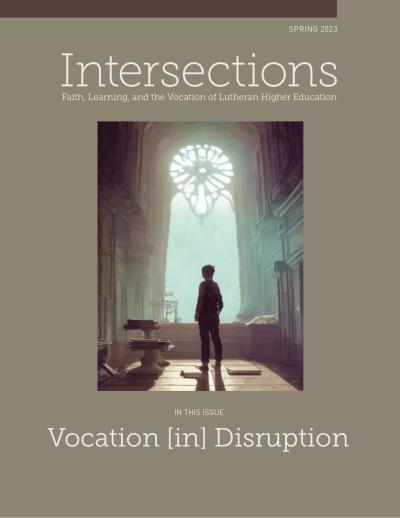
From the Editor: Vocation [in] Disruption
Colleen Windham-Hughes
Windham-Hughes introduces the issue’s theme — vocation amidst disruption — previews new features including contributor contact information, a study guide for So That All May Flourish, and invited pieces on reproductive rights, and shares results from the Fall survey of readers.
-
Institutional Focus
So That All May Flourish Study Guide
A chapter-by-chapter study guide to So That All May Flourish (Fortress Press 2023), a new volume by NECU authors that develops the central tenet of “Rooted and Open” and offers discussion questions for use in orientation programs, classes, workshops, task forces, and professional development settings.
-
Reflection
“Miracles are no longer required”—Life Writing as a Healing Tool
Barbara Reul
A music historian and cancer survivor chronicles how a uterine cancer diagnosis in the early months of the COVID-19 pandemic disrupted her vocation as a university professor, and how writing two open-access memoirs became an unexpected tool for healing body, mind, and soul.
-
Article
The Power of Ritual Action and George Floyd Square
Mary Clare Tiede Hottinger
A California Lutheran University senior examines how George Floyd Square in Minneapolis has been transformed into sacred space through ritual action, and considers what this site of remembrance, mourning, and ongoing struggle for justice can teach us about the power of ritual to unify and sustain community.
-
Reflection
Be Like Jesus: Flip Some Tables
Jessica Easter
Easter argues that the example of Jesus overturning the moneychangers’ tables in Matthew 21 calls Christians not to work within unjust systems but to disrupt them — and that this table-flipping must be done in community with others who share the vision of a world where all are seen, heard, and valued.
-
Article
Where Disruption and Vocation Meet: One Path Toward Teaching Reproductive Justice in Challenging Times
Lena R. Hann
Hann recounts how a missed math class in her first college term led her into volunteer work at a feminist abortion clinic and ultimately a career in public health, and describes how she designed and taught a Reproductive Justice immersive term course at Augustana College through the disruptions of COVID-19, George Floyd’s murder, and the Dobbs decision.
-
Article
The Duty to Teach and Restore Bodily Autonomy: Reflections from the Classroom
Cynthia Richards
Richards reflects on a Narrative Medicine course she taught at Wittenberg University in the wake of the Dobbs decision, in which students examined cultural “first recognitions” of the reproductive body and discovered that almost none had ever had a way of talking openly about their reproductive selves — an alienation she calls educators to address.
-
Article
Turning to a Reproductive Justice Framework for Inclusive Dialogue across Differences
Jenny M. James
James makes the case that a reproductive justice framework, rooted in the work of black feminist scholars and activists, gives educators tools to overhaul polarized pro-choice/pro-life conversations and to host inclusive dialogues across differences of race, sexuality, gender identity, and faith.
-
Article
A Reconsideration of the Political Approach to Abortion
Sophia Cruz Ponce
Cruz Ponce argues that the pro-life versus pro-choice binary distracts from the underlying social factors that lead to unwanted pregnancies, and proposes a reframed political approach focused on mandated sex education, free contraception, and crisis pregnancy centers that address the social, political, and economic barriers women face.
-
Article
Take Heart: Is Neutrality Really What We Need Right Now?
Abbylynn Helgevold
Helgevold, an ethicist at Wartburg College, argues that calls for faculty neutrality on abortion in the post-Roe classroom stifle the courageous conversations Lutheran higher education is uniquely positioned to host — conversations grounded in “Rooted and Open” and the ELCA’s 1991 Social Statement on Abortion.
-
Article
Views on Flourishing After the Age of Roe
Caryn Riswold, Mary J. Streufert
Riswold and Streufert reflect on the Radcliffe Institute’s January 2023 conference “The Age of Roe” and argue that the ELCA’s 1991 Social Statement on Abortion and its 2019 statement Faith, Sexism, and Justice offer Lutheran higher education a third way to approach reproductive justice grounded in serving the neighbor so that all may flourish.
-
 Editorial
Guest Editorial
Lynn Hunnicutt
No. 47 · Spring 2018
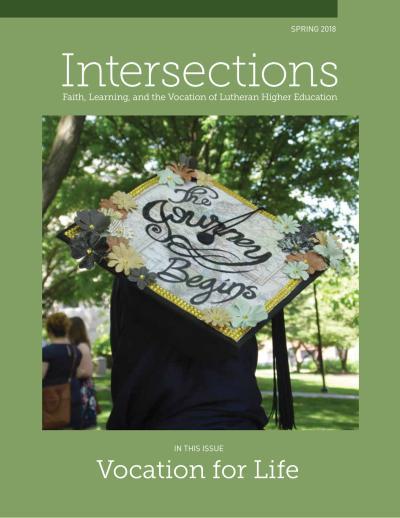
Hunnicutt traces the etymology of vocation through its cognates — evoke, provoke, convocation — to argue that vocation presumes a relationship between caller and called, that callings are often grounded in ordinary words and humble lives, and that recognizing vocation as plural and lifelong relieves colleges of the pressure to help students find a single calling while on campus.
-
 Article
Sexuality over the Lifespan—Social Trends Pose Moral Dilemmas for Communities of Faith
Adina Nack
No. 22 · Spring 2006
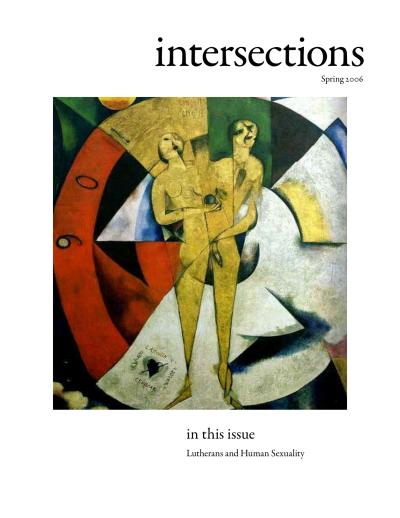
Nack, a sociologist who presented to the ELCA Task Force for Studies on Sexuality, surveys empirical research on three life-stages flagged by the Task Force as particularly contested—premarital sexuality among adolescents and young adults, sexuality after divorce and within single parenting, and sexuality in late adulthood. Drawing on the Alan Guttmacher Institute, the Office of the Surgeon General, AARP, National Council on the Aging, and the World Health Organization’s 2002 definition of sexual health, she closes each section with questions about the church’s role in education, blessing of committed nonmarital relationships, and dismantling stereotypes about aging and sexuality.
-
 Article
Through Truth to Freedom—by Way of Reconciliation
Paul C. Pribbenow
No. 52 · Fall 2020
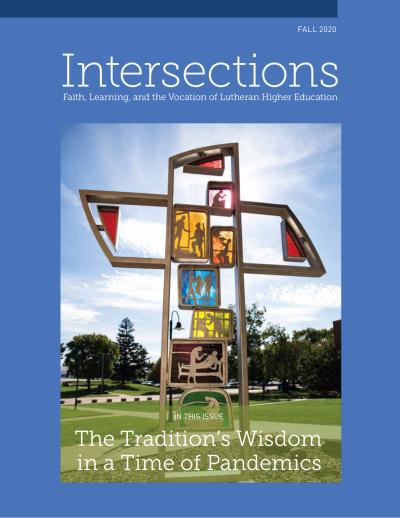
Reflecting on Augsburg’s 150th-anniversary motto “Through truth to freedom,” Pribbenow argues that in a season of three pandemics — pandemic illness, economic collapse, and the racial sin laid bare by the murder of George Floyd — higher education’s most authentic work is to educate for truth and freedom by way of confession and reconciliation.
-
 Editorial
The Vocation of a Lutheran College: Some Transitional Thoughts
James M. Unglaube
No. 4 · Winter 1998
Unglaube offers final reflections on thirty years in Lutheran higher education as he leaves the ELCA Division for Higher Education and Schools to join Carthage College, his alma mater. He recalls colleague Richard Solberg’s influence, the closing of Upsala College in 1995, the Higher Education and Namibia program shared with Naomi Linnell, the growth of endowments from $70 million to $1 billion in 25 years, and the Vocation of a Lutheran College project he credits Paul Dovre with inspiring. He likens the twenty-eight ELCA colleges to flowers on a rose bush—same Lutheran tradition, each blossom different—requiring constant nurture if the partnership between church and college is to thrive.
-
Article
What I Have Learned: Maybe Plato Was Right
Richard Ylvisaker
No. 4 · Winter 1998
Inaugurating the new “What I Have Learned” column, Ylvisaker reflects on a career of teaching philosophy at Luther College and offers four hard-won “preliminary examples” in which Plato turned out to be more right than fashionable criticism allowed: (1) communities are not necessarily better off by becoming more diverse—diversity needs a unity of purpose if it is to enrich rather than fragment; (2) politics, to be more than a struggle for power by competing interests, must rest on a moral basis that transcends those interests; (3) the much-derided body-soul dualism contains a measure of truth about the cognitive and moral limitations of embodied life; and, deepest of all, (4) reason itself depends on a community of discourse in which doctrinaire pronouncement gives way to disciplined inquiry. Athens and Jerusalem, he concludes, should meet at the college of the church.
-
 Article
Point / Counterpoint: What It Means to be a "College of the Church"
Robert Benne, Tom Christenson
No. 28 · Fall 2008
Moderated by Wartburg College pastor Larry Trachte and introduced by Kathryn Kleinhans, this Wartburg campus conversation between Robert Benne (Roanoke College) and Thomas Christenson (Capital University) probes what it means to be a college of the church—Benne emphasizing ethos, vocation, and the Christian intellectual tradition over against secularization and generic education, and Christenson lifting up persistent vocational questions, the gift of difference, and induction into a community of discourse—and finds large common ground around hiring for mission, pedagogy that asks deep questions, and the courage to claim a living religious tradition while inviting everyone to the banquet.