I opened my email on a September morning to find an article in the Chronicle of Higher Education highlighting the ways that our post-Roe world is influencing our institutions, our teaching, and our mentoring of students. I was drawn in by the part of the headline that read, “A University Tells Faculty to ‘Remain Neutral’ on Abortion Discussions in Class.” Learning about the ways that abortion legislation is impacting higher education in other states amplified very real fears and uncertainties present in our changing legislative and educational environments. As I processed the piece, my thoughts kept returning to one phrase— ‘remain neutral.’ It was somehow disturbing. As I sat with it, I wondered, is neutrality really what we need right now? I understand that, legally, this may be the best advice that general counsel can give. But, what about pedagogically?
Neutrality is problematic for several reasons. It presupposes that the issue in question is about taking sides, it relies on a lack of investment or care, and it can be a barrier to critical engagement since neutral positions are rarely as truly neutral or value-free as they purport to be. As an ethicist, I am concerned about the ways that remaining neutral can prevent the kind of deep, intentional, and careful engagement needed for addressing issues that so intimately affect our lives and the lives of others in our communities. Emphasizing neutrality seems like just another way to say this issue is too hot to touch and that we’d better just leave it alone.
The shared and distinctive values of Lutheran higher education, as expressed in the statement “Rooted and Open” combined with the approach taken by the ELCA in its 1991 Social Statement on Abortion (SSOA) call us to take heart and consider more fully how to create and maintain spaces for learning and growth. These spaces ought to be those where we and our students are challenged to think critically about our assumptions and to grow into a greater awareness of our lives in community and the ways we can work toward a common good. Urging neutrality threatens to stifle conversation precisely when we ought to be opening up more opportunities for collective reflection on how we preserve important social and moral goods like access to reproductive health care and respect for life. As we engage with our students and each other we don’t need neutrality. What we need is courage.
Courage: Identifying and Responding to Fear
I've been teaching courses in sexual ethics for nearly 15 years. In that time, I’ve noticed that it has only become harder for students to talk about the ethics of abortion. A big reason for this is fear. In the polarized environment we are in, students expect conversations about abortion to be contentious, adversarial, and intractable. Many of them have only experienced engaging with this topic through the dualistic “pro-choice vs. pro-life" framework and they are often very anxious about entering into any kind of “debate” or conversation with those who have different views. These fears aren’t easily dismissed. A polarized environment feeds insecurity, it suggests that one must choose a side and it can feel threatening to those who are unsure. Students are often afraid of being shamed or judged by their peers, and having little experience with civil and respectful dialogue, the threat of rejection is not imaginary. It often feels like a safer option to stay quiet or avoid having a view at all. Furthermore, when it looks like there are only two sides to choose from, those who have chosen a side may be afraid to examine it because important parts of their self-understanding may be closely tied to that position. The threat of losing oneself is very scary.
One of the strengths of the SSOA is that it makes room for ambivalence and disagreement while also sustaining a commitment to remaining in a community united by shared values. This shared commitment to affirming the goodness of life includes attention to the many factors that support flourishing more broadly such as access to education, a supportive community, and health and child care. In our Lutheran higher ed environments, we ought to be guided by a similar spirit. Grounded in our common calling to “intentionally pursue conversations about big questions” and to nurture and educate students who are “intellectually acute, humbly open to others, vocationally wise, and morally astute,” we ought to be boldly confident in our commitment to holding space for courageous conversations about challenging political and ethical matters like abortion. It is unfortunate and frightening that our colleagues in different institutions may not have this freedom.
We have a responsibility to honor the courage it takes for our students to risk stepping into conversations about big questions in the first place. Encouraging students to wrestle with complex issues and to develop their own perspectives can play an important role in boosting self-confidence as they are challenged to strengthen their own sense of agency in a world that will ask a lot of them. We can help them (and ourselves) to bolster their courage by challenging the dualistic framework and approaching this issue with greater nuance and care.
Courage: Taking Heart and Challenging Apathy
Courage is a virtue of the heart, it opposes neutrality in part because it relies on caring about something enough to face challenges. Courage boosts our spirit when we’d rather run away, it enables us to “take heart” and keep going. A neutral position can often mask an underlying apathy, a lack of interest or care. As we just explored, there are many uncomfortable and frightening obstacles to engaging in dialogue with others about abortion and reproductive rights. In my experience, student’s commonly try to remain above the fray by assuming that this issue does not concern them. They may have their own privately held views or beliefs, and a sense for what choices they think they would make, and that is where they prefer to keep them. In some ways this can be a good thing if it creates space for being generally respectful of the different views and decisions that others may make. But the other side of this is that it releases them from having to care about the lives of others and from thinking about the role they play in shaping a society that can be more or less supportive of life and well-being.
“The values of Lutheran higher education directly challenge apathy. Students are called to be a ‘neighbor’ and to serve and understand the needs of others in the pursuit of a common good.”
The values of Lutheran higher education directly challenge apathy. Students are called to be a “neighbor” and to serve and understand the needs of others in the pursuit of a common good. We have a responsibility to challenge ignorance and speak openly about the ways that laws and policies impact people’s lives. We need more awareness of the ways that members of our communities are suffering so that we are better able to envision alternatives that can alleviate that suffering and promote flourishing.
Courage: Confronting and Breaking Silence
Conversations about the ethics and legal status of abortion are severely hampered by the power of taboo and the perpetuation of ignorance. Despite growing up in what seems like a sex-saturated cultural environment, my students still overwhelmingly agree that talking openly about sex and sexuality rarely happens. This is even more the case with abortion specifically. Over the past 15 years of teaching, I can recall only a handful of students who have any knowledge of what a decision about abortion or an abortion experience is like. Most of my students tend to assume that abortion is something that “other” people experience. Having little to no exposure to the experiences of real people making real choices in complex situations leaves them free to make all kinds of assumptions, often negative, about who chooses to have an abortion and why. Adopting a position of neutrality risks perpetuating the problem by failing to challenge this damaging status quo.
Having the courage to break the silence that persists when abortion is a taboo topic is essential for empowering our students to adopt a careful, compassionate, and nuanced understanding. Over the past few years more and more women have been sharing their experiences in order to break this silence. Listening to their stories is transformative because it helps students to see and better understand all of the variables at play in each unique circumstance. It makes it clear that addressing abortion entails much more than determining the moral status of the fetus or defending an abstract legal right or determining who is right or wrong. It requires asking difficult questions about the society we are building and living in and the ways that our society either honors or fails to promote human dignity and flourishing.
Roe v. Wade is gone. Our current reality has opened up the political “flood gates” and we are now confronting a dizzying array of new legislative realities that will significantly impact the lives of ourselves, our students, and our communities. Our graduates need to feel confident in their preparation for this new and uncertain world. Neutrality will not get them there.
Works Cited
ELCA (Evangelical Lutheran Church of America). “A Social Statement on Abortion.” 1991. Accessed Feb 12, 2023.https://www.elca.org/faith/faith-and-society/social-statements/abortion.
Gluckman, Nell. “’It’s Making Us Accomplices’: A University Tells Faculty to ‘Remain Neutral’ on Abortion Discussions in Class.” Chronicle of Higher Education. Sept 26, 2022. On-line. Accessed Feb 12, 2023. https://www.chronicle.com/article/its-making-us-accomplices-a-university-tells-faculty-to-remain-neutral-on-abortion-in-class?cid2=gen_login_refresh&cid=gen_sign_in
NECU. “Rooted and Open: The Common Calling of the Network of ELCA Colleges and Universities.” ELCA, Jan 2018. Accessed Feb 12, 2023. https://download.elca.org/ELCA%20Resource%20Repository/Rooted_and_Open.pdf?_ga=2.39360483.1535089622.1615735202-1928609613.1615735202.
-
 Editorial
From the Publisher: Introduction and Invitation
Lamont Anthony Wells
Wells introduces himself as the new Executive Director of NECU, succeeding Rev. Dr. Mark Wilhelm, and frames this Spring issue as a passionate response to the crises facing higher education amid threats to academic freedom and the well-being of educators.
-
Editorial
From the Editor: Vocation [in] Disruption
Colleen Windham-Hughes
Windham-Hughes introduces the issue’s theme — vocation amidst disruption — previews new features including contributor contact information, a study guide for So That All May Flourish, and invited pieces on reproductive rights, and shares results from the Fall survey of readers.
-
Institutional Focus
So That All May Flourish Study Guide
A chapter-by-chapter study guide to So That All May Flourish (Fortress Press 2023), a new volume by NECU authors that develops the central tenet of “Rooted and Open” and offers discussion questions for use in orientation programs, classes, workshops, task forces, and professional development settings.
-
Reflection
“Miracles are no longer required”—Life Writing as a Healing Tool
Barbara Reul
A music historian and cancer survivor chronicles how a uterine cancer diagnosis in the early months of the COVID-19 pandemic disrupted her vocation as a university professor, and how writing two open-access memoirs became an unexpected tool for healing body, mind, and soul.
-
Article
The Power of Ritual Action and George Floyd Square
Mary Clare Tiede Hottinger
A California Lutheran University senior examines how George Floyd Square in Minneapolis has been transformed into sacred space through ritual action, and considers what this site of remembrance, mourning, and ongoing struggle for justice can teach us about the power of ritual to unify and sustain community.
-
Reflection
Be Like Jesus: Flip Some Tables
Jessica Easter
Easter argues that the example of Jesus overturning the moneychangers’ tables in Matthew 21 calls Christians not to work within unjust systems but to disrupt them — and that this table-flipping must be done in community with others who share the vision of a world where all are seen, heard, and valued.
-
Article
Necessary Disruptions: Centering Vocation in the Common Good
Erin VanLaningham
VanLaningham previews the forthcoming NetVUE volume Called Beyond Our Selves: Vocation and the Common Good, arguing that vocation, common, and good all need to be disrupted and expanded so that students might arrive at a wider sense of individual purpose and collective well-being.
-
Article
Where Disruption and Vocation Meet: One Path Toward Teaching Reproductive Justice in Challenging Times
Lena R. Hann
Hann recounts how a missed math class in her first college term led her into volunteer work at a feminist abortion clinic and ultimately a career in public health, and describes how she designed and taught a Reproductive Justice immersive term course at Augustana College through the disruptions of COVID-19, George Floyd’s murder, and the Dobbs decision.
-
Article
The Duty to Teach and Restore Bodily Autonomy: Reflections from the Classroom
Cynthia Richards
Richards reflects on a Narrative Medicine course she taught at Wittenberg University in the wake of the Dobbs decision, in which students examined cultural “first recognitions” of the reproductive body and discovered that almost none had ever had a way of talking openly about their reproductive selves — an alienation she calls educators to address.
-
Article
Turning to a Reproductive Justice Framework for Inclusive Dialogue across Differences
Jenny M. James
James makes the case that a reproductive justice framework, rooted in the work of black feminist scholars and activists, gives educators tools to overhaul polarized pro-choice/pro-life conversations and to host inclusive dialogues across differences of race, sexuality, gender identity, and faith.
-
Article
A Reconsideration of the Political Approach to Abortion
Sophia Cruz Ponce
Cruz Ponce argues that the pro-life versus pro-choice binary distracts from the underlying social factors that lead to unwanted pregnancies, and proposes a reframed political approach focused on mandated sex education, free contraception, and crisis pregnancy centers that address the social, political, and economic barriers women face.
-
Article
Views on Flourishing After the Age of Roe
Caryn Riswold, Mary J. Streufert
Riswold and Streufert reflect on the Radcliffe Institute’s January 2023 conference “The Age of Roe” and argue that the ELCA’s 1991 Social Statement on Abortion and its 2019 statement Faith, Sexism, and Justice offer Lutheran higher education a third way to approach reproductive justice grounded in serving the neighbor so that all may flourish.
-
 Article
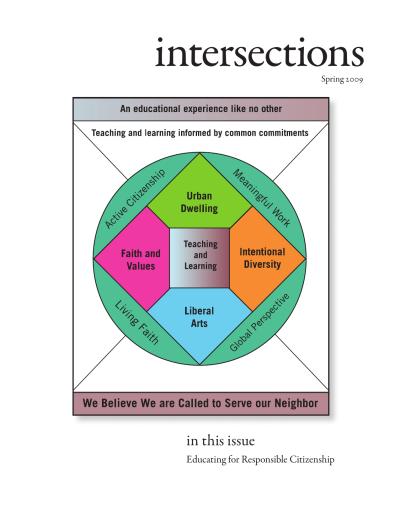
Students in the Cloud: Creating Digital Citizens
Jose Marichal
No. 29 · Spring 2009
Marichal weighs the utopian and dystopian views of the “networked information economy,” drawing on Yochai Benkler, Manuel Castells, Henry Jenkins, Cass Sunstein, Robert Putnam, Nicholas Carr, and Andrew Keen to chart the promise and peril of life “in the cloud,” and proposes Aristotle’s intellectual virtue of phronesis—developed through Hubert Dreyfus’s five stages of skill acquisition—as the goal of digital citizenship for college faculty and their students.
-
 Editorial
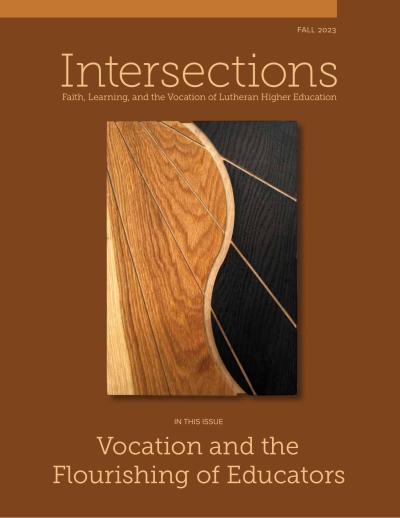
From the Editor: So That We, Too, May Flourish
Colleen Windham-Hughes
No. 58 · Fall 2023
Windham-Hughes introduces the 2023 VLHE conference theme of educator flourishing, drawing on Dr. Monica Smith’s plenary challenge — “How can we flourish if only some are centered and others are at the margins?” — and invites readers to ground themselves in Us/We, the cover art by Augustana graduate William Hatchet, and join the conversation.
-
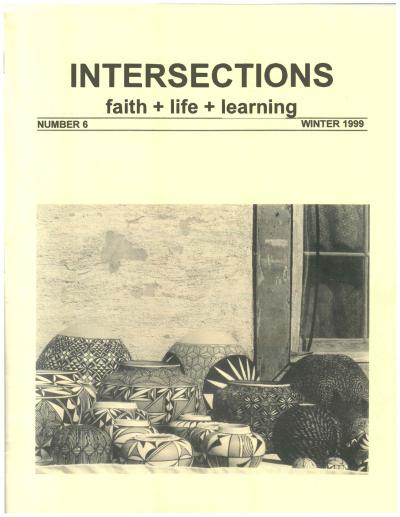 Editorial
From the Editor
Tom Christenson
No. 6 · Winter 1999
Christenson explains that three of the five papers from the 1998 Wittenberg Vocation of a Lutheran College conference appear here (with Robert Scholz and Cheryl Ney to follow in the next issue), passes on Andy Sheppard’s “Books for Belarus” appeal from Southwestern College, and reflects on Douglas John Hall’s The End of Christendom and the Future of Christianity—its claim that disengagement from cultural dominance is the prerequisite for faithful re-engagement, and its retrieval of Christ’s metaphors of “a little salt, a little yeast, a little light” as a possible session topic for a future VLC Conference.
-
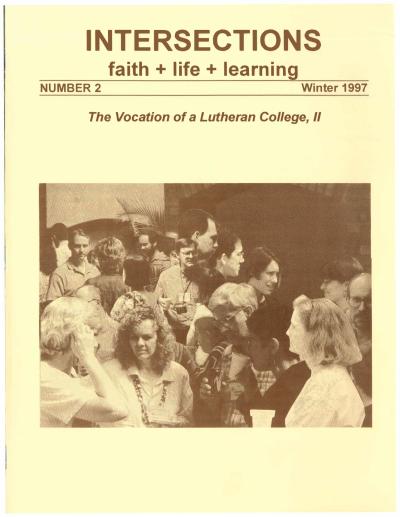 Editorial
From the Editor
Tom Christenson
No. 2 · Winter 1997
Christenson opens with an invitation for reader submissions to balance the conference-paper format of the first two issues, then asks how college and universities can turn students positively toward learning. Drawing on Aristotle’s claim that study is loved for its own sake (which students greet with disbelieving laughter) and Neil Postman’s The End of Education, he argues that students lack narratives within which learning makes sense and proposes four Lutheran mega-narratives—stewardship of creation, the freedom of the Christian, the sacramental presence of the transcendent in the concrete and ordinary, and vocation—that could inspire learning at the 28 ELCA colleges and universities.
-
 Response
A Call for Creative Education
Wendy McCredie
No. 3 · Summer 1997
McCredie of Texas Lutheran responds to Reichenbach by reframing the four ideas embedded in his claim that “the entire college community should be knowledgeably committed to the college’s mission”—community, knowledge, commitment, mission—and argues that the Lutheran tradition’s unwillingness to be separate from the world should lead us to educate the public about the Lutheran tradition rather than interrogate prospective employees about their faith. She questions whether agreement on “Christian values” is possible (or even Lutheran), and reads Reichenbach’s “creative education” as the dialectical tension between gospel and law, God’s love and our human limits, that members of communities related to the Lutheran church are uniquely positioned to inhabit.
-
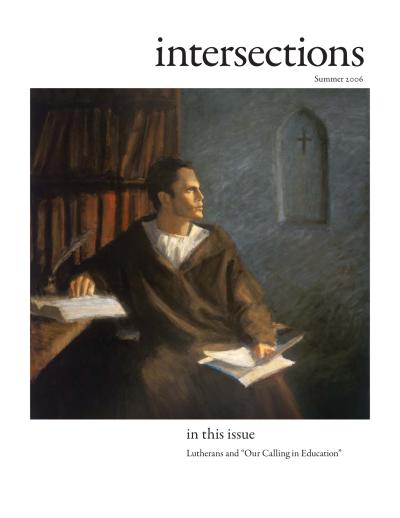 Article
Lutheran Education in the None Zone
Samuel Torvend
No. 23 · Summer 2006
Torvend, Associate Professor of Religion at Pacific Lutheran University, argues that any ELCA social statement on education must speak not only to those raised within the cultural and theological traditions of ELCA Lutheranism but also to the diverse communities of the “none zone” — the Pacific Northwest and other regions where religious affiliation is increasingly unaffiliated. The statement must therefore equip Lutheran colleges, congregations, and schools for engagement with religious pluralism and cultural diversity rather than presuming a Lutheran cultural baseline.