Low-Hanging Fruit, Moonshots, and Coffee: Dreaming Big Within and Beyond Our Limitations
Intersections No. 59 · Spring 2024
Vocation must be perpetually discerned. In today’s culture of constant change and pivoting, this discernment work is often bypassed as a quaint but pointless roadside attraction alongside the freeway towards progress/sustainability/innovation/retention (you pick!). Our team at Augsburg University’s Christensen Center for Vocation takes that roadside attraction very seriously. We design and lead transformative learning experiences for leaders intended to help them not only discern their organization’s calls but also take action that affirm these calls. Those learning experiences are only transformative if we create and facilitate the space for these leaders and teams to reflect on how the experience has impacted them. To do this, we have implemented an efficient and effective process. This article is a summary of that process and is shared here as a tool you can use with your teams when you find yourselves at a crossroads, when you have completed a workshop or continuing education experience, when a busy season or large event has come to an end. It is a process designed to help you listen to and trust your collective wisdom as you wonder what your next steps might be. It begins with the contemplative practice of the awareness examen, move into naming the low-hanging fruit that can be accomplished quickly and easily, invites you to dream big about the moonshots your team might take, and then lands with you naming the next few people you need to invite into the conversation.
Awareness Examen
The first step in this process is the Awareness Examen. The Examen was originally a part of the spiritual practices of Ignatius of Loyola. It was intended to be practiced at the end of the day as a way of reflecting back over the day, looking for moments of both desolation and consolation. Moments of desolation are moments when you experienced or encountered anxiety, fear, brokenness, etc. A moment of consolation is a moment in which you experienced peace, hope, healing, etc. Allowing your team to share their experiences of desolation and consolation during an event is a form of program evaluation, a way of relationally processing the experience together, an opportunity to develop trust with one another, and an important step towards allowing the collective wisdom of the group propel you work forward. Here is how you practice the Awareness Examen.
“Allowing your team to share their experiences of desolation and consolation during an event is a form of program evaluation, a way of relationally processing the experience together, an opportunity to develop trust with one another, and an important step towards allowing the collective wisdom of the group propel you work forward.”
Sit in a chair with your spine straight and your feet flat on the floor. Or find any position that is comfortable and possible for you and your body. Place your hands on your legs with your palms either up or down. Do a brief scan of your body from your scalp down to your feet. Notice where there is tension or discomfort. Do what you need to do to relieve that tension or discomfort—stretch, wiggle, crack, twist, etc. Then take three deep slow breaths in and begin to center yourself. Allow yourself to become aware of your breath and your body. Close your eyes and then reflect over the experience you want to process. Allow yourself to become aware of moments of desolation in this experience or over the particular time you are reflecting on. Once you’ve identified a moment, examine it. What was happening? Who was present? What were you feeling? Why would you categorize this as a moment of desolation? After sitting with it for a while, take a few more deep slow breaths and release the memory of that experience. When you are ready, allow yourself to reflect once again over the same period of time or experience. But this time, become aware of moments of consolation. Once you’ve identified a moment, examine it. What was happening? Who was present? What were you feeling? Why would you categorize this as a moment of consolation. After sitting with it for a while, take a few more deep slow breaths and release the memory of that experience. After completing this reflection, take some time to allow each person on your team to share both their moments of desolation and consolation with the team. Allow them to simply share what came to them without any judgment or commentary. Just let their words about those moments stand on their own.
Low-Hanging Fruit
After you have processed and shared your own experiences with an event you are then ready to begin looking forward. We always start this by asking teams to brainstorm what they think the low-hanging fruit might be for them. Low-hanging fruit are practices you and your team can implement almost immediately through minor changes and with the resources already at hand that could result in important and beneficial gains for the work you do. For example, at the end of a day long event focused on sustainability one team identified a quick and easy low-hanging fruit. They could add a “Support Our Work” button to their website where interested parties could simply make a financial donation. It would take one person about ten minutes to implement this low-hanging fruit. I tend to like to phrase the question this way, “Given the desolations and consolations we have heard from one another, what might be some of the low-hanging fruit our team can implement easily that would have a positive impact on our work?”
Moonshots
When we begin with low-hanging fruit we allow our team to honor its very real limitations as well as the assets they already possess. This next step, moonshots, invites your team to move beyond their current limitations and assets. A moonshot is exactly what it sounds like. The phrase originated from NASA’s Project Apollo from the late 1960’s and early 1970’s. It literally meant an attempt to land on the moon. It figuratively means a radical proposal or solution for a very challenging problem. For example, at the end of a DEI training a member of one leadership team said, “Rather than reading a land acknowledgment statement at the beginning of every large event on campus, what if we started a conversation with the local indigenous leaders in our area about what actual reparations might look like.” This is a moonshot. Again, I will often phrase the question this way, “Given all that we have seen and heard and shared here, what are some moonshots we might just dare to take?”
Coffee
After orbiting around our moonshots for a while, we invite teams back to terra firma. We know how busy we all become upon arriving home after an inspiring but exhausting team experience. We also know how lonely it can start to feel when working to implement some of the changes we dream of making. So the last step we ask teams to take is the naming of a few people with whom they each need to have a cup of coffee and a conversation regarding the low-hanging fruit and moonshots. These might be with high-level administrators who can make or break an idea, or they might be with the movers and shakers on campus who really know how to make things happen, or they might be with those naysayers who you know will be suspicious of whatever you propose. Naming these people together helps the team identify key people who need to be part of the movement. It also creates some immediate accountability. Now you each have someone you must reach out to and everyone on the team knows you have agreed to do this. Having these conversations helps to keep the momentum your team developed at the event and it helps build a coalition of people who will help lease the work.
“We also know how lonely it can start to feel when working to implement some of the changes we dream of making. So the last step we ask teams to take is the naming of a few people with whom they each need to have a cup of coffee and a conversation.”
Even though we talked about moonshots, we know this is not rocket science. What we are proposing is nothing amazing. Yet we have seen it be both an efficient and effective way for a team to wrap up their time at a shared experience together that helps them reflect upon the experience and identify some immediate and lofty goals. We often lose the insights we gain from a team experience when we transition away from them without pausing to reflect. This process has proven to be an effective way to honestly celebrate, lament, and move forward from an event with a community of collaborators and a sense of call to action. We hope it helps you do good work and love the work you do.
-
 Editorial
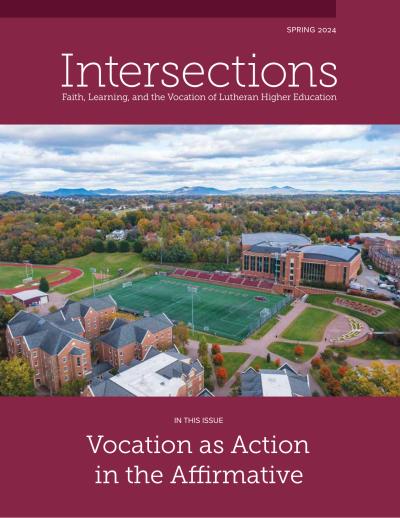
From the Editor: Vocation as Action in the Affirmative
Colleen Windham-Hughes
Windham-Hughes frames vocation as practicing “at the borders of our incompetence” — every small yes to the callings we experience, every effort made in the direction of life, is action in the affirmative — and previews the issue’s essays on diversity, transformation, AI, championship team culture, and dreaming big within and beyond our limitations.
-
Editorial
From the Publisher: Navigating Affirmative Action, DEI Policies, and Lutheran Vocational Identity
Lamont Anthony Wells
Wells surveys the converging pressures on NECU institutions — the unsettled landscape of affirmative action, political and academic scrutiny of DEI work, and the preservation of distinctively Lutheran vocational identity — and previews how the issue draws on affirmative practices, sociological viewpoints, and theological responses to navigate a path forward.
-
Article
Forming the Division for Access, Equity & Belonging at Susquehanna University
Amy Davis, Dena Salerno, María L. O. Muñoz, Nina Mandel, Scott Kershner
Five Susquehanna University colleagues trace the institution’s 166-year arc from a Missionary Institute founded to remove barriers to education through the formation of a new Division for Access, Equity & Belonging in 2023, arguing that access rooted in Lutheran origins must continue to drive policy revision, infrastructure, and belonging for minoritized communities today.
-
Article
On Recruiting Diverse Students, Rooted in Mission
Eric Rowell, Jason A. Mahn
Jason Mahn interviews Eric Rowell, Assistant Director of Admissions and Diversity Outreach at Augustana College, about how recruiting students from a wide variety of backgrounds — rooted in Augustana’s Lutheran commitment to vocation and educating across difference — remains essentially unchanged in the wake of the Supreme Court’s 2023 decisions on affirmative action.
-
Article
What Our Lutheran Heritage Entails for Lutheran Colleges and Affirmative Action
Mark Ellingsen
Ellingsen argues that the Lutheran Two-Kingdom Ethic — far from leading to political reaction — supports the church-relatedness of ELCA colleges and obligates them to keep affirmative action alive, even reading a Chief Justice Roberts “loophole” in Students for Fair Admissions v. Harvard as an open door for Black community partnerships, ELCA congregations, and Lutheran colleges to act in the affirmative.
-
Reflection
On the Power of Transformation and Becoming Human
Ken Yanai Flores
Flores, a Cal Lutheran sophomore, reflects on personal and institutional transformation as the slow work of shedding the armor of trauma responses, engaging discomfort rather than turning away, and trusting that the work of becoming more human — more empathetic, knowledgeable, and free — will be reflected in our institutions as well.
-
Article
The Critical Role of Lutheran Higher Education in the Age of Artificial Intelligence
Jose Marichal, Maya Goehner, Tyler Haug
A Cal Lutheran political science professor and two of his students draw on Rooted and Open to argue that Lutheran higher education is uniquely positioned to stake out a middle path between AI utopianism and AI doom — cultivating a “healthy sense of human limit,” resisting data colonialism, and forming students to see the neighbor rather than the enemy as the world becomes increasingly synthetic.
-
Article
Team Culture is Key to Success: Learning from Student-Athletes
Colleen Windham-Hughes
On a December weekend in “Championship City” Salem, Virginia, both California Lutheran’s Women’s Soccer Team and St. Olaf College’s Men’s Soccer Team won NCAA Division III national titles. Windham-Hughes talks with coaches, faculty mentors, and student-athletes about how off-the-field team culture — built on trust, relationships, and shared why — translates onto the pitch and into liberal arts and sciences education.
-
 Article
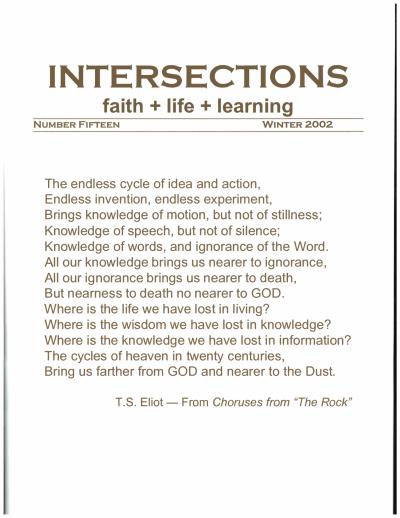
The Marks of an ELCA College: One Bishop's Reflections
Stanley Olson
No. 15 · Winter 2002
Olson, speaking as a bishop and “Harness Boy” whose job is to keep the church’s connections working, replaces his original four-noun outline (fealty, ingenuity, insouciance, focus) with eight marks the ELCA should be able to observe in its colleges: intentional Lutheran identity, significant Lutheran presence, Christian faith at every table, freedom of inquiry, coaching toward vocation, gravity and grace, nurtured community, and excellence by its own standards. Drawing on his survey of all twenty-eight ELCA college mission statements (two tables) and on Darrell Jodock and Mark Edwards, he argues that the Lutheran connection must be made explicit in mission, marketing, and faculty searches, and closes with six reciprocal expectations the colleges should hold of the ELCA—commissioner, mature parent, supporter of adventurous teenagers, advocate, steward of graduates, and a church faithful to its own Lutheran mission.
-
 Article
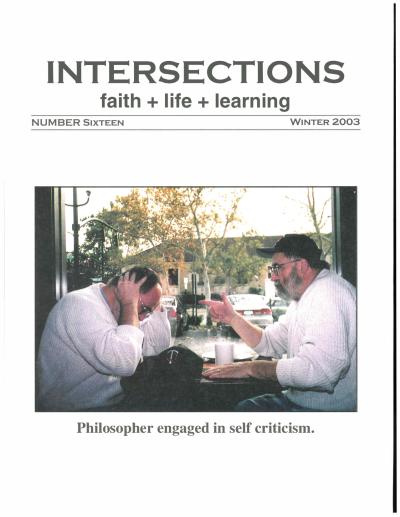
Do You Teach in a Different Manner at a Lutheran College? Unraveling the Lutheran Knot and Highlighting the Glory in the Theology of the Cross
Curtis L. Thompson
No. 16 · Winter 2003
Thompson argues that being Lutheran means having a “knot in the stomach”—a dialectical “Yes and No” tension between law and gospel, two kingdoms, Word and world—and that this knot is held together by Luther’s theology of the cross supplemented by an under-appreciated theology of glory in which God shines through human beings and creation. He then traces how the Lutheran knot shapes his teaching at Thiel College in the Religion department, the first-year team-taught “History of Western Humanities,” the second-year “Science and Our Global Heritage,” and his work as Co-Director of Thiel’s Global Institute, concluding that only such “dialectical doublespeak” leaves him with the “at-once dreaded and delightful dis-ease of the Lutheran knot.”
-
 Article
Rooting Science in Empathy: Growing Towards a Sustainable Science Practice for the 21st Century
Cheryl L. Ney
No. 7 · Summer 1999
Ney, a DNA biochemist turned feminist science educator at Capital University, traces her own search for the “grounding” of teaching from Ernest Boyer’s scholarship of teaching through Cathleen Loving’s Scientific Theory Profile, Evelyn Fox-Keller’s critiques of science as “truly masculine philosophy” and her biography of Barbara McClintock (“A Feeling for the Organism”), and Arnold Pacey’s definition of science as a web of technical, organizational, and cultural practice. Drawing on the Dutch Science Shops, the Loka Institute’s community-based research, and academic service learning, she calls for “sustainable science practice” rooted in empathy and asks whether Lutheran institutions have the courage to claim an institutional freedom of vision rather than reduce themselves to preparation for the job market.
-
 Article
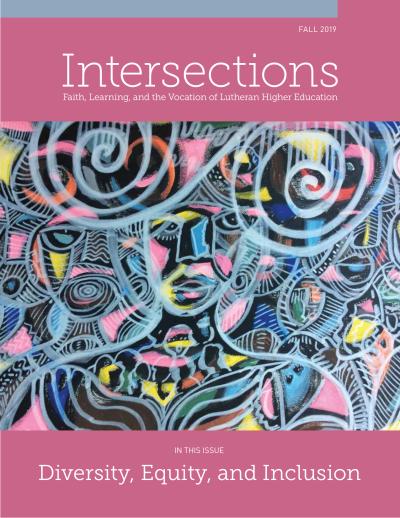
Learning the Language of Inclusive Pedagogy
David Thompson
No. 50 · Fall 2019
Thompson frames inclusive pedagogy as a foreign language with its own vocabulary, grammar, and cultural values, and reflects on a year of immersing himself in readings, conversations, and workshops — arguing that proficiency grows when instructors study and practice these languages repeatedly and atrophies when ignored.
-
 Article
Gen Z is Made for Lutheran Higher Education
W. Kent Barnds
No. 51 · Spring 2020
Barnds argues that Generation Z’s defining traits — socially responsible, purpose-driven, cost-conscious, culturally open, and tech-expectant — align almost perfectly with the missions of NECU institutions, and offers concrete suggestions (from replacing “vocation” with “purpose” to embracing Gen X parents as co-pilots) for Lutheran colleges seeking to attract and serve this generation.
-
 Editorial
From the Editor
Robert D. Haak
No. 22 · Spring 2006
Haak introduces himself as the new editor inheriting the journal from Tom Christenson and frames the issue around the question of what ELCA colleges might contribute to conversations about human sexuality. He summarizes the contributions of Yeager, Benne, Williams, Bussie, and Nack, and shares previously uncollected National Study of Youth and Religion data on the sexual attitudes and behaviors of Lutheran teens—including that 25% of regularly-attending ELCA teens report the church has done nothing to help them with their sexuality.