Pilgrimage (n.) 1. Intentional dislocation, for the sake of transformation, where the body teaches the soul.
Definition by Martha Stortz, Professor Emerita, Augsburg University
It was the second or third time that I attended the gathering of the ELCA Campus Pastors. There, I heard Marty Stortz give this definition of the word pilgrimage. Words usually have to be put to music for them to stick in my head, but her words have stuck with me for years; no need for a melody. Maybe it is because they are so true for the work we all do on college and university campuses.
Intentional dislocation—that is what students always do when they come to college. They intentionally make the choice to pick themselves up from their homes to be a part of a new community in a new location. The academic year of 2020-21 has had more dislocation than we could have ever imaged. It has also made all of us more intentional, including students. Just moving to campuses this year demanded more intentionality than usual. Facing a global pandemic, students had to make the difficult choice about whether to suspend their college pilgrimage, to take online classes, or to return to our campuses.
Wherever and however they go to college, they do so for the sake of transformation. They do not come to college in the hopes of staying the same. They come to college to learn, to take in new ideas, and to discover more about their gifts and skills, and how each can be leveraged for the flourishing of communities.
Each year, they grow and change and push themselves to try new things. Each year, they seek deeper understanding of themselves and others. They do all this for the sake of themselves and all those around them: friends, family members, and future colleagues they have yet to meet and cannot yet imagine.
The 2020-2021 academic year is like no other in the modern era. The college pilgrimage this year can feel desolate and interminable, with too many mundane days leaving us little energy for coping with mountainous terrain. Many of our classrooms mix virtual students with others sitting six feet apart. Many of them are moving in and out of quarantine. Many are finding it difficult to make friends with the people down the hall because everyone’s doors are expected to be closed; this is especially hard on first year students. Student organizations are primarily meeting online; energy for additional time on Zoom is very low. Opportunities to meet others who may see the world differently, and who would otherwise play a vital role in a student’s transformation, aren’t readily available.
This year calls us to be more intentional. Where will we put our energy while on this pilgrimage? This year asks us to listen even more closely to what our bodies are telling us about the state of our souls. Where will we find transformation despite and because of the dislocation?
“This year calls us to be more intentional.”
The discomfort of this moment may be a sign that things need to change; it may also mean growth and transformation. Discomfort may mean you need to move away from an expectation, idea, or activity. It may also indicate growing pains that students need to push through as they start to see the world in a new way. When students—as well as educators—are worn out, they should stop and think about what is essential to each day.
All of us should be learning to say “yes” to the things that are life-giving and “no” to things that deplete us. Ask questions that will help you be discerning in these moments. You will need those questions for your entire life.
The long pilgrimage of 2020-21 is unlike any other journey any of us have been on. It is calling us to be even more intentional with each step we take. We are called to be more open to the ways we can be transformed.
-
 Editorial
From the Publisher
Mark Wilhelm
Wilhelm argues that the “hackneyed” expressions of higher education — “you are not just a number,” “the college experience,” “risen to the challenge” — tell the simple truth about NECU institutions even as the Covid-19 pandemic has pushed budgets, employees, and campus life to the breaking point.
-
Editorial
From the Editor
Jason A. Mahn
Mahn narrates a year of crisscrossing pandemics — Covid-19, economic collapse, partisan politics, and the long pandemic of white supremacy revealed anew by the murder of George Floyd — and argues that Lutheran liberal arts schools, by educating for vocation, are uniquely poised to help students respond with character and capable callings.
-
Article
A New Image for an Ancient Call: Lutheran Higher Education Amidst Pandemics Today
Caryn Riswold
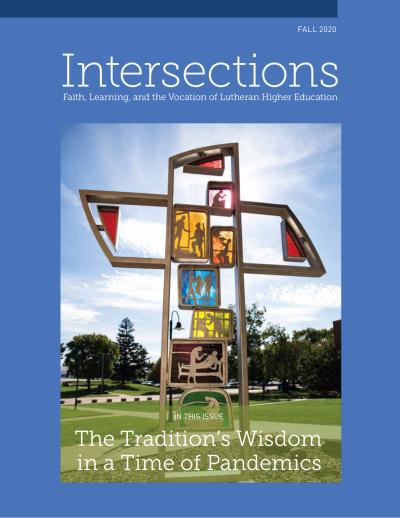
Pairing Wartburg’s Lebenskreuz sculpture with the Matthew 25 acts of mercy and the commitments of Rooted and Open, Riswold reads the calls to feed the hungry, welcome the stranger, and care for the sick as urgent summons for Lutheran higher education in a year of overlapping pandemics — and as a call to dismantle the structures that produced them.
-
Article
Learning from Luther on Covid-19
Carl Hughes
Reading Martin Luther’s 1527 treatise “Whether One May Flee from a Deadly Plague,” Hughes finds practical and spiritual guidance for a pandemic age: serve the neighbor, follow medical experts, honor those whose vocations put them at risk, and trust that even when we fail, God will not abandon the community.
-
Article
Radical Hospitality on Haunted Grounds: Anti-Racism in Lutheran Higher Education
Krista E. Hughes
Writing from Newberry College’s campus on land once home to the Cherokee and within a day’s drive of Mother Emanuel A.M.E., Hughes argues that NECU’s call to “practice radical hospitality” demands that predominately white institutions open themselves to the hauntings of racism — pursuing belonging rather than mere welcome, and risking kenotic transformation of institutional identity itself.
-
Article
Activism, Justice, and the Danger of Silence
Dezi Gillon
In conversation with Jason Mahn, Augustana College alumnux Dezi Gillon traces the call to action they felt as a Black student organizing for Black Lives Matter on a predominately white campus — through seminary, art, spirituality, and restorative justice work — and warns white professors that staying silent “actually speaks volumes.”
-
Article
Leadership in Lutheran Key at a Time of Pandemics
Deanna Thompson
Thompson draws on Luther’s theology of the cross and Shelly Rambo’s theology of trauma to sketch a Lutheran model of leadership for a season of pandemics — one that is attentive to pain, responsive to need, and intentionally nourished by food, friends, and deep conversation.
-
Article
Through Truth to Freedom—by Way of Reconciliation
Paul C. Pribbenow
Reflecting on Augsburg’s 150th-anniversary motto “Through truth to freedom,” Pribbenow argues that in a season of three pandemics — pandemic illness, economic collapse, and the racial sin laid bare by the murder of George Floyd — higher education’s most authentic work is to educate for truth and freedom by way of confession and reconciliation.
-
Article
Finding Purpose in Chaos: Reflection In and Beyond the Public Health Classroom
Lena R. Hann
When the pandemic hit her new public health professionalism course, Hann recalibrated her teaching from the “how” of professional preparation to the “why” of vocational reflection — and recounts how Augustana public health students and alumni found purpose in the chaos through food banks, disaster response, palliative care, and research on health inequities.
-
Article
Called to Flourish: An Ethic of Care
Mindy Makant
Drawing on Lenoir-Rhyne’s core value of Care, Glennon Doyle’s Untamed, Darrel Jodock’s “Gift and Calling,” and Luther’s plague-era practice of opening his home to the sick, Makant argues that flourishing is interdependent — that self-care is a means to extending care, and that an ethic of care is the meaningful, transformative work to which Lutheran liberal arts education is called.
-
Article
Called to the Moment: A New Vocation for Lutheran Colleges
W. Kent Barnds
After a derecho ravaged Iowa in August 2020 and Pastor Katy Warren preached on 1 Peter 4, Barnds watched line workers, neighbors, and Augustana colleagues simply show up where they were needed — and proposes that the true vocation of a Lutheran college may be making the case for “meeting immediate need with a deep willingness” alongside the longer work of vocational discernment.
-
 Article
The Ought
Ned Wisnefske
No. 19 · Summer 2004
Wisnefske observes that students and faculty raise contradictory objections to moral education—that students are already morally formed, and that teachers must not form them—and argues that both share the same fear of “the Ought.” He proposes that the Ought is best encountered not in front of us but behind us, nudging us, as we exercise impartiality, sympathy, and free will and discover that the persons participating in moral inquiry deserve respect; the Ought can then reform our past formations and transform our wants, so that it is never too late, or a mistake, to be shaped by it.
-
 Editorial
From the Publisher
Lamont Anthony Wells
No. 62 · Fall 2025
5 min audio
Wells frames the issue as a record of the 2025 VLHE Conference at Augsburg under the theme “Ethical Leadership in a Changing World,” arguing that vocation is never solitary but a collective, public witness of ethical formation, theology and care, flourishing and belonging, and leadership rooted in God’s grace.
-
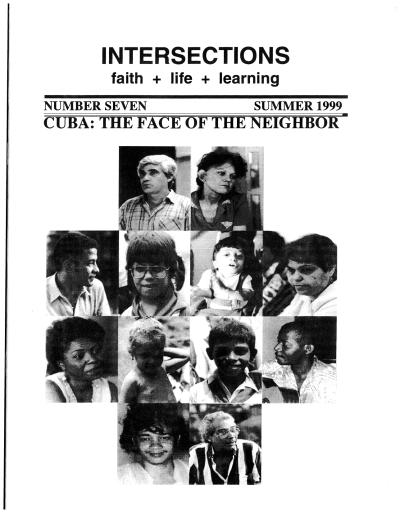 Article
The Face of the Neighbor: An Interview with Four Capital University Faculty About Their Recent Visit to Cuba
Brian Forry Wallace, Michael Yosha, Reg Dyck, Susan Narita
No. 7 · Summer 1999
Four Capital University faculty—political scientist Brian Wallace (returning to Cuba a third time after the 1994 boat lift), English professor Reg Dyck, ESL teacher Susan Narita, and political scientist Michael Yosha—recount their summer 1998 trip with Pastors for Peace, describing Cuban priorities of education, health care, and military (in that order), the cultural richness of Havana from sixteenth-century cloisters to Miramar, the Cuban Foreign Service’s vision of a Scandinavian-style democratic socialism, the counter-productive U.S. embargo (including its effect on kidney dialysis machines), Castro’s 1991 reconciliation with religious communities, and a recurrent image of a little girl named Marguerite singing at a school for amputee and terminally ill children. The interview was conducted by Capital senior Jessica Brown and Tom Christenson.
-
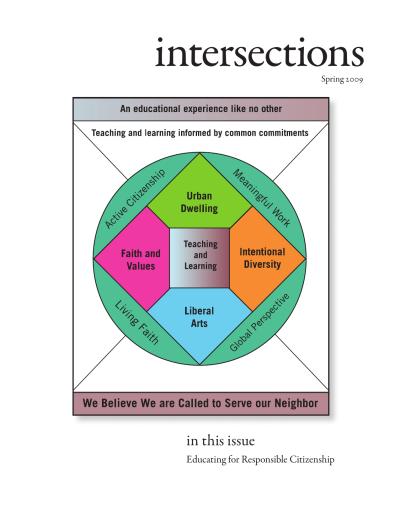 Article
Seeking the Common Good: Lutheran Contributions to Global Citizenship
Wanda Deifelt
No. 29 · Spring 2009
Deifelt draws on Luther’s account of neighborly love in “The Freedom of a Christian” and on his Two Kingdoms theology to argue that a Lutheran ethics of care fosters a sense of responsibility, accountability, and compassion that broadens citizenship beyond rights and virtues. Engaging William Galston’s typology of civic virtues, Sylvia Walby on women’s citizenship, Serene Jones on communitarianism, and Manuel Castells on globalization, she proposes that Lutheran theology equips the church to educate for transformative participation in world affairs.
-
 Reflection
On the Power of Transformation and Becoming Human
Ken Yanai Flores
No. 59 · Spring 2024
Flores, a Cal Lutheran sophomore, reflects on personal and institutional transformation as the slow work of shedding the armor of trauma responses, engaging discomfort rather than turning away, and trusting that the work of becoming more human — more empathetic, knowledgeable, and free — will be reflected in our institutions as well.
-
Article
Low-Hanging Fruit, Moonshots, and Coffee: Dreaming Big Within and Beyond Our Limitations
Jeremy Myers
No. 59 · Spring 2024
Myers shares the process used by Augsburg’s Christensen Center for Vocation to help teams move from a shared experience to next steps — an Ignatian-rooted Awareness Examen followed by naming low-hanging fruit, moonshots, and the coffee conversations that build the coalition to make it all happen.