Plague, pestilence, pandemic—these are not new phenomena. As someone who studies the history of theology, I think that one of the blessings of being part of a religious tradition is being able to look back on how people of faith in ages past have grappled with the scourges they faced.
I have been thinking lately of a short treatise that Martin Luther wrote in 1527, titled “Whether One May Flee from a Deadly Plague.” With all his talk of evil “vapors,” “mists,” and “spirits,” Luther definitely sounds like someone from another era. Then again, he also seems to understand the basics of respiratory transmission. Throughout the treatise, he actually shows a surprising degree of understanding of the nature of contagion and what we would today call public health. In fact, I would say that he has a lot of practical and spiritual guidance for our cities and our country as we struggle with the Covid-19 pandemic.
Luther’s response to pandemic centers around the theme of community. He reminds us that, like it or not, “we are bound to each other.” We live next to each other, we eat each other’s food, and we breathe each other’s air. On the one hand, he says, it is community that makes a pandemic possible, just like it makes a mass fire possible. On the other hand, he insists that the very thing that puts us at risk is also the very thing that can save us. If there’s a fire burning in our house, it is our neighbors who will help us put it out. So in a time of plague, God calls neighbors to take care of neighbors and to work together to restore the health of the community.
What does it mean to be part of a community during a time of plague? It starts, as it always does, with looking out for others rather than just ourselves. Like Jesus before him, Luther says that loving God means loving people. As he puts it, “service to God is service to our neighbor.”
For Luther, serving one’s neighbor in a time of plague requires first and foremost following the advice of medical experts. He insists that God has “created medicines” and “provided us with guidance” from doctors. He says that to put everything in God’s hands and then ignore experts’ advice would be like refusing to fetch water when your neighbor’s house is on fire.
“What does it mean to be part of a community during a time of plague?”
In Luther’s time as in our own, doctor’s orders started with vigilance about sanitation. Sure, pray to God for protection, Luther says, but then “fumigate, help purify the air, administer medicine, and take it.” Luther practically issues a lock-down order: “Shun persons and places wherever your neighbor does not need your presence.” He goes so far as to say that negligence in these matters is akin to murder. He has especially harsh words for anyone who has symptoms of the disease and doesn’t take precautions not to infect others.
Within the community, Luther says that some people have special responsibilities. For example, doctors and nurses have a calling from God to care for the sick and the dying. In our time as in Luther’s, following this calling puts their own lives at risk. Luther promises that God is with them in what they do and says that they should be honored in the community for their selflessness.
Similarly, Luther argues that civic officials are called to be competent and responsible leaders in a time of crisis, always looking out, not for their own interests, but for the good of the whole. He insists that they have a particular duty to look out for the poor and the weak. When they flee from these responsibilities, he says, they sin against God.
Like it does for most, the pandemic currently sweeping our country and my city makes me fearful. As someone married to a hospital nurse, I am especially worried for my wife’s safety and that of my family. Still, Luther reminds me that we have faced pandemics like this before. We can get through them, with the help of God, if we work together for the good of all.
“Luther argues that civic officials are called to be competent and responsible leaders in a time of crisis, always looking out, not for their own interests, but for the good of the whole.”
So honor medical professionals and trust their advice. Thank grocery store workers, delivery personnel, and all those who risk their safety for the benefit of others. Remember that whenever we wash our hands, or check in on a neighbor in need, or stay home when we would rather go out, we are truly doing God’s work. Finally, as Luther would certainly remind us, have faith that even when we fail, God will never abandon our community or anyone within it.
-
 Editorial
From the Publisher
Mark Wilhelm
Wilhelm argues that the “hackneyed” expressions of higher education — “you are not just a number,” “the college experience,” “risen to the challenge” — tell the simple truth about NECU institutions even as the Covid-19 pandemic has pushed budgets, employees, and campus life to the breaking point.
-
Editorial
From the Editor
Jason A. Mahn
Mahn narrates a year of crisscrossing pandemics — Covid-19, economic collapse, partisan politics, and the long pandemic of white supremacy revealed anew by the murder of George Floyd — and argues that Lutheran liberal arts schools, by educating for vocation, are uniquely poised to help students respond with character and capable callings.
-
Article
A New Image for an Ancient Call: Lutheran Higher Education Amidst Pandemics Today
Caryn Riswold
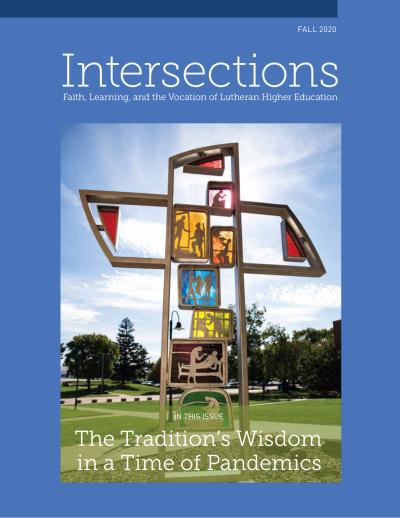
Pairing Wartburg’s Lebenskreuz sculpture with the Matthew 25 acts of mercy and the commitments of Rooted and Open, Riswold reads the calls to feed the hungry, welcome the stranger, and care for the sick as urgent summons for Lutheran higher education in a year of overlapping pandemics — and as a call to dismantle the structures that produced them.
-
Article
Radical Hospitality on Haunted Grounds: Anti-Racism in Lutheran Higher Education
Krista E. Hughes
Writing from Newberry College’s campus on land once home to the Cherokee and within a day’s drive of Mother Emanuel A.M.E., Hughes argues that NECU’s call to “practice radical hospitality” demands that predominately white institutions open themselves to the hauntings of racism — pursuing belonging rather than mere welcome, and risking kenotic transformation of institutional identity itself.
-
Article
Activism, Justice, and the Danger of Silence
Dezi Gillon
In conversation with Jason Mahn, Augustana College alumnux Dezi Gillon traces the call to action they felt as a Black student organizing for Black Lives Matter on a predominately white campus — through seminary, art, spirituality, and restorative justice work — and warns white professors that staying silent “actually speaks volumes.”
-
Article
Leadership in Lutheran Key at a Time of Pandemics
Deanna Thompson
Thompson draws on Luther’s theology of the cross and Shelly Rambo’s theology of trauma to sketch a Lutheran model of leadership for a season of pandemics — one that is attentive to pain, responsive to need, and intentionally nourished by food, friends, and deep conversation.
-
Article
Through Truth to Freedom—by Way of Reconciliation
Paul C. Pribbenow
Reflecting on Augsburg’s 150th-anniversary motto “Through truth to freedom,” Pribbenow argues that in a season of three pandemics — pandemic illness, economic collapse, and the racial sin laid bare by the murder of George Floyd — higher education’s most authentic work is to educate for truth and freedom by way of confession and reconciliation.
-
Article
Finding Purpose in Chaos: Reflection In and Beyond the Public Health Classroom
Lena R. Hann
When the pandemic hit her new public health professionalism course, Hann recalibrated her teaching from the “how” of professional preparation to the “why” of vocational reflection — and recounts how Augustana public health students and alumni found purpose in the chaos through food banks, disaster response, palliative care, and research on health inequities.
-
Reflection
The Long Pilgrimage of 2020-21
Kara Baylor
Drawing on Martha Stortz’s definition of pilgrimage as “intentional dislocation, for the sake of transformation, where the body teaches the soul,” Baylor invites students and educators worn out by the 2020-21 academic year to ask what is essential, to listen to what their bodies are telling their souls, and to be more open to the transformations the dislocation might still yield.
-
Article
Called to Flourish: An Ethic of Care
Mindy Makant
Drawing on Lenoir-Rhyne’s core value of Care, Glennon Doyle’s Untamed, Darrel Jodock’s “Gift and Calling,” and Luther’s plague-era practice of opening his home to the sick, Makant argues that flourishing is interdependent — that self-care is a means to extending care, and that an ethic of care is the meaningful, transformative work to which Lutheran liberal arts education is called.
-
Article
Called to the Moment: A New Vocation for Lutheran Colleges
W. Kent Barnds
After a derecho ravaged Iowa in August 2020 and Pastor Katy Warren preached on 1 Peter 4, Barnds watched line workers, neighbors, and Augustana colleagues simply show up where they were needed — and proposes that the true vocation of a Lutheran college may be making the case for “meeting immediate need with a deep willingness” alongside the longer work of vocational discernment.
-
 Editorial
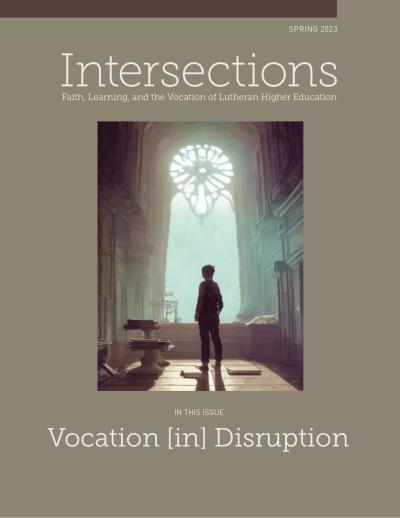
From the Editor: Vocation [in] Disruption
Colleen Windham-Hughes
No. 57 · Spring 2023
Windham-Hughes introduces the issue’s theme — vocation amidst disruption — previews new features including contributor contact information, a study guide for So That All May Flourish, and invited pieces on reproductive rights, and shares results from the Fall survey of readers.
-
 Editorial
From the Publisher
Mark Wilhelm
No. 32 · Spring 2010
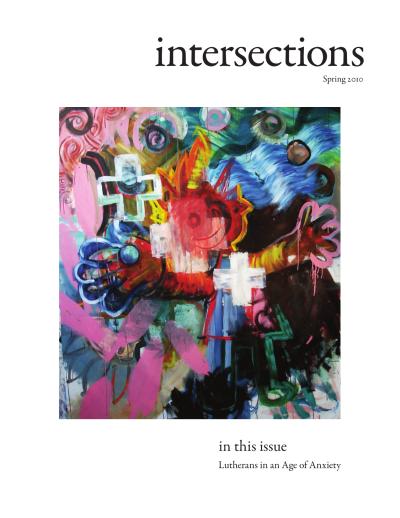
Wilhelm invites readers to enjoy or revisit the presentations from the 2009 Vocation of a Lutheran College Conference, then reflects on the Higher Learning Commission’s denial of Dana College’s request to transfer accreditation to a for-profit purchaser—an event that effectively ended Dana’s sale and prompted ELCA colleges and universities to welcome Dana students and faculty—and argues that the irreversible entry of for-profit operators into liberal arts education gives the Lutheran community further reason to continue the conversation about the vocation of a Lutheran college.
-
 Editorial
From the Editor
Tom Christenson
No. 3 · Summer 1997
Christenson explains that this issue breaks from the first two issues’ single-focus pattern to feature three principal papers on the environment, the education of desire, and hiring and personnel policies, plus two poems and a piece of reflective bemusement. He then commends George Marsden’s The Outrageous Idea of Christian Scholarship (Oxford, 1997) and challenges Lutheran scholars to articulate how the particulars of their faith inform their scholarship—in conversation with Calvinist work like Nicholas Wolterstorff’s Reason Within the Bounds of Religion and Art in Action—rather than remaining silently complicit in the view that faith has no place in the academy.
-
 Institutional Focus
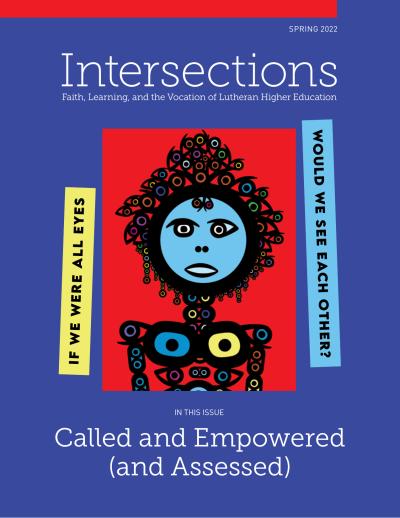
Sharing the Gift of Vocation at (and beyond) Augsburg University
Paul C. Pribbenow
No. 55 · Spring 2022
Pribbenow, drawing on a 2022 NetVUE panel with Dorothy Bass and Jodi Porter, considers how the gift of vocation forged with undergraduates can be extended — beyond undergraduate campuses to graduate students, faculty, and staff; across the vocational lifespan from high schoolers to alumni navigating the “gig economy”; and into accompaniment of faith communities through Augsburg’s Riverside Innovation Hub.
-
 Article
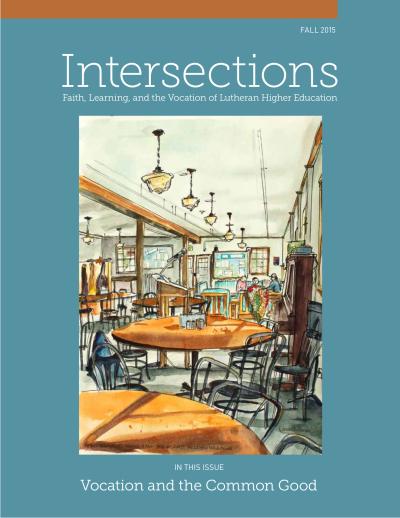
Making the Common Good Common
René Johnson
No. 42 · Fall 2015
Johnson reflects on the Servant Leadership House for women at Finlandia University — from a sweaty trip to the local landfill to weekly habits of campus presence — to argue that the common good becomes truly common when it is embedded in the ordinary details of vocational living, and that Luther’s sense of neighbor calls servant leaders to “little bits of good” as well as to more radical pursuits of justice.
-
 Article
Lutheran Identity, Academic Integrity, and Religious Diversity
Storm Bailey
No. 25 · Spring 2007
Bailey argues that one might rightly say of a college “that’s a pretty good school because it’s religious,” defending the proposition under three headings: academic and curricular virtues, free inquiry, and religious diversity. Drawing on Mark Schwehn’s Exiles from Eden, Richard Hughes on the Lutheran tradition’s “most potent theological resources” for the life of the mind, Parker Palmer, Lendol Calder, Mill’s On Liberty, Newman’s Idea of a University, and the AAUP’s 1940 Statement, he proposes a “critical mass” alternative in which the Lutheran commitment to truth-seeking and self-critique itself requires—rather than tolerates—a religiously diverse faculty whose opposing voices are needed for the mission to flourish.