Associations of colleges and universities are commonplace in American higher education. Many of these associations are found in the community of church-related colleges and universities. Before 2016, however, the colleges and universities of the ELCA had never been organized into an association. They shared in many others, including an association composed of schools from pan-Lutheran church-bodies in the United States and Canada (including those outside the ELCA), known as the Lutheran Educational Conference of North America (LECNA). But until 2016, ELCA colleges and universities never had their own association.
Now they do. The new association, called the Network of ELCA Colleges and Universities, was established through a yearlong process in 2015, culminating in the first meeting of the Network’s Board of Directors in February 2016. The Network was established as a missional collaboration of the churchwide organization and the twenty-six colleges and universities that are part of the ELCA. This new association will help ELCA schools and the churchwide organization sustain a common identity and shared mission in higher education. (The mission will include maintaining relationships with LECNA, in which ELCA colleges and universities continue to hold membership.)
The Network was created by the churchwide organization and the colleges and universities in response to lost capacity in the churchwide organization to maintain connections and programming among the ELCA’s twenty-six colleges and universities. The Network is not an additional administrative structure that will burden ELCA’s mission of higher education with bureaucratic bloat. The new Network replaces former churchwide units devoted to higher education that had to be eliminated as the churchwide organization’s annual budget shrank from approximately $100 million in the 1990s (soon after the creation of the ELCA) to approximately $50 million today. The Network of ELCA Colleges and Universities is a collaborative solution to address a problem of diminished capacity within the churchwide organization to provide leadership for ELCA higher education.
The Network came into being through the work of the college and university presidents and churchwide leaders over a period of five years. A special word of thanks goes to Elizabeth Eaton, Presiding Bishop of the ELCA; Stephen Bouman, executive director of the Domestic Mission unit; and Michael Maxey, President of Roanoke College and Chairperson of the President’s Council, whose agreements in March 2015 about the mechanism of this new collaboration made it possible for the presidents to take the final steps toward creation of the new Network.
As I write this note, I am preparing for the first meeting of the Executive Committee of the Network. The committee’s meeting will set in motion, in the words of President Mike Maxey, the pledge of this groundbreaking Network to “develop and sustain a stronger, more viable vision of Lutheran higher education in the ELCA. The links between and among our colleges and universities and the ELCA will make all of us stronger, separately and collectively.”
I think Tom Christensen and the other Lutheran higher education leaders who invented Intersections twenty years ago would be proud.
-
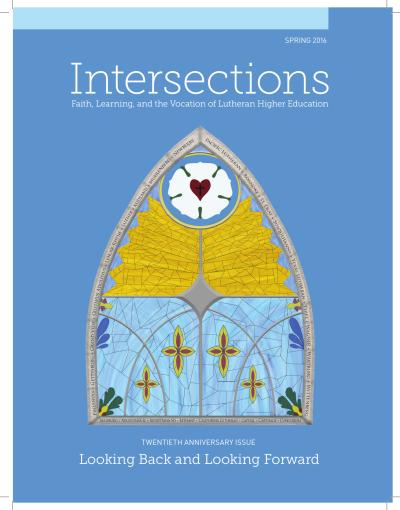 Editorial
From the Editor
Jason A. Mahn
Mahn introduces the twentieth anniversary issue of Intersections, recalling its 1996 birth at Capital University “in the twinkle of an idea” in the mind of founding editor Tom Christenson, and previewing essays by Wilhelm, Amamoto, Kleinhans, Glass Perez, and Simmons that together look back at twenty years of the journal and forward to its work in the decades to come.
-
Article
The Vocation of Intersections on its Twentieth Birthday
Jason A. Mahn, Robert D. Haak, Tom Christenson
The three editors of Intersections — Bob Haak, Jason Mahn, and Tom Christenson (in spirit, following his death in 2013) — trace the twenty-year vocation of the journal itself: its 1996 birth at Capital University; its coming-of-age years of debate over institutional markers, two-kingdoms theology, and Lutheran identity; the ascendancy of “education for vocation” as the central marker of Lutheran higher education; and its ongoing identity in relation to a changing ELCA and to the broader cultural conversation about purpose, wholeness, and the vocation of higher education.
-
Article
The Vocation Movement in Lutheran Higher Education
Mark Wilhelm
Wilhelm offers a brief history of the “vocation movement” in ELCA higher education, arguing that it arose as Lutheran leaders moved beyond institutional markers (percentages of Lutheran students, faculty, and board members) and the collapse of ethnic, separatist Lutheranism to re-ground their schools’ identity in a 500-year-old intellectual tradition that educates the whole person for vocation and the common good — an educational ideal open to persons of any religious or non-religious conviction.
-
Article
Diversity and Dialogue: Twenty Years and Counting
Florence D. Amamoto
Twenty years after her essay “Diversity and Dialogue” in the first issue of Intersections, Amamoto returns to Gustavus Adolphus College to reflect on what has changed and what has not: rising numbers of students of color and international students, faculty turnover and increased publication pressures, the disappearance of the Center for Vocational Reflection, and the renewed importance of articulating Gustavus’s Swedish Lutheran heritage and inclusive sense of community in a tuition-dependent, cost-cutting environment.
-
Article
Distinctive Lutheran Contributions to the Conversation about Vocation
Kathryn A. Kleinhans
Kleinhans surveys the recent resurgence of vocation talk in American higher education — from Frederick Buechner’s widely quoted definition to Lilly Endowment’s PTEV grants and the CIC’s NetVUE Scholarly Resources Project — and uses her chapter in At This Time and In This Place: Vocation and Higher Education to highlight distinctively Lutheran emphases: vocation grounded in creation rather than redemption, the given-ness of multiple simultaneous callings, and a frank acknowledgment of the constraints and “dark side” of vocation.
-
Article
Moving Forward by Looking Back: Lutheran Vocation as Foundation for Interfaith Ministry
Kristen Glass Perez
Recounting how Augustana students mentored her into the role of presider at a campus vigil following the 2012 Sikh Temple of Wisconsin shooting, Glass Perez proposes that interfaith understanding become a mode of praxis for the twenty-first century Lutheran college. Drawing on Engaging Others, Knowing Ourselves and Interfaith Youth Core’s leadership practices, she urges ELCA schools to develop a common language linking interfaith engagement to vocational exploration and to the wider mission of the church.
-
Article
Semper Reformanda: Lutheran Higher Education in the Anthropocene
Ernest L. Simmons
Simmons enumerates the ELCA initiatives over the past twenty years that have helped Lutheran higher education retrieve a Christian understanding of vocation, then argues that the looming reality of human-caused climate change — the geological epoch of the Anthropocene — now requires Lutheran liberal arts education to prepare students for “planetary citizenship” as sustainability leaders, drawing on the classical Trivium, Luther’s panentheism, and a quantum-physics-inflected theology of divine entanglement and hope.
-
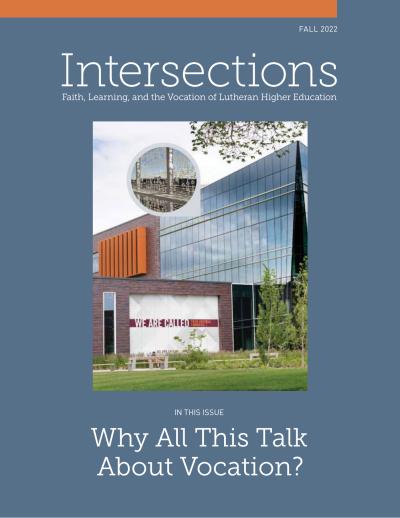 Article
Why All This Talk About Understanding the Mission of NECU Member Institutions as a Vocation?
Mark Wilhelm
No. 56 · Fall 2022
In his valedictory keynote, retiring NECU Executive Director Mark Wilhelm argues that Lutheran higher education is, properly understood, vocation-based education — outlining four core practices recovered over the past fifty years and naming the constructive and corrective work still to be done, including a fuller embrace of DEIJ and of the diverse vocations of NECU’s 27 institutions.
-
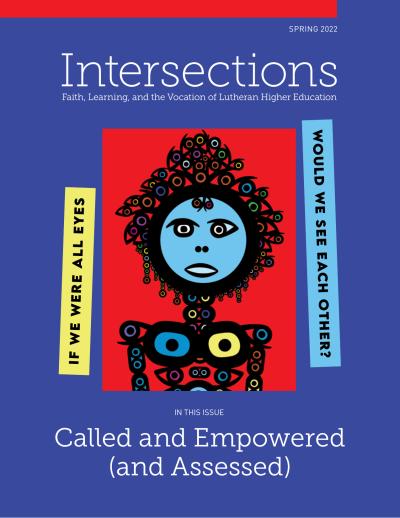 Editorial
From the Publisher
Mark Wilhelm
No. 55 · Spring 2022
Wilhelm announces his planned retirement on January 31, 2023, after serving as the founding executive director of the Network of ELCA Colleges and Universities, and gives thanks for the privilege of helping NECU articulate a shared vision for Lutheran higher education in twenty-first-century North America.
-
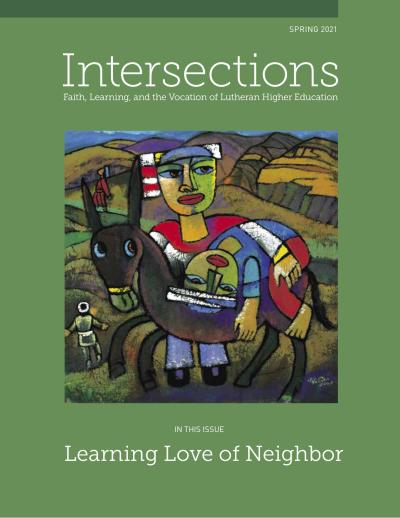 Editorial
From the Publisher
Mark Wilhelm
No. 53 · Spring 2021
Wilhelm reflects on an NPR report of teenagers’ pandemic diaries and the fraught Christian history of struggling to live out Jesus’s ethic of love, framing the issue as a record of NECU institutions working out how to act for the common good through the pandemic of 2020–2021.
-
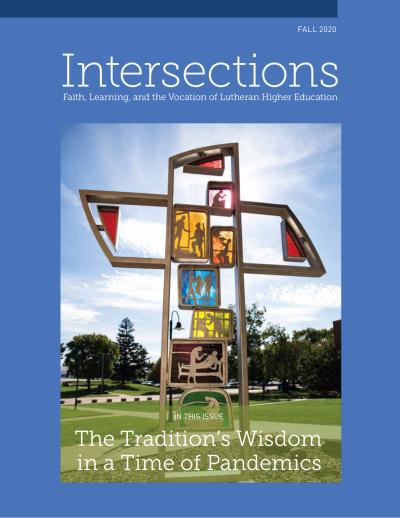 Editorial
From the Publisher
Mark Wilhelm
No. 52 · Fall 2020
Wilhelm argues that the “hackneyed” expressions of higher education — “you are not just a number,” “the college experience,” “risen to the challenge” — tell the simple truth about NECU institutions even as the Covid-19 pandemic has pushed budgets, employees, and campus life to the breaking point.
-
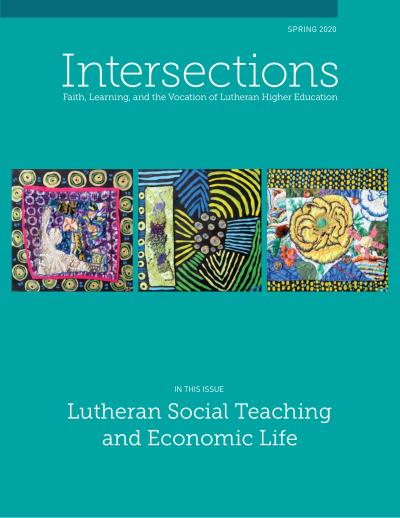 Editorial
From the Publisher
Mark Wilhelm
No. 51 · Spring 2020
Wilhelm frames the issue by tracing how Lutheran educational ideals — once a primary source of contemporary higher education — were masked in the United States, and introduces a NECU initiative that uses the case of business ethics to explore Lutheran social teaching as an academic resource.
-
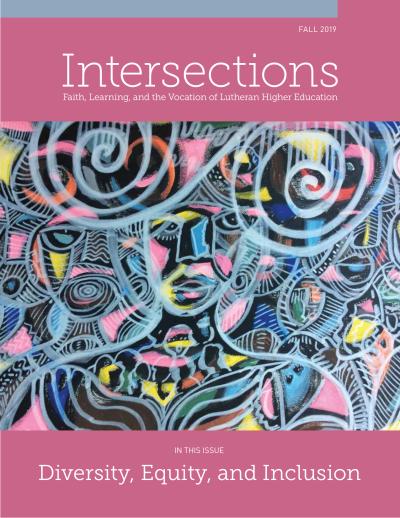 Editorial
From the Publisher
Mark Wilhelm
No. 50 · Fall 2019
Wilhelm frames the issue by noting that a federal court’s vindication of Harvard’s race-conscious admissions process is a win for higher education’s commitments to diversity, equity, and inclusion — and argues that for Lutheran higher education, the commitment to diversity is an old and foundational claim, rooted in Christianity’s openness to all and reflected in the four diverse gospels of the New Testament.
-
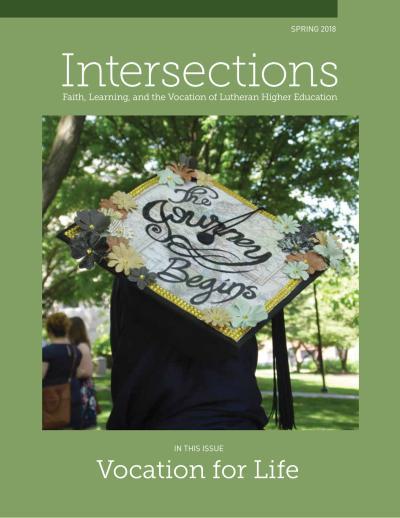 Editorial
Guest Editorial
Lynn Hunnicutt
No. 47 · Spring 2018
Hunnicutt traces the etymology of vocation through its cognates — evoke, provoke, convocation — to argue that vocation presumes a relationship between caller and called, that callings are often grounded in ordinary words and humble lives, and that recognizing vocation as plural and lifelong relieves colleges of the pressure to help students find a single calling while on campus.
-
 Response
Renewing Our Journey: Some Thoughts on Pursuing the Truth
John Rehl
No. 1 · Summer 1996
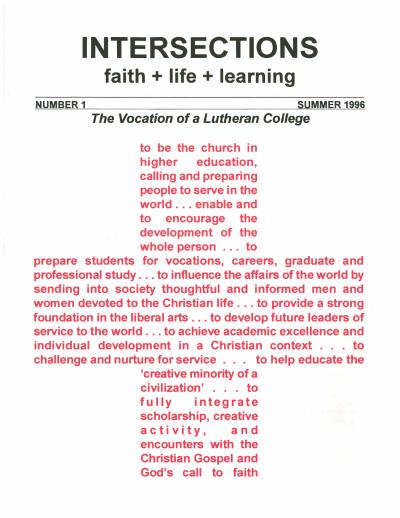
Rehl, a Capital University graduate pursuing doctorates in theology at Chicago and in economics at Wisconsin, takes up Schwehn’s invitation to think again on the nature of truth. He sets aside truth as information, as object, and as mere words; recasts the church-related college’s task as a renewed emphasis on classroom teaching (Kierkegaard’s teacher as midwife) and on brave, articulate professors. He calls for moral education in courage, discipline, patience, and love, illustrates the costs of the fact-value split with examples from economics, and argues that we honor Lutheran heritage not by preserving it as a museum piece but by testing it—Luther’s theology of the cross over a theology of glory—and by preparing students for a world of Untruth, strengthened (with Julian of Norwich) by the promise that they will not be overwhelmed.
-
 Article
Hospitality to the Wild
Laura M. Hartman
No. 54 · Fall 2021
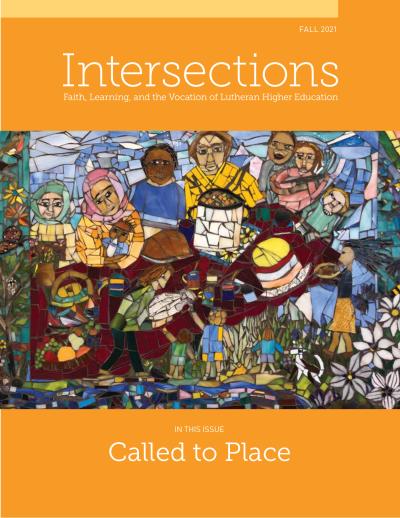
Drawing on research with a Wild Ones Native Landscaping chapter and Marilyn Matevia’s ethic of “creature comfort,” Hartman argues that Christian hospitality must extend to non-human animals and plants — and asks whether college campuses can foster not just human diversity but biodiversity.
-
 Editorial
From the Publisher
Mark Wilhelm
No. 37 · Spring 2013
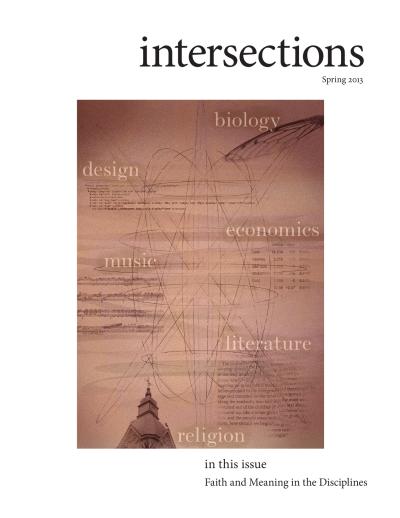
Wilhelm reports that decisions at the February 2013 LECNA and ELCA presidents’ meetings authorized reviews of funding and organizational practices and appointed a working group to draft a presidential statement on what it means to be a college or university of the ELCA, signaling a more substantive future role for the annual presidents’ gathering in shaping the shared identity and common mission of ELCA schools.
-
Editorial
From the Editor
Jason A. Mahn
No. 52 · Fall 2020
Mahn narrates a year of crisscrossing pandemics — Covid-19, economic collapse, partisan politics, and the long pandemic of white supremacy revealed anew by the murder of George Floyd — and argues that Lutheran liberal arts schools, by educating for vocation, are uniquely poised to help students respond with character and capable callings.
-
 Editorial
From the Editor: Vocation [in] Disruption
Colleen Windham-Hughes
No. 57 · Spring 2023
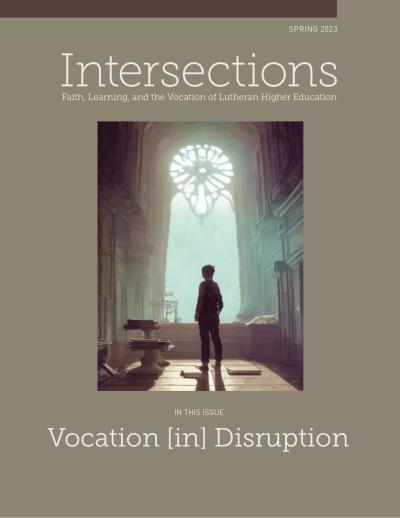
Windham-Hughes introduces the issue’s theme — vocation amidst disruption — previews new features including contributor contact information, a study guide for So That All May Flourish, and invited pieces on reproductive rights, and shares results from the Fall survey of readers.