I write this column with the famous (in Christian circles) words about the human tongue from the Letter of James in the New Testament freshly on my mind. The text was one of readings yesterday at my church. The passage from James reads, “How great a forest is set ablaze by a small fire. And the tongue is a fire! No one can tame the tongue—a restless evil, full of deadly poison” (James 3:5b-6a; 8). As James writes more succinctly earlier in his letter, “If any think they are religious, and do not bridle their tongues… their religion is worthless” (1:26).
Social ethics is not my academic discipline. Nonetheless, I can safely say that much Christian discourse about ethical conduct turns around the interplay of “bridling the tongue” and at the same time endorsing frank, honest conversation. The latter concern finds expression in a passage in the Letter to the Colossians, which urges Christians to always let their speech “be seasoned with salt” (4:6). Christians are to embrace a love ethic, but they are not to be door mats for Jesus, nor are they to ignore the evils they see. As the Lutheran tradition puts it, a theologian of the cross (that is, a follower of Jesus), calls a thing what it is.
Balancing the need for frank honesty in our speech, while at the same time not permitting frank speech to degenerate into hateful speech, is a daunting challenge. It is no virtue to avoid challenging difficult issues or wrongful acts under the banner of maintaining civility. At the same time, it is no virtue to speak with an arrogant, haranguing, unbridled tongue. We struggle to find the sweet spot. In response to the evil of segregation in the United States, Martin Luther King was convinced that nonviolent action was the way to “speak” frankly and honestly, controlling and avoiding “speaking” hate through a violent response. Malcolm X thought otherwise. The debates continue.
The challenge is further complicated because evil in our speech is easily disguised. This can be true in personal speech, for example, when overtly mild speech is used to demean someone, as in the damning of African Americans with faint praise in the comment “he speaks so well,” while omitting the implied “for a (n-word).” Evil social or organizational speech may also be disguised, often perniciously. For example, overtly “good” public speech by organizations is increasing used for evil through the mechanism known as astroturfing. Astroturfing is the practice of hiding the true sponsors of a message to make a message appear to be from some other (typically, grassroots) group. See John Oliver’s September 16 episode of Last Week Tonight on HBO if you are unfamiliar with the dastardly practice of astroturfing.
In higher education, the received practices of the academy give us an advantage over many groups in the United States for facing the challenge to sustain frank and honest but not hateful discourse about complex and divisive public issues. We should insist that the standards of academic discourse prevail when such issues are taken up on our campuses. These standards do not allow any and all speech, as guidelines adopted by many NECU institutions demonstrate. The standards of the North Atlantic academy, in which NECU institutions share, are deeply rooted in the Lutheran tradition and its insistence on frankness, honesty, and calling a thing what it is, while maintaining a concern for others and the common good and avoiding acrimony amid divisive disputes. The standards of academic discourse do not eliminate the challenge of speaking appropriately, but they give all of us in ELCA-related higher education a solid platform on which to stand. And they do this within a larger, fragmented culture struggling for pathways into civil discourse.
-
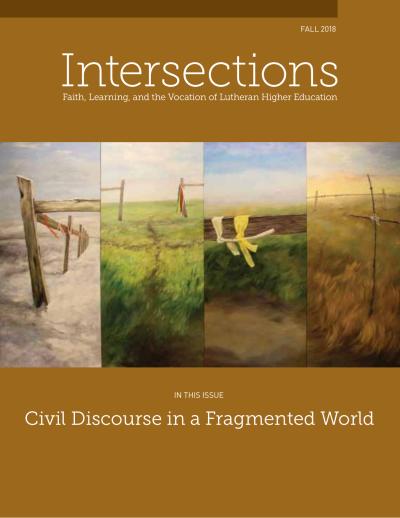 Editorial
From the Editor
Jason A. Mahn
Mahn recounts how a participant’s probing questions at the 2018 Vocation of a Lutheran College Conference turned “civil discourse” from an innocuous theme into a contested one — and previews essays that variously urge listening and common ground, or speaking truthfully even when those words sound angry.
-
Article
Vocation and Civil Discourse: Discerning and Defining
Lynn Hunnicutt
Hunnicutt draws on Rabbi Amy Eilberg’s reading of Moses’ calling to identify four features of vocational discernment — attention, wonder, communal consciousness, and humility — and argues that these same qualities are also key aspects of civil discourse, so that forming students for vocational discernment is simultaneously forming them for civility.
-
Article
Polarization, Incivility, and a Need for "Change"
Guy Nave
Nave argues that when Americans demand “change,” they usually mean that “others” need to see things their way — and that meaningful transformative change requires acknowledging the provisional nature of our perspectives, seeking to understand as much as to be understood, and bursting the ideological echo chambers of social media through projects like Clamoring for Change.
-
Article
Putting the Kind Back in Human
Sarah Ciavarri
Drawing on Brené Brown’s research on vulnerability and Edwin Friedman’s family systems theory, Ciavarri distinguishes “kind” from “nice” and argues that courageous, vulnerable, and playful truth-telling — rather than yelling louder or trading pithy memes — is the path back to one another and to our common humanity.
-
Article
It's Time to Rewrite the Rules of Civility
Jon Micheels Leiseth
Leiseth contends that the prevailing rules of civility too often function as the majority’s rules, stifling those facing real harm — and proposes that NECU institutions rewrite civility as “neighboring,” guided by the ELCA’s five values of accompaniment: mutuality, inclusivity, empowerment, sustainability, and vulnerability.
-
Poem
Original Song Lyrics: "Just a Little"
Mike Blair
Lyrics for an original song inspired by biblical images and stories, by Emma Lazarus’ “The New Colossus,” and by the faith, hope, love, and courage of immigrant friends and neighbors — led as a devotion during the 2018 Vocation of a Lutheran College conference.
-
Article
The Musician's Vocation
Jeffrey Bell-Hanson
Bell-Hanson argues that musicians, who exercise profound influence over the emotional flavor of a moment, are called not merely to technical proficiency but to a sense of vocation: understanding their art well enough to use it responsibly, to intend truthfulness rather than manipulation, and to articulate its significance in dialog with other disciplines.
-
 Article
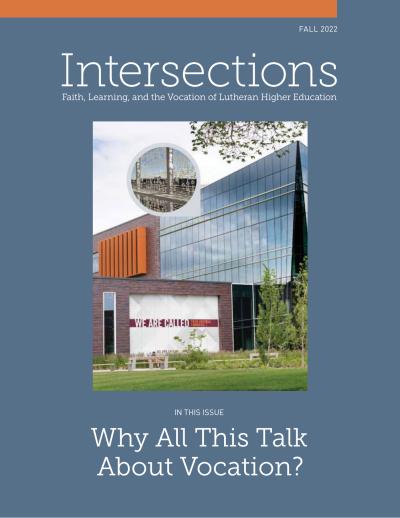
Why All This Talk About Understanding the Mission of NECU Member Institutions as a Vocation?
Mark Wilhelm
No. 56 · Fall 2022
In his valedictory keynote, retiring NECU Executive Director Mark Wilhelm argues that Lutheran higher education is, properly understood, vocation-based education — outlining four core practices recovered over the past fifty years and naming the constructive and corrective work still to be done, including a fuller embrace of DEIJ and of the diverse vocations of NECU’s 27 institutions.
-
 Editorial
From the Publisher
Mark Wilhelm
No. 55 · Spring 2022
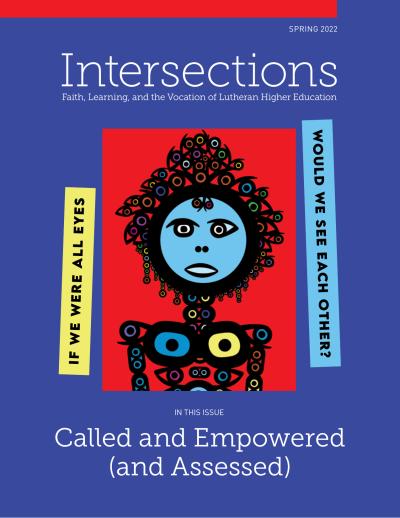
Wilhelm announces his planned retirement on January 31, 2023, after serving as the founding executive director of the Network of ELCA Colleges and Universities, and gives thanks for the privilege of helping NECU articulate a shared vision for Lutheran higher education in twenty-first-century North America.
-
 Editorial
From the Publisher
Mark Wilhelm
No. 53 · Spring 2021
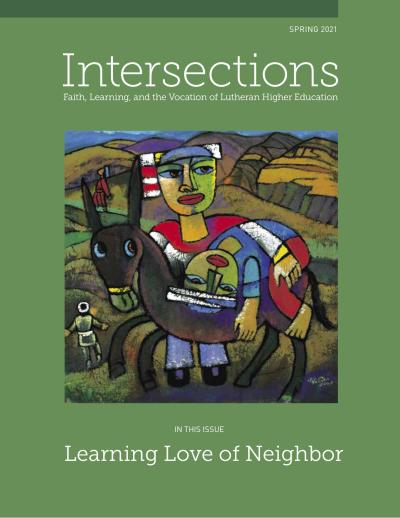
Wilhelm reflects on an NPR report of teenagers’ pandemic diaries and the fraught Christian history of struggling to live out Jesus’s ethic of love, framing the issue as a record of NECU institutions working out how to act for the common good through the pandemic of 2020–2021.
-
 Editorial
From the Publisher
Mark Wilhelm
No. 52 · Fall 2020
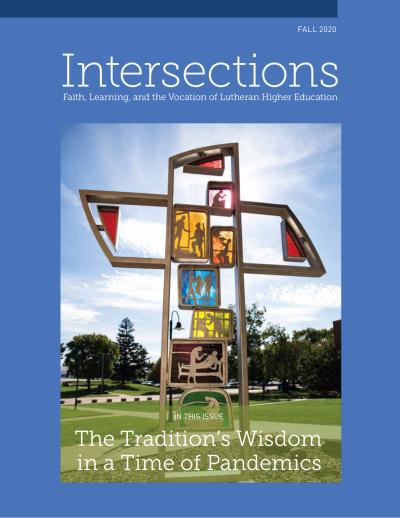
Wilhelm argues that the “hackneyed” expressions of higher education — “you are not just a number,” “the college experience,” “risen to the challenge” — tell the simple truth about NECU institutions even as the Covid-19 pandemic has pushed budgets, employees, and campus life to the breaking point.
-
 Editorial
From the Publisher
Mark Wilhelm
No. 51 · Spring 2020
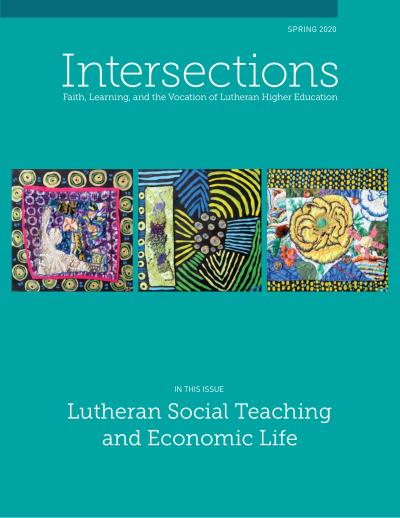
Wilhelm frames the issue by tracing how Lutheran educational ideals — once a primary source of contemporary higher education — were masked in the United States, and introduces a NECU initiative that uses the case of business ethics to explore Lutheran social teaching as an academic resource.
-
 Editorial
From the Publisher
Mark Wilhelm
No. 50 · Fall 2019
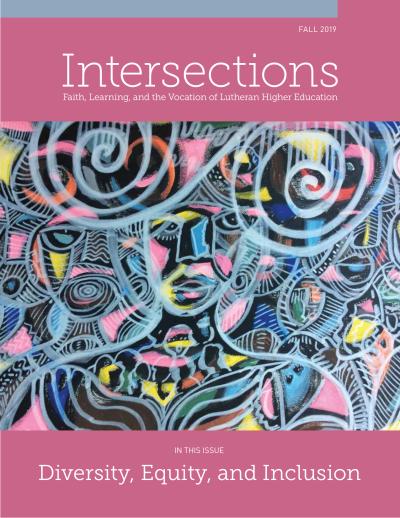
Wilhelm frames the issue by noting that a federal court’s vindication of Harvard’s race-conscious admissions process is a win for higher education’s commitments to diversity, equity, and inclusion — and argues that for Lutheran higher education, the commitment to diversity is an old and foundational claim, rooted in Christianity’s openness to all and reflected in the four diverse gospels of the New Testament.
-
 Editorial
From the Editor
Jason A. Mahn
No. 35 · Spring 2012
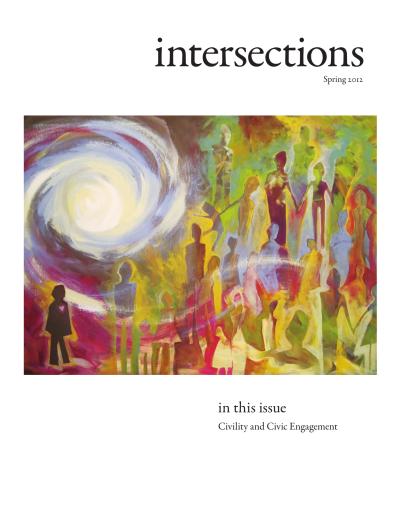
Mahn introduces five essays from the 2011 Vocation of a Lutheran College Conference at Augsburg, framing how Torvend, Anderson, Svennungsen, Tunheim, and Pribbenow press Lutheran colleges to turn outward—recovering the public character of Luther’s gospel, forming students for moral deliberation, investing in the infrastructure of civic renewal, and pursuing justice and education “off the main road.”
-
 Article
Dual Citizenship: Reflections on Educating Citizens at Augsburg College
Paul C. Pribbenow
No. 29 · Spring 2009
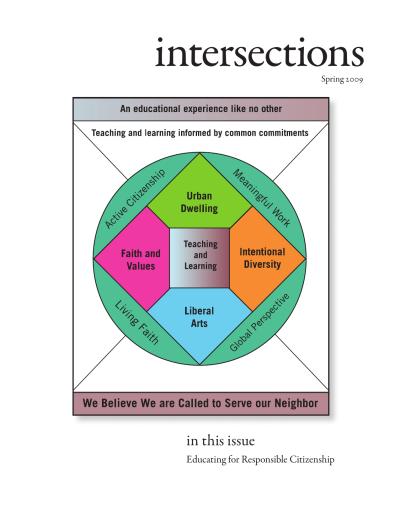
Pribbenow argues that the vocation of Augsburg College is to educate “dual citizens”—those able to live within the messiness of common work rather than resolve every tension once and for all. Drawing on John Courtney Murray on democracy as “the intersection of conspiracies,” Bill Moyers, Jean Bethke Elshtain, Stephen Carter, and the Augsburg vision statement “We believe we are called to serve our neighbor,” he names four common commitments and five principles of civic education that ground Augsburg’s incarnational mission in its city neighborhood.
-
 Article
Hope in the Face of Ecological Decline
Jason Peters
No. 32 · Spring 2010
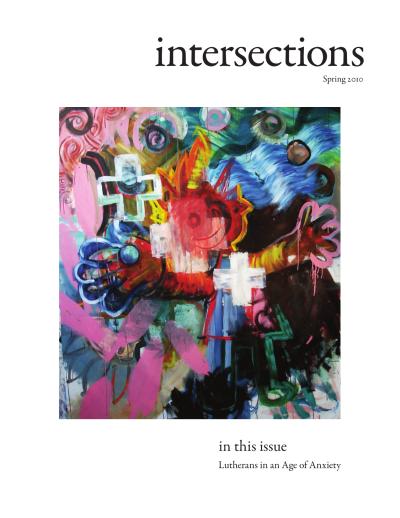
Peters reads our ecological crisis—a campus “Birth Control Tree,” feminized fish, population, climate, water, and soil—through Alexander Pope, William Blake, Søren Kierkegaard, and C. S. Lewis’s The Abolition of Man, and argues that the modern project of mastering nature has made despair (the unconscious form Kierkegaard named) our condition. He calls for three reorientations: practical (assigning value to domestic arts and place over disciplinary specialization), philosophical (dismantling the Baconian/Machiavellian/Cartesian project of control), and theological (recovering the Church’s rejection of Gnosticism so that grace comes to us by means of nature, not in contempt of it).
-
 Editorial
From the Editor
Tom Christenson
No. 9 · Summer 2000
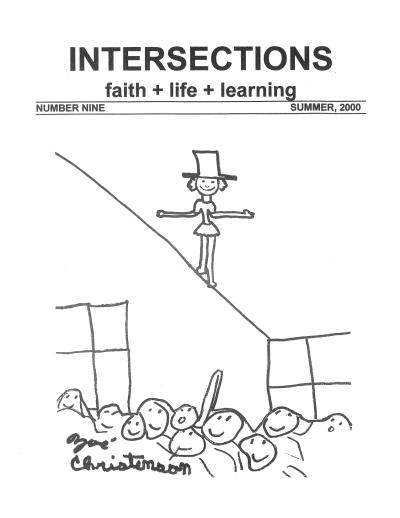
Christenson introduces a varied issue: the VonDohlen / Ratke discussion of the two kingdoms doctrine, Rachel Hammond’s “real gem” of a talk on her time in Ecuador (with an invitation to send contributions to the Home for Perpetual Hope orphanage via her home church in Oberlin, Ohio), Chuck Huff’s essay on the effect of liberal learning on the practice of psychology, and John Reumann’s reflection on a scholarly life lived between academy and church—and notes that the cover artist is his eight-year-old daughter Zoé, whose post-circus drawing of a balancing act struck him in light of Reumann’s opening line.
-
 Editorial
From the Editor
Robert D. Haak
No. 22 · Spring 2006
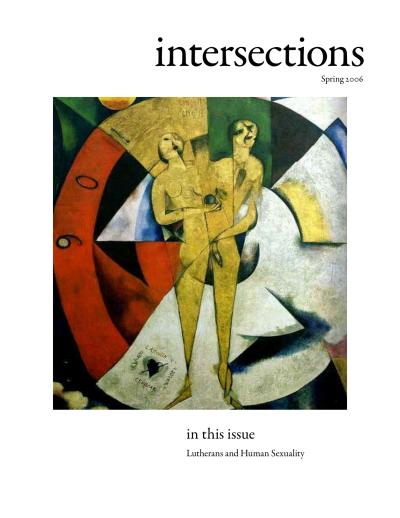
Haak introduces himself as the new editor inheriting the journal from Tom Christenson and frames the issue around the question of what ELCA colleges might contribute to conversations about human sexuality. He summarizes the contributions of Yeager, Benne, Williams, Bussie, and Nack, and shares previously uncollected National Study of Youth and Religion data on the sexual attitudes and behaviors of Lutheran teens—including that 25% of regularly-attending ELCA teens report the church has done nothing to help them with their sexuality.
-
 Book Review
Types, Methods, and Sagas in Lutheran Higher Education: Learning from Childers
Lake Lambert
No. 39 · Spring 2014
Lambert situates Eric Childers’ College Identity Sagas within the older tradition of the 1977 Association of Lutheran College Faculties volume The Church-Related College in an Age of Pluralism, working through Burton Clark’s “saga” and Robert Benne’s typology of church-related colleges. He commends Childers’ socio-scientific approach while questioning whether a typology can do justice to institutions that resist easy classification.