Our annual conferences on “the Vocation of a Lutheran College” are designed to explore the shared identity and mission of the colleges and universities related to the Evangelical Lutheran Church in America (ELCA). As the standing title of the conference suggests, these conferences claim that the concept of vocation offers the best lens for examining (and the best opportunity for invigorating) a shared identity and mission among our very diverse schools.
In my longer talk (forthcoming in Intersections Spring 2016), I offer an overview of how the leadership of the network of ELCA colleges and universities arrived at the conclusion that the theme of vocation should be our touchstone. I also focus on the particular wisdom about higher education embedded in the Lutheran intellectual tradition that “vocation” upholds. Despite many challenges, I remain optimistic that the Lutheran ideal of higher education and its vocation movement will find wide acceptance over time. Our generation has the chance to reclaim one of the great western educational traditions by remembering the ideal of education for vocation and the Lutheran notion of a non-sectarian, but authentically religious, higher education.
Lutheran colleges and universities are not defined by their support for an ethnic culture or by their adherence to a check-list of institutional practices or markers, such as mandating minimal standards for the numbers of Lutheran students enrolled. Nor are they Lutheran schools because schooling provides a platform for promoting parochial Lutheran interests. Rather, our schools are Lutheran because they stand in a 500 year-old intellectual tradition that educates for vocation, an education of the whole person, prepared to contribute to the common good.
Educating for the Common Good
Providing education for vocation to all persons of good will, whatever their personal religious or non-religious convictions, is educational excellence in the Lutheran tradition. It is the vocation of a Lutheran college. Given our particular theme of the “Common Good” here, I want to reflect on how the Lutheran intellectual tradition and its concept of vocation are worth reclaiming and promoting because they undergird and sustain an educational commitment to prepare students to contribute to the common good.
I will mention only two insights from the Lutheran intellectual tradition by way of demonstrating how our concern for character education, citizenship, and the common good stem from the Lutheran roots of our schools and the concept of education for vocation. The first points toward a rationale for a commitment to the commons, that is, a sense of community and shared well-being. The second aids our efforts to work toward the good by prohibiting any individual or group from claiming to definitively know the good.
“Our schools are Lutheran because they stand in a 500 year-old intellectual tradition that educates for vocation, an education of the whole person, prepared to contribute to the common good.”
A Sense of the Commons
The Lutheran tradition’s commitment to a sense of the commons is rooted in a number of sources, but among them is the Lutheran doctrine of vocation’s insistence that all persons share a common walk of life. The Lutheran tradition teaches that people experience a variety of callings and that each person has multiple callings simultaneously, reflecting in the various aspects of their lives. The Lutheran doctrine of vocation also insists that this variety of callings does not indicate a division of persons into a variety of classes, hierarchies, or castes attendant to their vocations. The Lutheran tradition is adamant that understanding life in terms of vocation does not create difference of status. There may be many vocations, but these are all part of a single, common walk of life. To recall Luther’s German categories, we are called to various functions, activities, or offices (Amt), but according to Luther all are called to and are part of a single walk of life (Stand).
Humankind is seemingly at work endlessly to divide people into this or that category, class or station. The Lutheran doctrine of vocation stands behind the democratic and egalitarian impulse that in its ideal informs higher education in the Lutheran tradition. Education for vocation promotes a commitment to the commons. We all have our distinct and various roles to play, but we all share a common walk of life. We are all—to use a sports analogy—on the same team—the team called humanity.
Ambiguity and Humility
The Lutheran tradition asserts that no one has a monopoly on knowledge, including knowledge of the good. This is drawn within Lutheranism from the belief that a person of faith has no epistemological advantage over non-believers about the workings of the world, and that knowledge of the world comes through God’s gift of reason which is accessible to all. It is through cooperative work and inquiry, driven from a Lutheran perspective by the concept of vocation, that we strive to know the good.
As part of its assertion that no one has a monopoly on knowledge, the Lutheran tradition also does not shy away from the complexities of human life, including our attempt to know the good. This conviction in expressed in the Lutheran theological affirmation of paradox as key to a wise understanding of life. One of the paradoxes of our existence is the paradoxical mix of good and evil that is difficult to sort. The Lutheran intellectual tradition asserts that ambiguity is integral to this life and that determining wise ethical practice is fraught with complexity. For example, how can it be that persons in their one-to-one relationships can be exceedingly moral and yet they can seemingly not overcome the immorality of the collective actions they take as members of society? Education for vocation should encourage students to not despair in the face of such complexity, nor should they be deterred from pursuing the common good even as they struggle to work out the paradox of good and evil in life.
“Education for vocation should encourage students to not despair in the face of such complexity, nor should they be deterred from pursuing the common good even as they struggle to work out the paradox of good and evil in life.”
Conclusion
The continuing conversation about education for vocation is about the grand renewal of a 500 year-old vision that returns our community of schools to an educational ideal as the basis of our shared identity and mission. The remainder of this issue explores in more detail one implication of the concept of vocation: namely, that from the Lutheran heritage of our schools we share a commitment to prepare students to contribute to the common good.
-
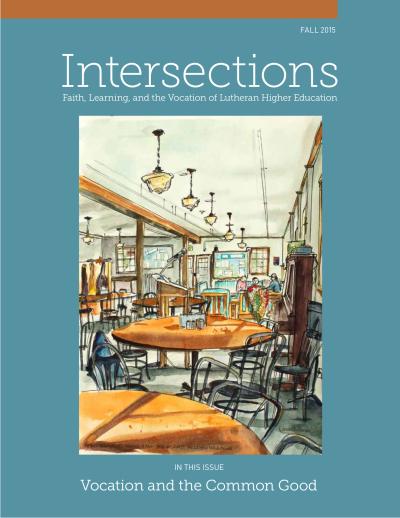 Editorial
From the Editor
Jason A. Mahn
Mahn introduces the “Vocation and the Common Good” issue by asking what is left of “the commons” in an age of privatized goods and education-as-commodity, and frames church-related colleges — with their stubborn vocabulary of “liberal arts,” “collegiate,” and “calling” — as among the least fully-privatized resources left in American life.
-
Article
Making the Common Good Common
René Johnson
Johnson reflects on the Servant Leadership House for women at Finlandia University — from a sweaty trip to the local landfill to weekly habits of campus presence — to argue that the common good becomes truly common when it is embedded in the ordinary details of vocational living, and that Luther’s sense of neighbor calls servant leaders to “little bits of good” as well as to more radical pursuits of justice.
-
Article
"Greed is an Unbelieving Scoundrel": The Common Good as Commitment to Social Justice
Samuel Torvend
Torvend uses his Lutheran Heritage course at Pacific Lutheran University to ask what “the common good” might mean concretely — fresh air, clean water, food, shelter, healthcare — and traces the early Lutheran reform of literacy and social welfare to argue that the first gift of Lutheran education is the capacity to question the status quo and to push beyond charity into the pursuit of social justice.
-
Article
Grinding for the Common Good and Getting Roasted
Rahuldeep Singh Gill
Reading Starbucks’ ill-fated “Race Together” campaign as a parable for campus work on the common good, Gill argues that interfaith cooperation, vocational reflection, and the “re-storying” of our campuses require us to err boldly across lines of difference — not pretending that difference doesn’t matter, but inviting students to imagine and realize what the common good might mean to them.
-
Article
Attentional Commons and the Common Good: Technology and Higher Education
Amy Weldon
Weldon argues that the electronic devices our students (and we) reach for are designed to monetize attention and fragment the very capacities — tolerance for complexity, sustained focus, real conversation — that build lives of meaning and service to the common good. Drawing on Crawford, Lanier, Arendt, and Palmer, she sketches practical tech-mindfulness for the small-college classroom as a defense of the “attentional commons.”
-
Article
Say Something Theological: A Meditation on the Vocation of Lutheran Colleges and Universities to Serve the Common Good
Paul C. Pribbenow
Pribbenow expands Luther’s “priesthood of all believers” into a meditation on doing theology with the Bible in one hand and the New York Times in the other — reading Luke 14 alongside walls, immigration, and hunger in his Minneapolis neighborhood — and argues that the leadership of Lutheran colleges demands a willingness to engage the theological issues at the heart of their public vocation.
-
Article
Women Presidents in Higher Education: How They Experience Their Calling
Aimee Goldschmidt, Gary McLean, Katherine A. Tunheim
Drawing on in-depth interviews with fifteen women college presidents and a transformative-learning-theory framework, Tunheim, McLean, and Goldschmidt trace a three-stage journey — identifying, interpreting, and pursuing the call — and ask what the language of vocation contributes to the preparation and mentoring of women leaders in higher education.
-
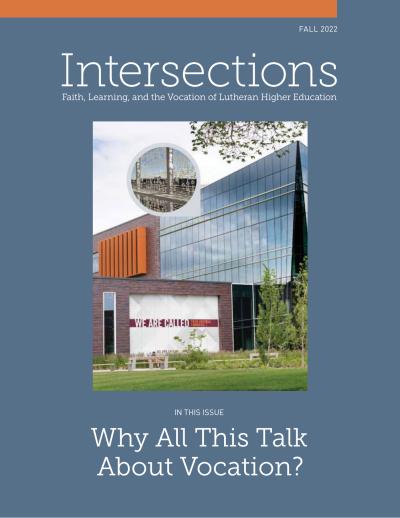 Article
Why All This Talk About Understanding the Mission of NECU Member Institutions as a Vocation?
Mark Wilhelm
No. 56 · Fall 2022
In his valedictory keynote, retiring NECU Executive Director Mark Wilhelm argues that Lutheran higher education is, properly understood, vocation-based education — outlining four core practices recovered over the past fifty years and naming the constructive and corrective work still to be done, including a fuller embrace of DEIJ and of the diverse vocations of NECU’s 27 institutions.
-
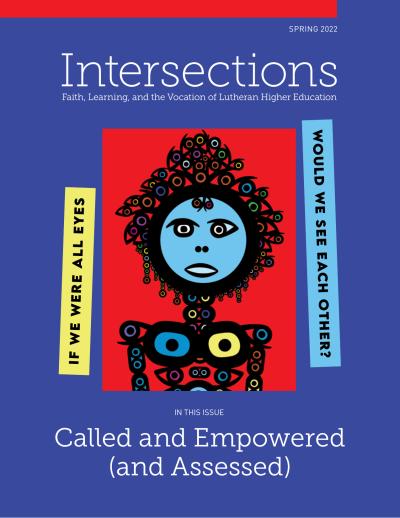 Editorial
From the Publisher
Mark Wilhelm
No. 55 · Spring 2022
Wilhelm announces his planned retirement on January 31, 2023, after serving as the founding executive director of the Network of ELCA Colleges and Universities, and gives thanks for the privilege of helping NECU articulate a shared vision for Lutheran higher education in twenty-first-century North America.
-
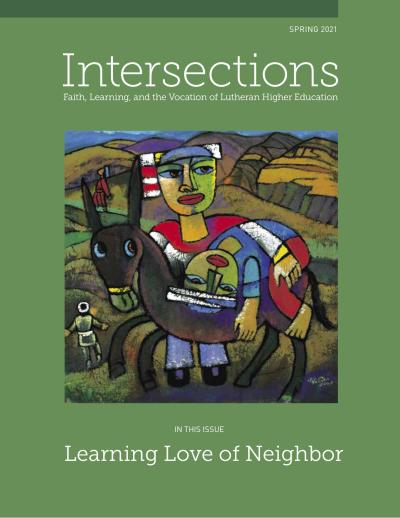 Editorial
From the Publisher
Mark Wilhelm
No. 53 · Spring 2021
Wilhelm reflects on an NPR report of teenagers’ pandemic diaries and the fraught Christian history of struggling to live out Jesus’s ethic of love, framing the issue as a record of NECU institutions working out how to act for the common good through the pandemic of 2020–2021.
-
 Editorial
From the Publisher
Mark Wilhelm
No. 52 · Fall 2020
Wilhelm argues that the “hackneyed” expressions of higher education — “you are not just a number,” “the college experience,” “risen to the challenge” — tell the simple truth about NECU institutions even as the Covid-19 pandemic has pushed budgets, employees, and campus life to the breaking point.
-
 Editorial
From the Publisher
Mark Wilhelm
No. 51 · Spring 2020
Wilhelm frames the issue by tracing how Lutheran educational ideals — once a primary source of contemporary higher education — were masked in the United States, and introduces a NECU initiative that uses the case of business ethics to explore Lutheran social teaching as an academic resource.
-
 Editorial
From the Publisher
Mark Wilhelm
No. 50 · Fall 2019
Wilhelm frames the issue by noting that a federal court’s vindication of Harvard’s race-conscious admissions process is a win for higher education’s commitments to diversity, equity, and inclusion — and argues that for Lutheran higher education, the commitment to diversity is an old and foundational claim, rooted in Christianity’s openness to all and reflected in the four diverse gospels of the New Testament.
-
 Article
Lutheran Tradition: Five Continuing Themes
Walter R. Bouman
No. 2 · Winter 1997
Bouman of Trinity Lutheran Seminary identifies five themes central to the Lutheran theological tradition (understood through Alasdair MacIntyre’s account of tradition as “an historically extended, socially embodied argument”): biblical (a non-oppressive authority for the Bible rooted in the gospel rather than in scholastic inerrancy, against the backdrop of Luther’s 1517 challenge to Tetzel and the post-Enlightenment marginalization of theology); catholic (continuity with the Book of Concord and the three ancient creeds, with Luther’s “Christology from below” recovering a Jewish rather than Hellenistic understanding of God, revived by Tillich, Pannenberg, Forde, and Jenson); evangelical (justification by faith as the answer to mortality’s radical question); sacramental (Word, Eucharist, and Baptism as Christ’s presence from the future of God’s consummated Reign); and world-affirming (creation as gift, vocation as God’s work in every calling, and stewardship of the ecological crisis).
-
 Editorial
From the Publisher
Arne Selbyg
No. 8 · Winter 2000
Selbyg reflects on the origins of Intersections—begun out of concern that the philosophy and theology behind Lutheran higher education could be lost to retirements and other preoccupations—and credits Paul Dovre of Concordia and Robert Sorensen of the ELCA Division for Higher Education and Schools as key figures behind the resumption of the debate. He points to three recent books (Ernest Simmons’s Lutheran Higher Education, Paul Contino and David Morgan’s The Lutheran Reader, and Pamela Schwandt’s Called to Serve) and to the new Lutheran Academy for Scholars in Higher Education, and previews the next “Vocation of a Lutheran College” conference at Dana College in August on what differentiates Lutheran colleges within American higher education.
-
 Editorial
From the Editor
Tom Christenson
No. 4 · Winter 1998
Christenson thanks the departing Jim Unglaube, recommends Ronald A. Wells’s Keeping Faith: Embracing the Tensions in Christian Higher Education (Eerdmans) as both an interesting collection of essays and a model worth imitating at ELCA institutions, previews the issue’s pieces by Richard Hughes, Carl Skrade and Spencer Porter, Gregory Clark, and Karla Bohmbach, and introduces three new features of the journal: “What I Have Learned” (an essay by a senior or emeritus faculty member, inaugurated by Richard Ylvisaker), “Reviews” (initiated by Karla Bohmbach), and a “Bulletin Board” for cross-campus announcements.
-
 Article
Sexuality over the Lifespan—Social Trends Pose Moral Dilemmas for Communities of Faith
Adina Nack
No. 22 · Spring 2006
Nack, a sociologist who presented to the ELCA Task Force for Studies on Sexuality, surveys empirical research on three life-stages flagged by the Task Force as particularly contested—premarital sexuality among adolescents and young adults, sexuality after divorce and within single parenting, and sexuality in late adulthood. Drawing on the Alan Guttmacher Institute, the Office of the Surgeon General, AARP, National Council on the Aging, and the World Health Organization’s 2002 definition of sexual health, she closes each section with questions about the church’s role in education, blessing of committed nonmarital relationships, and dismantling stereotypes about aging and sexuality.
-
Reflection
Why All This Talk About Vocation?
Madyson Ray
No. 56 · Fall 2022
Ray, a junior at Midland University and the only student attendee at the 2022 conference, reflects on four workshops — on teaching womanist thought, on supporting student-athletes, on resistance to the word “vocation,” and on vocational reflection — and brings home concrete ideas including a women’s-history scavenger hunt and semester-long vocational reflections.
-
Article
Through Truth to Freedom—by Way of Reconciliation
Paul C. Pribbenow
No. 52 · Fall 2020
Reflecting on Augsburg’s 150th-anniversary motto “Through truth to freedom,” Pribbenow argues that in a season of three pandemics — pandemic illness, economic collapse, and the racial sin laid bare by the murder of George Floyd — higher education’s most authentic work is to educate for truth and freedom by way of confession and reconciliation.