The colleges and universities of the ELCA play a leading role the common life of American higher education. Faculty fulfill active roles in the professional societies of their disciplines, personnel from ELCA schools regularly participate in accreditation visits and other forms of work with accrediting bodies, and the presidents of our institutions take up leadership roles in the major agencies of higher education, to cite several examples of leadership by our schools. As an example of presidential engagement, let me note that Chris Kimball, president of California Lutheran University, is currently serving as chair of the Board of Directors for the Council of Independent Colleges. We can be proud of the contributions of our schools to the American higher education community. We teach students to lead and to serve. Our colleges and universities teach by example through their collegial service to the wider higher education community.
Our schools lead the larger higher education community in ways other than the fine work done by individuals with the agencies of higher education. The colleges and universities of the ELCA are recognized leaders in important aspects of the mission of American higher education. Our schools have long been recognized leaders in global education, and pace-setting leadership continues in this arena. More recently, the Interfaith Youth Core has pointed with appreciation to the leadership of our community in promotion of interfaith understanding. In these and other ways, ELCA colleges and universities are in the vanguard of higher education’s mission.
I am most proud of the recognition given by the church-related higher education community and others to the health of ELCA colleges and universities as a network of schools. Executives from foundations and agencies, as well as leaders from other churches, often comment that among church-related colleges and universities, our network of schools works. We are noted as a community that maintains a sense of shared identity and work as a church-related network of schools, all the while living as good citizens of the larger academy and higher education community instead of embracing a sectarian stance. Although many improvements could be made to our network, I celebrate the health in our community that is recognized by others.
As you read the essays in this issue of Intersections about our community’s vocation to prepare leaders, celebrate with me the leadership shown by ELCA colleges and universities within the larger community of American higher education.
-
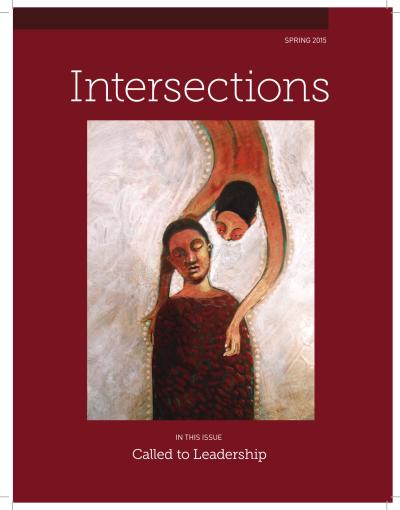 Editorial
From the Editor
Jason A. Mahn
Mahn introduces the “Called to Leadership” issue by worrying that training for leadership has become so ubiquitous in higher education as to be nearly meaningless, and recovers Luther’s sense of leadership as service — a calling to be a “slave” whose learning, power, and wisdom belong to the unlearned, the oppressed, and the foolish — as the shared mission of Lutheran colleges to train servant-leaders.
-
Article
Vocational Leadership
Darrell Jodock
Jodock proposes “vocational leadership” as a name for a distinctive educational value at the heart of a Lutheran college — one that seeks to benefit the neighbor and the community, inspires and invites others to participate in that service, and is institutionally anchored in the Lutheran concept of vocation. He unpacks twelve facets of vocational leadership and ties them to Luther’s own leadership around indulgences, public schooling, and beggary.
-
Article
Sharing Leadership within Colleges and Universities
Leanne Neilson
Building on Jodock’s framework, Neilson applies vocational leadership to the unique work environment of higher education — mission statements, faculty governance, the slow pace of consensus, and the sometimes uneasy relationships between faculty and staff — and asks how leaders, followers, and team players can create an atmosphere of mutual empowerment on Lutheran college campuses.
-
Article
Mentoring in the Academy: Of Gurus, Coaches, and Sponsors
Faith Wambura Ngunjiri
Ngunjiri urges faculty, staff, and administrators in faith-based institutions to assemble a “personal board of directors” of mentors — connectors, sponsors, taskmasters, motivators, dreamers, sages, and proofers — and reflects on how race and gender complicate mentoring in predominantly white, male-led ELCA institutions, where women and minorities must reach out to build the “cloud of witnesses” they need to thrive.
-
Article
The Dangers of "Vocation" for Students Thinking about Career
Carl Hughes
Hughes warns that Lutherans too often use “vocation” as a theologically glorified synonym for a fulfilling career — a misuse that constricts God’s call to our jobs and excludes minimum-wage workers, caregivers, and others from the dignity of calling. Recovering Luther’s expansive understanding, he argues that vocation refers first to people, not professions, and must always be bigger than any one aspect of our lives.
-
Article
Women in Leadership: Obstacles, Opportunities, and Entry Points
Susan Hasseler
Drawing on two focus-group conversations with female faculty and academic administrators at Augustana College (Sioux Falls), Hasseler traces four obstacle/opportunity themes for women in academic leadership — valuing the intellectual work of leadership, religious and cultural interpretations of gender roles, caregiving realities, and embracing a strong voice — and proposes deliberate next steps for cultivating inclusive excellence on ELCA campuses.
-
Article
Superheroes and Origin Stories: Tools to Discover and Claim One's Callings
TJ Warren
Warren argues that the “Hero’s Journey” — Joseph Campbell’s monomyth with its ordinary world, call to adventure, mentors, and return with the elixir — offers a powerful pedagogical tool for helping college students discover their origin stories and claim their callings. Drawing on Superman, Wonder Woman, and Rosa Parks alike, he invites educators to mentor students into becoming the heroes of their own lives.
-
Article
Leading from Within: Peer-Learning Consultations to Explore Our Callings and Campus Capacities for Leadership
Chris Johnson
Johnson reframes vocational leadership as “soul work” that calls for the deep mind as much as the conscious one, and offers two practices — deep listening and a modified Quaker clearness consultation — as ways for campus colleagues to listen one another into existence. Drawing on Sharon Daloz Parks, Marshall Ganz, Parker Palmer, and Mary Rose O’Reilley, he invites readers to map their stories of self, us, and now.
-
Book Review
Old and New Ideas of the Liberal Arts: A Review of Claiming Our Callings
David Crowe, Katie Hanson
Crowe and Hanson review Claiming Our Callings: Toward a New Understanding of Vocation in the Liberal Arts (Oxford 2014), a collection of thirteen essays by St. Olaf faculty edited by Kaethe Schwehn and L. DeAne Lagerquist. They commend the book’s thoughtful, sincere engagement with consumerism, sustainability, Buddhist meditation, and Lutheran-Bonhoefferian theology — and recommend it for any liberal arts campus pulled between idealistic mission and career-minded pressure.
-
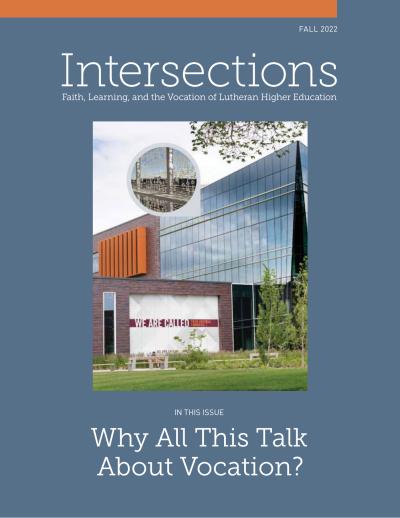 Article
Why All This Talk About Understanding the Mission of NECU Member Institutions as a Vocation?
Mark Wilhelm
No. 56 · Fall 2022
In his valedictory keynote, retiring NECU Executive Director Mark Wilhelm argues that Lutheran higher education is, properly understood, vocation-based education — outlining four core practices recovered over the past fifty years and naming the constructive and corrective work still to be done, including a fuller embrace of DEIJ and of the diverse vocations of NECU’s 27 institutions.
-
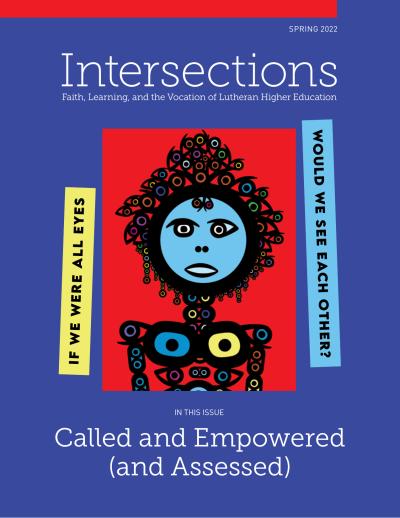 Editorial
From the Publisher
Mark Wilhelm
No. 55 · Spring 2022
Wilhelm announces his planned retirement on January 31, 2023, after serving as the founding executive director of the Network of ELCA Colleges and Universities, and gives thanks for the privilege of helping NECU articulate a shared vision for Lutheran higher education in twenty-first-century North America.
-
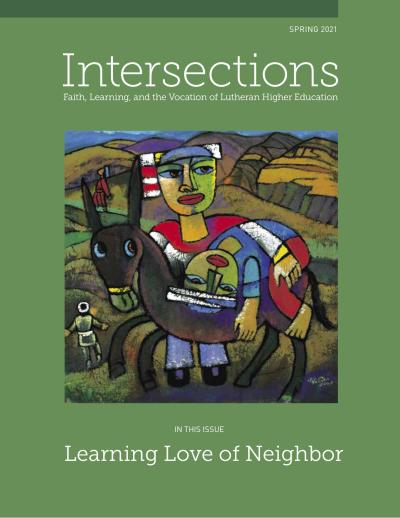 Editorial
From the Publisher
Mark Wilhelm
No. 53 · Spring 2021
Wilhelm reflects on an NPR report of teenagers’ pandemic diaries and the fraught Christian history of struggling to live out Jesus’s ethic of love, framing the issue as a record of NECU institutions working out how to act for the common good through the pandemic of 2020–2021.
-
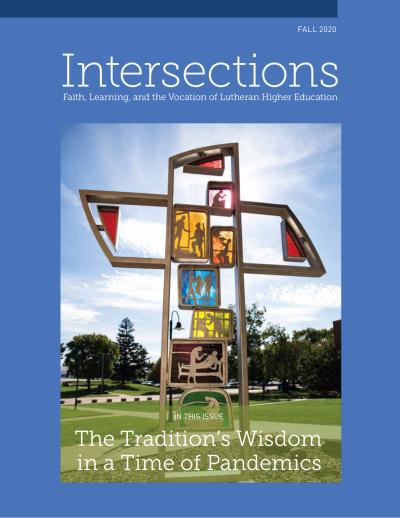 Editorial
From the Publisher
Mark Wilhelm
No. 52 · Fall 2020
Wilhelm argues that the “hackneyed” expressions of higher education — “you are not just a number,” “the college experience,” “risen to the challenge” — tell the simple truth about NECU institutions even as the Covid-19 pandemic has pushed budgets, employees, and campus life to the breaking point.
-
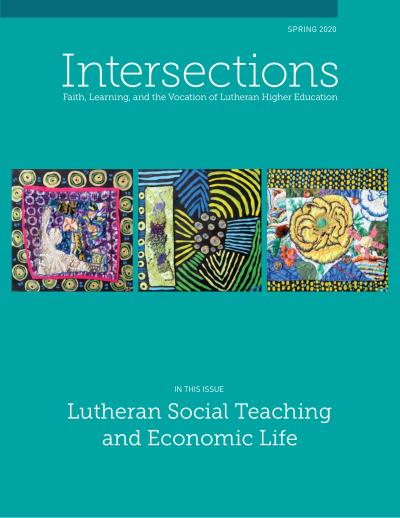 Editorial
From the Publisher
Mark Wilhelm
No. 51 · Spring 2020
Wilhelm frames the issue by tracing how Lutheran educational ideals — once a primary source of contemporary higher education — were masked in the United States, and introduces a NECU initiative that uses the case of business ethics to explore Lutheran social teaching as an academic resource.
-
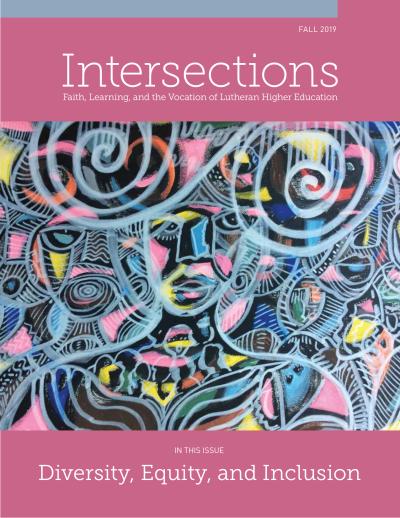 Editorial
From the Publisher
Mark Wilhelm
No. 50 · Fall 2019
Wilhelm frames the issue by noting that a federal court’s vindication of Harvard’s race-conscious admissions process is a win for higher education’s commitments to diversity, equity, and inclusion — and argues that for Lutheran higher education, the commitment to diversity is an old and foundational claim, rooted in Christianity’s openness to all and reflected in the four diverse gospels of the New Testament.
-
 Article
The Divide Within (Not Between) Liberal Arts and Professional Education
Lake Lambert
No. 24 · Fall 2006
Lambert, then Board of Regents Chair in Ethics at Wartburg College and Project Director for the “Discovering and Claiming our Callings Initiative,” argues that the real divide in higher education runs not between the liberal arts and the professions but within each — between teaching that forms students for callings and teaching that merely transmits content or credential. He calls Lutheran colleges to recover, across both liberal arts and professional disciplines, a shared commitment to vocational formation grounded in the Lutheran tradition.
-
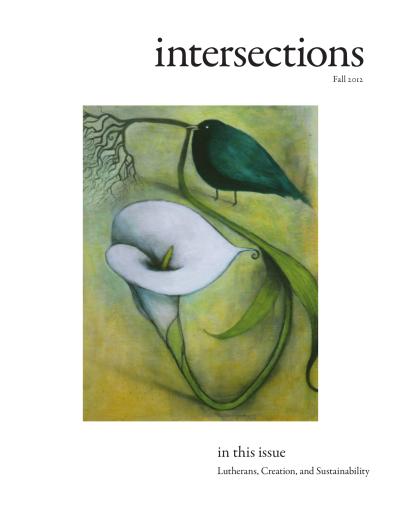 Institutional Focus
Facing Tornados and Climate Change: An Interview with Jim Dontje about Environmental Innovation at Gustavus
Jim Dontje
No. 36 · Fall 2012
Dontje, director of the Johnson Center for Environmental Innovation at Gustavus Adolphus College, describes the Center’s work with solar thermal and photovoltaic systems, LEED certification of Beck Hall, recycling and conservation initiatives, the Linnaeus Arboretum, and the difficult work of building consensus around climate response—reflecting on how Gustavus’s 1998 tornado recovery shaped a community capable of collective action, and on how the “Lutheran identity” both restrains and energizes the college’s environmental ethos.
-
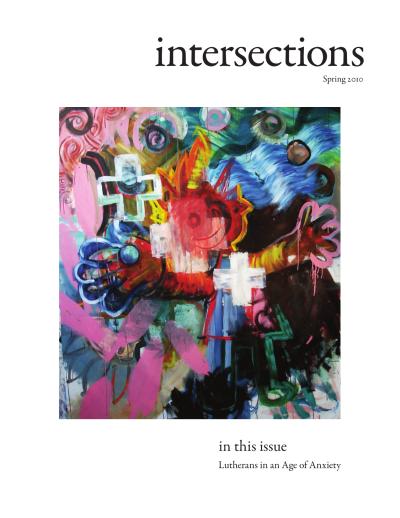 Article
Practicing Hope: The Charisms of Lutheran Higher Education
Martha E. Stortz
No. 32 · Spring 2010
Stortz names four charisms—theological gifts of identity rather than commodities—that Lutheran higher education brings to a culture of fear: semper reformanda as flexible, responsive institutions; the freedom of a Christian as simul justus et peccator critical inquiry that holds opposites in creative tension; regard for the other as “neighbor” rather than friend or alien; and the priesthood of all believers as a public, civic calling to know the poor. Drawing on Augustine, George Lindbeck, Patricia Killen, James Clifford, Earl Shorris, Carter Lindberg, and Augsburg’s Center for Global Education, she argues that immersion trips, neighbor-regard, and welfare reform witness that the gift Lutherans bring is hope grounded in Christ in you, the hope of glory.
-
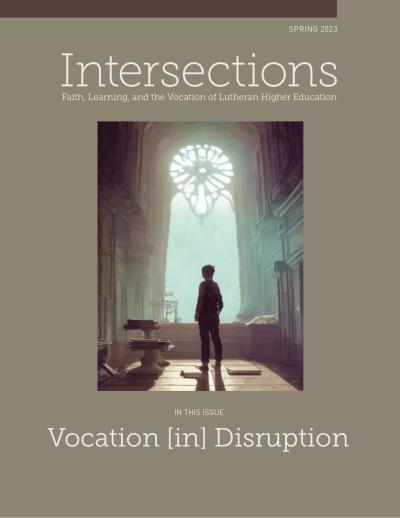 Article
Take Heart: Is Neutrality Really What We Need Right Now?
Abbylynn Helgevold
No. 57 · Spring 2023
Helgevold, an ethicist at Wartburg College, argues that calls for faculty neutrality on abortion in the post-Roe classroom stifle the courageous conversations Lutheran higher education is uniquely positioned to host — conversations grounded in “Rooted and Open” and the ELCA’s 1991 Social Statement on Abortion.
-
 Article
A Church, the Human Condition, and the Fissured Face of Peace
D. M. Yeager
No. 22 · Spring 2006
Yeager, a member of the ELCA Task Force for Studies on Sexuality, reflects on lessons for the church’s educational mission in the wake of the 2005 Churchwide Assembly. Drawing on Macquarrie’s The Concept of Peace, Polanyi on the personal coefficient of knowledge, Hannah Arendt’s The Human Condition, and responses to the task force report from Roy Harrisville III and Larry Rasmussen, she proposes “the fissured face of peace”—peace as the absence of hostility rather than disagreement—and maps how Arendt’s five conditions of human existence (life, earth, natality, mortality, worldliness, plurality) might shape Lutheran colleges’ curricula in history, epistemology, and the sociology of knowledge so that graduates can disagree without hostility and embrace the slow work of reformation.
-
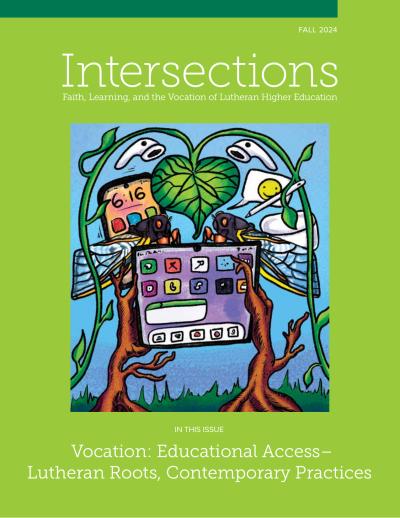 Article
Access, Accessibility, & Change: A Call for Trustworthy Leadership in Higher Education
Emma Jones
No. 60 · Fall 2024
Jones surveys the converging pressures on higher education — cost, the enrollment cliff, shifting demographics, and declining public confidence — and uses Reichheld and Dunlap’s four factors of trust (transparency, capability, reliability, humanity) to call campus leaders to rebuild trustworthy leadership from the inside out.