Response to Mark Wilhelm: Distinguishing Between Identity and Vocation
Intersections No. 56 · Fall 2022
This response to Mark Wilhelm’s proposal for Diversity of Vocations Among Lutheran Colleges and Universities is what the Forum for Theological Exploration might call a “next most faithful step” in the process. That step is simply stated and difficult to manifest: we, as NECU institutions, must faithfully and effectively differentiate vocations and identities. For NECU institutions to robustly engage a unique diversity of vocations connected to their Lutheran rootedness, it’s vital to appreciate the distinction of identity and vocation, and the contributions of identities to vocations. This distinction is a key element in my book, 4D Formation: Exploring Vocation in Community, where I sum the distinction this way: Your identity is who you are, your vocation is what you do. Of course, we have not one vocation, but many. So perhaps it is better said this way: your vocations are how you put your identity to work in different contexts and seasons of life.
There are a number of relevant considerations. First, there’s something of a Venn diagram of identity and vocation. We live much of our lives in the area where the two circles overlap. Consider, for instance, our language. I say, “I am a pastor, a professor, a voter, and a husband.” I also say, “I am a straight, white, cisgender, invisibly disabled man.” One is a set of vocations. Another is a set of identities. The verb “to be” complicates our understanding of the separation of vocation and identity.
A second point was contained in the first: we not only have a multitude of vocations. We also have a plurality of identities. Of course, our work as NECU is focused on our shared calling, coming out of a shared identity of Lutheran higher education, but that is not the only shared identity we have. We’re also North American institutions. We’re Independent institutions. It’s essential for us to focus on our vocations as they flow out of our identity as Lutheran higher education institutions, and we should also investigate how other identities impact our vocations.
Third, not only do our identities impact how we live out our vocations. The communities in which we serve give particular timbre to the calling. So, even if you transplanted Capital University to, let’s say, St. Thomas in the USVI—that’s one of those unanswered prayers I keep bringing before God—and even if our identity remained functionally the same, the flavor profile of our vocations would shift because of where we’re planted. To embrace the identity of a Lutheran higher education institution is to embrace our place in the pluralistic project of higher education. Our diverse constituencies deserve clarity on how being a part of the Lutheran higher education tradition impacts their educational experience.
Finally, we must admit that not all work is holy work for us. Not all work is vocation, and not every vocation is ours to take up. From within the Lutheran tradition, we can point to the words of Jesus, who said he came to give life to the full, or life abundant. Vocation is work that is life-giving, that amplifies the integrity of others, rather than diminishes or destroys life. In an age of increasing responsibility and decreasing resources, we cannot do all work. We cannot even do all good work. Reflecting on what life-giving work we’re called to do in our specific contexts can enable us to say no, both to that work that is not our vocation because it’s good work that belongs to someone else, and to that work that is not vocation because it is destructive, rather than constructive.
In short, by understanding that a diversity of institutional vocations is related to a diversity of institutional identities, we can more healthfully live out our identities and more faithfully embody our vocations in the unique communities we’re called to serve.
-
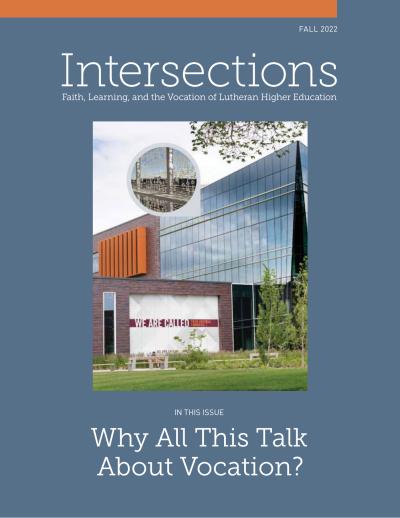 Editorial
From the Editor: Why All This Talk About Vocation?
Colleen Windham-Hughes
Windham-Hughes introduces the Fall 2022 issue built around Mark Wilhelm’s keynote “Why all this talk about vocation?” and previews five panel responses, two first-time conference reflections, and companion pieces on Womanist theology — framing vocation as a call not to privilege but to constructive and corrective work that undoes unjust systems.
-
Article
Why All This Talk About Understanding the Mission of NECU Member Institutions as a Vocation?
Mark Wilhelm
In his valedictory keynote, retiring NECU Executive Director Mark Wilhelm argues that Lutheran higher education is, properly understood, vocation-based education — outlining four core practices recovered over the past fifty years and naming the constructive and corrective work still to be done, including a fuller embrace of DEIJ and of the diverse vocations of NECU’s 27 institutions.
-
Response
Response to Mark Wilhelm: Vocation, Mission and Privilege
Marit Trelstad
Trelstad affirms Wilhelm’s claim that vocation is the foundational shared mission of Lutheran higher education rather than one program among many, and presses the critique that calls to “vocational reflection” can mask privilege — arguing that an intersectional lens shows vocational discernment is in fact a matter of survival and flourishing for students from marginalized communities.
-
Response
Response to Mark Wilhelm: DEI, Great; DWS (Dismantling White Supremacy), Even Better
Vic Thasiah
Thasiah argues that if Lutheran colleges and universities want to live out their commitment to the flourishing of all, DEI is good but DWS — dismantling white supremacy — is even better, and offers three Lutheran sensibilities (suspicion of self-righteousness, the decolonial shockwave of the cross, and critical thinking that can still register awe) that can make DWS a core practice of higher education.
-
Response
Response to Mark Wilhelm: Vocation—Wide Perspective Questions
Mary-Paula Cancienne
Cancienne, drawing on Iain McGilchrist, asks whether higher education has prioritized micro lenses at the expense of the macro view, and invites educators to hold the drama of individual vocation stories within a wider plot that includes James Webb Telescope wonder, climate grief, the long shadow of enslavement, and the resilience of native populations.
-
Response
Response to Mark Wilhelm: Adopting the Framework of ‘Because’ and ‘Therefore’
Paul C. Pribbenow
Pribbenow describes how Augsburg University responded to its dramatic demographic transformation (from 18% to nearly 70% BIPOC entering students over sixteen years) by adopting an institutional vocational statement and a simple “because/therefore” framework for translating particular Lutheran theological convictions into institutional programs, policies, and practices.
-
Article
Work Works
Julius Crump
Crump argues that in an era of class-stratified careerism and the “ruins of neoliberalism,” commencement-speech rhetoric about heroic vocation will not resuscitate vocation — instead, professors embodying vulnerability, extemporaneity, and contemporaneity in the classroom can show students that consistent work, embodied as service to others, is itself worthy.
-
Reflection
Why All This Talk About Vocation?
Madyson Ray
Ray, a junior at Midland University and the only student attendee at the 2022 conference, reflects on four workshops — on teaching womanist thought, on supporting student-athletes, on resistance to the word “vocation,” and on vocational reflection — and brings home concrete ideas including a women’s-history scavenger hunt and semester-long vocational reflections.
-
Institutional Focus
LibGuide: Introduction to Womanist Theology
Elli Cucksey
Cucksey, the head librarian at Trinity Lutheran Seminary, recounts how Beverly Wallace’s Introduction to Womanist Theology class — the first offering of the ELCA Seminaries’ Womanist Theology Initiative — led her to build a publicly available LibGuide that amplifies Black women’s voices and gathers the resources of the course for future students.
-
Article
Doing the Work One’s Soul Must Have
Beverly Wallace, Yolanda M. Norton
Norton and Wallace describe the Womanist Experiential Learning Initiative — including the Beyoncé Mass, study-abroad partnerships in Portugal, Brazil, and Ghana, and the Black Girl Magic Academy for teenage girls — as a way of centering Black women’s voices in theological education and doing, as Katie Geneva Cannon put it, “the work…that one’s soul must have.”
-
 Article
ELCA Social Teaching for the Classroom?
Roger A. Willer
No. 51 · Spring 2020
Willer argues that the body of ELCA social teaching, taken as a whole, constitutes an actual social ethic — relatively comprehensive, responsibly consistent, and remarkably cogent — whose mode of responsibility ethics commends it as a classroom resource for any discipline that wrestles with moral questions.
-
 Article
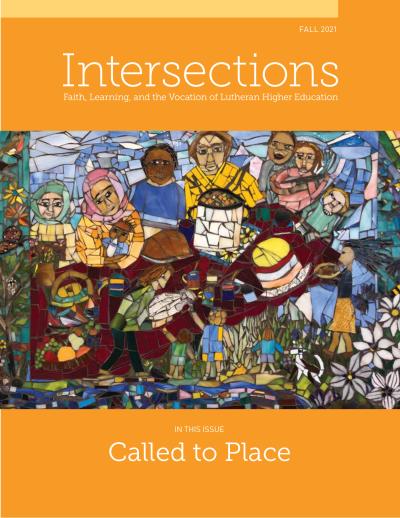
Just Communities: From Liberal Arts in Prison to Racial Healing over Zoom
Monica Smith
No. 54 · Fall 2021
Smith showcases how Augustana College’s commitment to social justice extends into the Quad Cities through two initiatives: the Augustana Prison Education Program at East Moline Correctional Center, and Racial Healing conversations developed through the Truth, Racial Healing and Transformation framework.
-
 Article
Room at the Table: Reflections on Identity and Inclusion from a Lutheran-Friendly Muslim
Rose Aslan
No. 45 · Spring 2017
Aslan reflects on her experience as a Muslim professor of Islamic studies at California Lutheran University — teaching “Introduction to Christianity” from her strengths in the Abrahamic religions, preaching an Eid khutba in a Lutheran chapel, and conversing with the university’s convocators — and proposes “Lutheran-friendly Muslim” as a way of being host and guest at once in a pluralistic Lutheran institution.
-
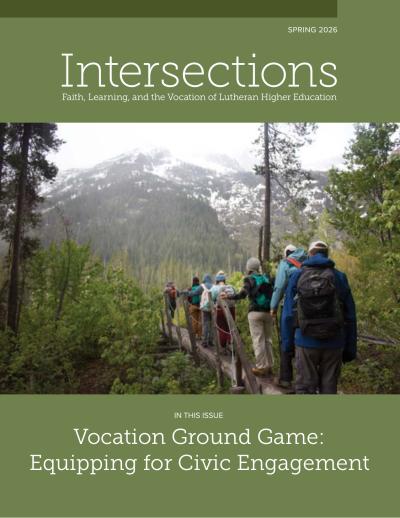 Article
Bringing Core Values to Life through Civic Engagement
Austin Trantham
No. 63 · Spring 2026
5 min audio
Trantham shows how Saint Leo University’s Benedictine Core Values shape his civic engagement work — from advising a “Why Vote?” campaign and Constitution Day panels to engaging students in the Unify Challenge for respectful cross-institutional discourse.
-
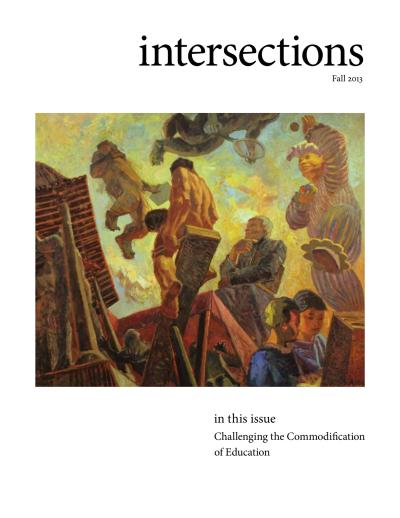 Editorial
From the Publisher: Staying Connected
Mark Wilhelm
No. 38 · Fall 2013
Wilhelm frames Intersections as a tool for maintaining relationships among leaders in ELCA higher education, welcomes the journal’s new editorial advisory board, and points readers toward the 2014 Vocation of a Lutheran College conference at Augsburg and a special interfaith understanding conference at Augustana with Eboo Patel and Presiding Bishop Elizabeth Eaton.
-
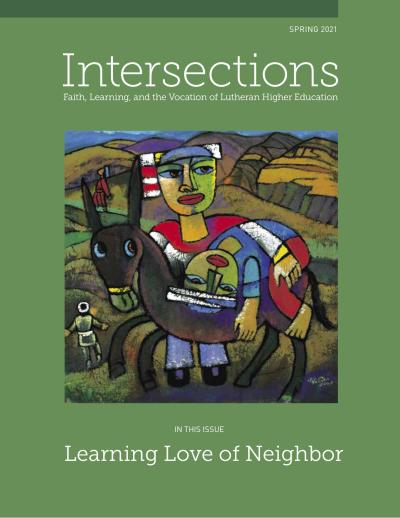 Editorial
From the Publisher
Mark Wilhelm
No. 53 · Spring 2021
Wilhelm reflects on an NPR report of teenagers’ pandemic diaries and the fraught Christian history of struggling to live out Jesus’s ethic of love, framing the issue as a record of NECU institutions working out how to act for the common good through the pandemic of 2020–2021.