While the primary source of articles for this journal is the papers presented at the annual conference on “The Vocation of a Lutheran College,” we now receive other submissions for it as well. We also ask for permission to publish papers based on other presentations we hear that deal with “our” topics. In Issue 17 last year we published four papers that were developed by participants in the Lutheran Academy of Scholars in Higher Education, and this issue includes some other papers by participants in that academy.
The Lutheran academy was started with generous grant support from Lutheran Brotherhood and the Lilly Endowment, but those grants have now been exhausted. Fortunately, the colleges and universities that are related to the ELCA recognized that the academy could be a very valuable faculty development opportunity, so the academy has been continued with support from the ELCA Division for Higher Education and Schools and from the colleges themselves. Especially important is support from St. Olaf College, which made it possible for Dr. DeAne Lagerquist, professor of religion at St. Olaf, to take on the task of being the director for the academy.
In 2004 the academy has returned to Harvard University, and the leader is again Dr. Ronald Thiemann, the John Lord O’Brian professor of Divinity at Harvard. At the academy, each of the participants work on scholarly papers in their discipline, and they also participate in scholarly exchanges about the relationships between their faith and their profession, and between religion and society, and they work on interdisciplinary papers, learning from each other both in topical discussions led by the leader and in critiques of the work each faculty member presented.
In addition to the papers presented in INTERSECTIONS, numerous other scholarly articles and books have been published by the participants based on the work they did as participants in the academy. We want to especially draw your attention to a book written by the editor of INTERSECTIONS, Dr. Tom Christenson, The Gift and Task of Lutheran Higher Education, published this year by Augsburg Fortress. That volume should be of special interest to the many people who are fascinated by the topics of this journal.
Arne Selbyg
Director, ELCA Colleges and Universities
-
 Editorial
From the Editor
Tom Christenson
Christenson reflects on the scarcity of time in over-committed academic lives and posts a tongue-in-cheek help-wanted advertisement for his own successor as editor. He introduces the issue’s four authors as “three friends and one new acquaintance” whose work addresses Lutheran higher education, the significance of Paul Ricoeur, the implications of being a reformation community, and the perils of teaching ethics.
-
Article
Academic Vocation: What the Lutheran University has to Offer
Wendy McCredie
Writing as a practicing Lutheran, a trained literary scholar, and the associate director for interpretation at the ELCA churchwide office, McCredie articulates a vocation for ELCA colleges and universities grounded in the dialogical tension Gilbert Meilaender names between “bonds of particular love” and “a love which is open to every neighbor.” Drawing on Berube and Nelson, Marsden, Pelikan, Schwehn, Toulmin, Simmons, Hughes, MacIntyre, and Wolterstorff, she argues that Lutheran tradition resists both the easy separation and the collapse of sacred and secular, that human reason errs while God’s grace makes action possible, and that listening to the marginalized and to those outside the tradition is itself a theology of the cross enacted in classroom and collegial life.
-
Article
Dual Citizenship in Athens and Jerusalem: Ricoeur's Hermeneutics and the Promise of Lutheran Higher Education
Mark C. Mattes
Mattes proposes a Lutheran model of Christian higher education that develops conversation between faith and learning while preserving the integrity of each, in contrast to Reformed, Roman Catholic, and Mennonite/free-church alternatives. Drawing extensively on Paul Ricoeur’s hermeneutics of suspicion and retrieval, his account of myth and symbol, and his understanding of truth as manifestation rather than mere correspondence, Mattes argues that issues of faith can be genuinely public; that the four phenomenological contours of dialogue—risk, listening, mutuality, and open-endedness—mark authentic Lutheran pedagogy; and that Lutheran education is best served when it charts a path between accommodationist and sectarian responses to the liberal-rationalist tradition.
-
Reflection
Reflections on Lutheran Identity on Reformation Sunday
Thomas W. Martin
Beginning with an “intellectual vertigo” experienced when his celebrant announced that “today the Church gathers to celebrate the Reformation,” Martin—a biblical scholar who has belonged to four Protestant denominations—asks how Lutherans should tell their own foundational myth. He argues that the Reformation was a mixed bag whose dark side includes a century of religious warfare and the killing of Anabaptists; that Luther himself is too mythic a figure to monopolize; and that distinguishing “constitutive” from “prophetic” reading (after James Sanders) opens the way to a Reformation Sunday told “together with” rather than “over and against” the rest of the Church—one that mixes repentance for the dark with celebration of the glory.
-
Article
The Ought
Ned Wisnefske
Wisnefske observes that students and faculty raise contradictory objections to moral education—that students are already morally formed, and that teachers must not form them—and argues that both share the same fear of “the Ought.” He proposes that the Ought is best encountered not in front of us but behind us, nudging us, as we exercise impartiality, sympathy, and free will and discover that the persons participating in moral inquiry deserve respect; the Ought can then reform our past formations and transform our wants, so that it is never too late, or a mistake, to be shaped by it.
-
Poem
Unpossible
Tim Knopp
A new Capital University education graduate reflects on the bargain of trading childhood for “four years closer to some hidden knowledge, four years farther from what I once knew,” as the noon chimes call him out into a campus where professors and students teach one another along worn brick paths that “love is” should be “love can be.”
-
 Article
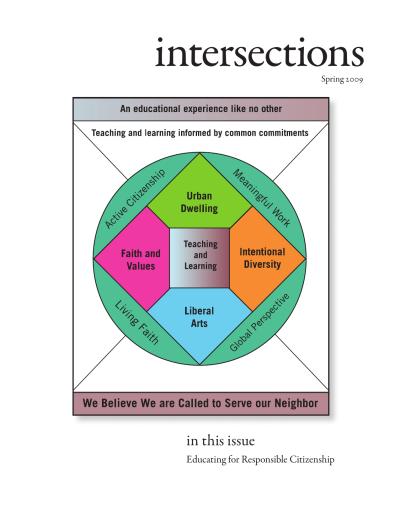
From Alien to Citizen
Arne Selbyg
No. 29 · Spring 2009
Selbyg reflects on three experiences of being educated for citizenship—growing up in Norway under the legacy of Lutheran pastors and public school teachers who resisted the Nazi occupation, arriving in America as a resident alien, and becoming a naturalized American citizen—and proposes the jazz ensemble as a better metaphor for American society than the melting pot, one in which different citizens learn skills, study other instruments, and dialog with one another in service to the common music.
-
 Editorial
From the Publisher
Arne Selbyg
No. 27 · Spring 2008
Selbyg, retiring this summer as Director for ELCA Colleges and Universities, reflects on his decade serving as spokesperson between the church and its twenty-eight colleges and universities, and argues that the link between the colleges and the church has grown stronger over the last ten years — sustained by supportive church leaders like Presiding Bishop Mark Hanson, the annual Vocation of a Lutheran College conference, and a Lutheran theology of higher education whose principles (questioning authority, returning to the sources, including the excluded, serving the neighbor) remain a strong basis for operating colleges and universities in the twenty-first century.
-
 Editorial
From the Publisher
Arne Selbyg
No. 26 · Fall 2007
Selbyg notes that, while a stated purpose of Intersections over its twelve years and twenty-six issues has been the intersection of faith, learning, and teaching, surprisingly few articles have addressed how Lutheran faculty teach and why — and credits the editor for assembling essays from authors whose teaching has benefited from the ELCA Wittenberg Center, on the eve of the City of Wittenberg’s “Luther Decade” leading up to the 2017 Reformation anniversary.
-
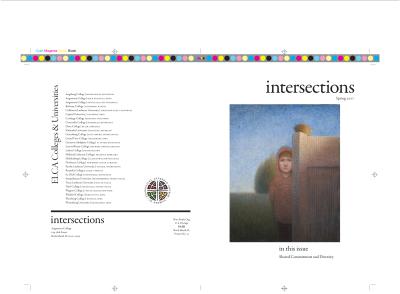 Editorial
From the Publisher
Arne Selbyg
No. 25 · Spring 2007
Selbyg notes that most papers in this issue grew out of a pan-Lutheran conference organized by the Association of Lutheran College Faculties in fall 2006 rather than the annual Vocation of a Lutheran College conference, and argues that the ELCA’s ecumenical posture—truthful but open to learning from others—is a good foundation for institutions of higher education whose faculty likewise profess while remaining subject to change based on new research and insights.
-
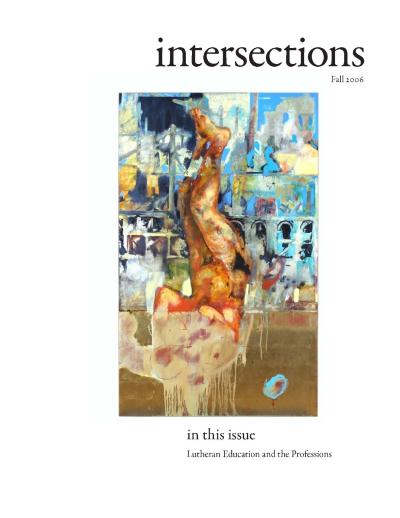 Editorial
From the Publisher
Arne Selbyg
No. 24 · Fall 2006
Selbyg situates this issue in the ongoing ELCA conversation about education that began with the 2005 conference and is feeding into the second draft of the ELCA Social Statement on Education, previews the 2007 conference (“The Vocation of a Lutheran College — Engaging the World”) at Augustana College, Rock Island, and lifts up Luther’s insistence that the church and its members contribute to their wider communities rather than retreat into self-centered enclaves.
-
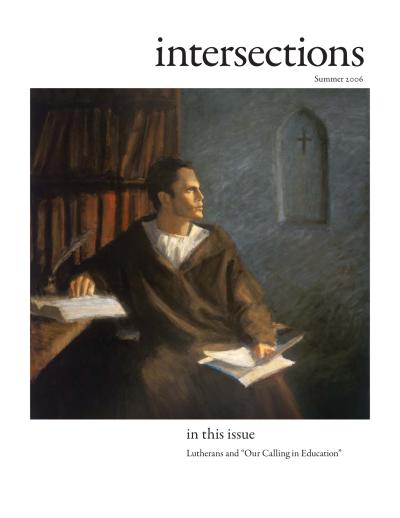 Editorial
From the Publisher
Arne Selbyg
No. 23 · Summer 2006
Selbyg features articles based on presentations at the 2005 Vocation of a Lutheran College conference focused on the upcoming ELCA Social Statement on Education, and urges members of the ELCA higher-education community to download the first draft (“Our Calling in Education”) from the ELCA website and submit feedback to the Task Force on Education before the October 15 deadline. He worries that the sexuality social statement on a 2009 timeline will draw more attention than the education statement, but reminds readers that, for Martin Luther and for those who work in Lutheran higher education, education is as important as sex.
-
 Article
Integrity and Fragmentation: Can the Lutheran Center Hold?
Robert Benne
No. 8 · Winter 2000
Benne answers the conference’s question pessimistically—“the Lutheran center cannot hold in many, if not most of our colleges, because it was never there in an articulated form in the first place”—and distinguishes “Christ of culture” colleges like the Midland Lutheran of his youth (Lutheran by ethno-religious ethos rather than by articulated theology) from James Burtchaell’s “confessional colleges” that operated from a theologically distilled Lutheran humanism. Drawing on Alasdair MacIntyre and Mark Schwehn’s First Things essay on Christian universities, he sketches what a Lutheran center looks like (unity, universality, integrity, a tradition of thought) and how its distortion—reducing the Gospel to justification and ceding everything else to autonomous reason—splits Christ and culture as dangerously as the German church separated Gospel and politics. For colleges that have lost their center, he proposes an “intentional, robust pluralism” that guarantees a Lutheran voice in every department and an “affirmative action for Christians” in hiring.
-
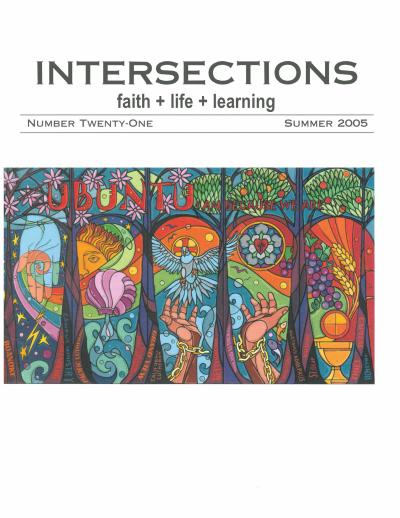 Article
Money, Sex and Power: An Exploration of Some Controversial Issues in the Public Witness of the Church
Pamela K. Brubaker
No. 21 · Summer 2005
Brubaker explores two controversial issues in the church’s public witness—homosexuality and economic life—and the challenges they present for both church and college. Drawing on Beverly Harrison, Elizabeth Bounds, Ron Thiemann, Linell Cady, Marcia Bunge, Richard Hughes, Darrell Jodock, Ernest Simmons, Karen Bloomquist, Garth Kasimu Baker-Fletcher, and Larry Rasmussen, and on episodes at California Lutheran University around “Harmony Week” and Bishop Paul Egertson’s participation in Anita Hill’s ordination, she argues that colleges related to the ELCA are called to educate for “critical citizenship” by hosting rigorous, bold, and unfettered debate—including debate over the neo-liberal globalism that she names a form of economic fundamentalism.
-
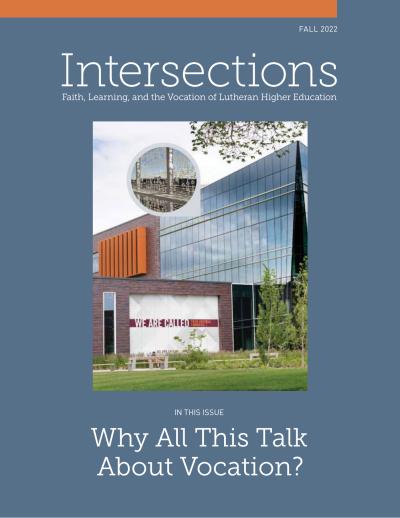 Institutional Focus
LibGuide: Introduction to Womanist Theology
Elli Cucksey
No. 56 · Fall 2022
Cucksey, the head librarian at Trinity Lutheran Seminary, recounts how Beverly Wallace’s Introduction to Womanist Theology class — the first offering of the ELCA Seminaries’ Womanist Theology Initiative — led her to build a publicly available LibGuide that amplifies Black women’s voices and gathers the resources of the course for future students.
-
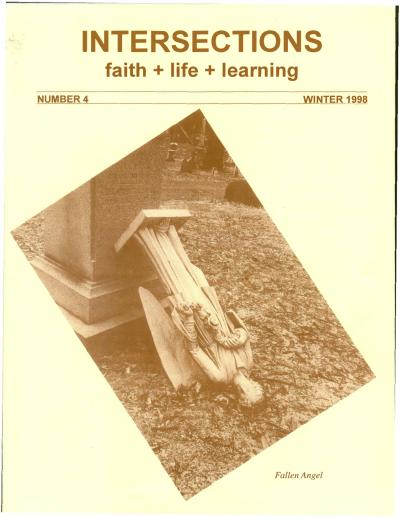 Editorial
The Vocation of a Lutheran College: Some Transitional Thoughts
James M. Unglaube
No. 4 · Winter 1998
Unglaube offers final reflections on thirty years in Lutheran higher education as he leaves the ELCA Division for Higher Education and Schools to join Carthage College, his alma mater. He recalls colleague Richard Solberg’s influence, the closing of Upsala College in 1995, the Higher Education and Namibia program shared with Naomi Linnell, the growth of endowments from $70 million to $1 billion in 25 years, and the Vocation of a Lutheran College project he credits Paul Dovre with inspiring. He likens the twenty-eight ELCA colleges to flowers on a rose bush—same Lutheran tradition, each blossom different—requiring constant nurture if the partnership between church and college is to thrive.
-
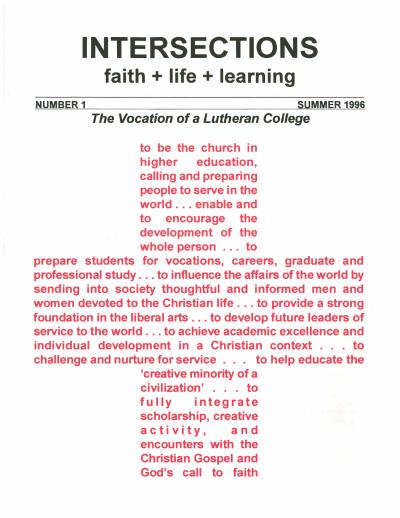 Institutional Focus
Diversity and Dialogue: Gustavus Adolphus College
Florence D. Amamoto
No. 1 · Summer 1996
Amamoto, a third-generation Japanese-American Buddhist who teaches American literature at Gustavus Adolphus and regularly attends daily chapel, writes as an “inside outsider.” Engaging Schwehn’s closing call to refurbish the Lutheran college, she argues that church-related colleges are vitally important to society, that “refurbishing” must take up diversity, and describes how Lutheranism is manifest at Gustavus: Christ Chapel as the highest point on campus, the ecumenical chapel program led for thirty years by Chaplain Richard Elvee, the Nobel Conferences that pair scientists with philosophers and theologians, the First-term Seminar and Tuesday Conversations, the India study-abroad program organized by Deane Curtin, and the Sponberg Chair in Ethics. She names the pressures of money, secularization, and the publications-driven push for “excellence” that threaten this creative tension.
-
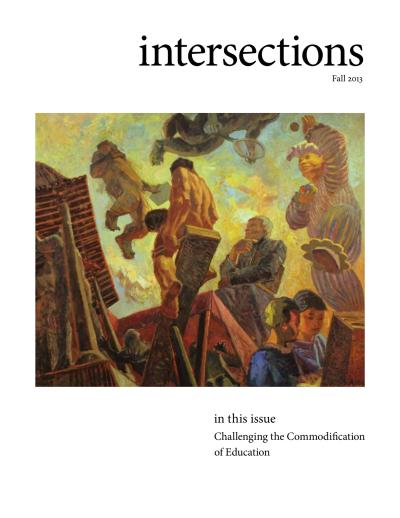 Article
The Value of Evoking Vocation and the Vocation of Evoking Value
Mark Schwehn
No. 38 · Fall 2013
Schwehn answers Michael Staton’s call to “disaggregate” the components of a college degree by insisting that Lutheran education is integral and whole. Working through Bruce Kimball’s history of liberal education, Cardinal Newman, and Leon Kass on Athens and Jerusalem, he argues that Lutherans should defend liberal learning on instrumental grounds and offers the figure of the “local genius”—exemplified by his Valparaiso colleague John Strietelmeier—as the form of human excellence that Lutheran colleges uniquely cultivate.