Nobody likes the Ought. Everyone tries to flee from the Ought whenever it comes around, or even deny it exists.
Moral education is all about the Ought: we ought to do this; we ought not to do that. There is opposition to moral education in college, from students as well as faculty, because not even they want to hear this or be around the Ought. Some say (with respects to Dr. Seuss), “You cannot teach morals to college students because it is too late. They have already been formed by family, school, church, and state.” Or else you hear, “You cannot teach values to college students because that would mold them. You must only expose them, not compose them.”
Now note something about these two very common claims: they make opposite assumptions. The first complaint assumes that students are already formed (and can no longer be shaped morally), whereas the second charge assumes that students are not formed (and should shape themselves). Curiously, you hear both objections out of the same mouth in the same conversation: “You cannot teach morals because students’ morals are already formed.” “You cannot teach morals because you will form students’ morals.” Both cannot be true.
Why do we hear these contradictory objections to moral formation? The answer is that both share the same fear, the fear of the Ought. As is often the case, opposites are joined by a common threat. In this case, both feel threatened by the demands posed by the Ought. They feel threatened because the Ought intends to shape them in ways they do not want. So when students meet moral demands in the classroom and feel the presence of the Ought they will say, “The Ought cannot be real. Since our upbringings are so diverse, and we see things so differently, the Ought has to be something different for each us.” In this way they convince themselves that the Ought is not actually there in the classroom with them at all, but only their personal, pet oughts—which is not the real animal. Or, when some faculty find out that the Ought has been allowed into the classroom, they complain, “The Ought must leave. There must only be oughts in the room. Only those oughts are allowed which we choose to be oughts.” In so professing they too banish the Ought, since an ought we choose is really not the Ought at all. (A clever way to deny the Ought—while appearing to acknowledge it—is to allow that we each already have oughts we bring with us, so why concern ourselves with the Ought which supposedly encounters us?) Once more, when the Ought starts to enter, we close the classroom door.
This fear and denial of the Ought tells us something important about ourselves. For one, the fact that we feel threatened shows that we sense the presence of the Ought. How else do we explain our contradictory objections to the moral formation of students, or why we protest so zealously against it? If the Ought were really nothing, we would simply ignore it, as we would the claim that there is a ghost in the room. We feel threatened because we realize that the Ought intends to shape us. That is why we flee from it and even deny it exists. Evidently we have the mind, heart, and will to sense the Ought, to respond to it, and to be shaped by it, yet we do not want to use those capacities. Finally, what does it say about us that we realize something exists, yet refuse to respond to it and even deny it? It says that there is something obstinate about our moral nature. This entrenched stubbornness, whatever it is, prevents us from seeing moral demand before our eyes, and obstructs moral education.
How might we overcome this obstinacy? Can we get the Ought in the classroom without causing students and faculty to flee? As we have seen, we refuse to see the Ought in front of us; but we might sense it behind us, nudging us. Perhaps there we can hear its presence and not close our ears, feel its breath and its clasp on our shoulders and not cover up.
It might work this way. Let students and faculty begin by supposing that there really could be an Ought. (Isn’t it possible that moral demand encounters us and is not invented by us? That the difference between right and wrong is objective and not subjective?) Then, let us see whether we might find out what the Ought is, if together we search for it by using our moral capacities: examining our moral senses, applying the rules common to us, and weighing our moral judgments, discerning the better ones from the worse.
When we do that we may not find the Ought, though it will find us; for then we will realize that the persons participating in this enterprise deserve respect. To exercise our capacities to be impartial, to sympathize, and to exert our free will gives us distinction and sets us apart as beings with dignity. To realize this is to be grasped by the claim that humans should and should not be treated in certain ways. When that happens the Ought has entered the room and nudged us. Then we can no longer deny it, and we will realize that we need not fear it, though we might be awed by it.
This might seem like a small thing, a naught rather than the Ought, but in that little thing is contained most everything. For it is the Ought which shapes our minds to think clearly, our hearts to feel genuinely, and our wills to act rightly. The Ought can reform the formations of our past, and transform our wants to give purpose to our future.
It is never, therefore, too late, or a mistake, to be shaped by the Ought.
-
 Editorial
From the Publisher
Arne Selbyg
Selbyg notes that while the primary source of articles for Intersections is the annual Vocation of a Lutheran College Conference, this issue draws on participants in the Lutheran Academy of Scholars in Higher Education, whose Lutheran Brotherhood and Lilly Endowment grants have been exhausted but which has been continued through DHES, the colleges, and especially St. Olaf’s release of DeAne Lagerquist to direct it. He draws attention to editor Tom Christenson’s new book The Gift and Task of Lutheran Higher Education (Augsburg Fortress).
-
Editorial
From the Editor
Tom Christenson
Christenson reflects on the scarcity of time in over-committed academic lives and posts a tongue-in-cheek help-wanted advertisement for his own successor as editor. He introduces the issue’s four authors as “three friends and one new acquaintance” whose work addresses Lutheran higher education, the significance of Paul Ricoeur, the implications of being a reformation community, and the perils of teaching ethics.
-
Article
Academic Vocation: What the Lutheran University has to Offer
Wendy McCredie
Writing as a practicing Lutheran, a trained literary scholar, and the associate director for interpretation at the ELCA churchwide office, McCredie articulates a vocation for ELCA colleges and universities grounded in the dialogical tension Gilbert Meilaender names between “bonds of particular love” and “a love which is open to every neighbor.” Drawing on Berube and Nelson, Marsden, Pelikan, Schwehn, Toulmin, Simmons, Hughes, MacIntyre, and Wolterstorff, she argues that Lutheran tradition resists both the easy separation and the collapse of sacred and secular, that human reason errs while God’s grace makes action possible, and that listening to the marginalized and to those outside the tradition is itself a theology of the cross enacted in classroom and collegial life.
-
Article
Dual Citizenship in Athens and Jerusalem: Ricoeur's Hermeneutics and the Promise of Lutheran Higher Education
Mark C. Mattes
Mattes proposes a Lutheran model of Christian higher education that develops conversation between faith and learning while preserving the integrity of each, in contrast to Reformed, Roman Catholic, and Mennonite/free-church alternatives. Drawing extensively on Paul Ricoeur’s hermeneutics of suspicion and retrieval, his account of myth and symbol, and his understanding of truth as manifestation rather than mere correspondence, Mattes argues that issues of faith can be genuinely public; that the four phenomenological contours of dialogue—risk, listening, mutuality, and open-endedness—mark authentic Lutheran pedagogy; and that Lutheran education is best served when it charts a path between accommodationist and sectarian responses to the liberal-rationalist tradition.
-
Reflection
Reflections on Lutheran Identity on Reformation Sunday
Thomas W. Martin
Beginning with an “intellectual vertigo” experienced when his celebrant announced that “today the Church gathers to celebrate the Reformation,” Martin—a biblical scholar who has belonged to four Protestant denominations—asks how Lutherans should tell their own foundational myth. He argues that the Reformation was a mixed bag whose dark side includes a century of religious warfare and the killing of Anabaptists; that Luther himself is too mythic a figure to monopolize; and that distinguishing “constitutive” from “prophetic” reading (after James Sanders) opens the way to a Reformation Sunday told “together with” rather than “over and against” the rest of the Church—one that mixes repentance for the dark with celebration of the glory.
-
Poem
Unpossible
Tim Knopp
A new Capital University education graduate reflects on the bargain of trading childhood for “four years closer to some hidden knowledge, four years farther from what I once knew,” as the noon chimes call him out into a campus where professors and students teach one another along worn brick paths that “love is” should be “love can be.”
-
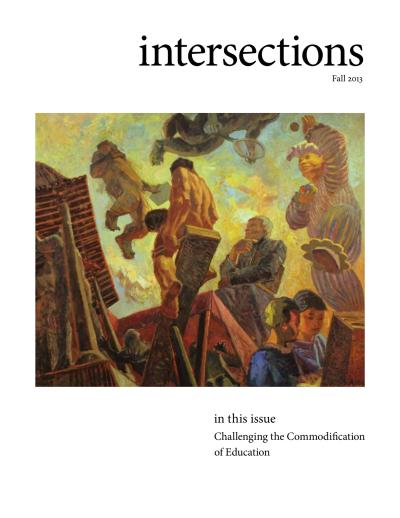 Article
More Value than Many Sparrows: A Sermon on Matthew 10:26-31
Patricia Lull
No. 38 · Fall 2013
Preaching at the 2013 Vocation of a Lutheran College conference, Lull recalls her own arrival at the College of Wooster the summer after Kent State and contrasts that era’s sense of students as participants in a college’s mission with today’s talk of “butts in seats.” Reading Matthew 10:26-31, she promises that the way of the cross—and its hard opportunities for slow-paced learning, genuine debate, and access for students who cannot pay the full cost—is the easy yoke, the lightest burden of all.
-
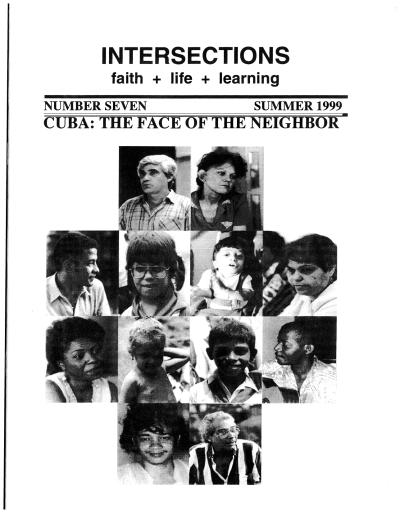 Editorial
From the Publisher
Arne Selbyg
No. 7 · Summer 1999
Selbyg celebrates the popularity of the previous issue—the first to draw on papers from the annual “Vocation of a Lutheran College” conference—and announces a new Lutheran Brotherhood Foundation grant that will fund the inaugural Lutheran Academy of Scholars in Higher Education, a two-week seminar at Harvard led by Ronald Thiemann on “Finding Our Voice: Christian Faith and Critical Vision.”
-
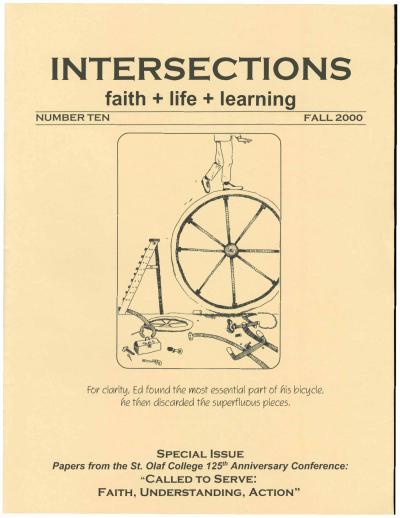 Editorial
From the Editor
Tom Christenson
No. 10 · Fall 2000
Christenson recommends the St. Olaf 125th-anniversary volume Called to Serve—edited by Pamela Schwandt with Gary de Krey and L. DeAne Lagerquist—particularly Walter Sundberg’s “What Does It Mean To be Lutheran?” and Darrell Jodock’s “The Lutheran Tradition and the Liberal Arts College.” He notes that the volume’s biographical sketches of Lars Boe, F. Melius Christiansen, Ole Rolvaag, Emil Ellingson, Agnes Larson, John Berntsen, Arne Flaten, and Howard and Edna Hong show, against an outsourcing age, that the life of an institution like St. Olaf is the committed life of the people who work there.
-
 Article
Called for Life — Affirming Vocational Discernment
Richard L. Torgerson
No. 31 · Winter 2010
Torgerson introduces the “Called for Life” project, a three-year, $278,437 Lilly Endowment-funded collaboration among Luther, Augsburg, and Augustana that—in partnership with Luther Seminary’s Centered Life initiative and Wilder Research—rigorously assessed the effectiveness of campus vocation programs, examining whether students’ exposure to and understanding of calling had increased, and what program elements were most effective in shaping discernment.
-
 Article
Resistance in the Age of Trump: An Interview with Ivonne Wallace Fuentes
Jason A. Mahn, M. Ivonne Wallace Fuentes
No. 45 · Spring 2017
In conversation with Jason Mahn, Roanoke College historian Ivonne Wallace Fuentes describes how she launched a local chapter of Indivisible after the 2016 election, how the skills of teaching and historical research carry over into grassroots advocacy, and how her sense of vocation (vocare) has become intertwined with the work of advocacy (advocare).
-
 Book Review
Vocation on Campus: Reading Mark Tranvik's Martin Luther and the Called Life at Pacific Lutheran University
Alex Lund, Michael Halvorson
No. 47 · Spring 2018
Halvorson and Lund — faculty member and student — review Mark Tranvik’s Martin Luther and the Called Life alongside PLU’s Wild Hope Center for Vocation, weighing the book’s warning against “vocation lite” against the challenge of speaking of God’s call to students in the Pacific Northwest’s “None Zone,” where most students have little exposure to Lutheranism.