After Months of Clouds, the Sun
Dry leaf breezes more wish than
shhh. Sun shines somehow. You can
walk into a space of wishing. Not
sit at your desk head and despair.
Not screen your eyes to blur.
Get up. Walk into breeze and light.
The few stiff rags still hanging on
branches all say locked too long
inside rooms with and without
a window but always the screen.
The kind of looking out you were
doing there was not looking
but addiction to latest explosion
and aftermath. See how the world
holds together—trunks stay rooted,
branches still etch a delicate corner
of sky. The combined shadows of
stop and street signs suggest
weathervane. How to spin
on weather’s hinge
into joy.
First Bird
I thought if I could only live
Till that first shout go by—
Not all Pianos in the Woods
Had power to mangle me—
—Emily Dickinson (348)
Mid-January in the Midwest. Worms twist
in workable loam. Cooled-ash feathers skip
a glowing coal from redbud branch. Its alien
eye gleams, flits, sends spring wheeling.
First bird luck plucked from the bloody crown
of Christ, fire created or stolen. Phenology,
a fairy tale that lures robin from shadows
to glyphs of grass and buds over lawn.
The trouble is when, is should. Remind me
how it happens, the sudden violence that
gets a person feathers. Do the words of forest
music simply frighten or do they mangle?
Give me this season of dread and urge to live in it.
-
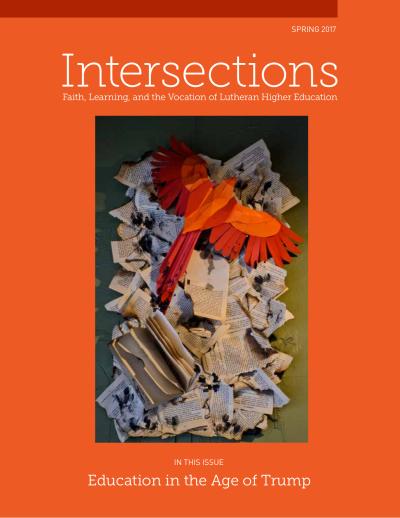 Editorial
From the Publisher
Mark Wilhelm
Wilhelm describes how ELCA colleges and universities have shifted the definition of Lutheran higher education away from institutional markers toward alignment with educational values drawn from the Lutheran intellectual tradition — and previews a NECU-convened faculty working group whose recommendations will go to the ELCA college presidents at their June 2017 conference on Lutheran identity.
-
Editorial
From the Editor
Jason A. Mahn
Mahn introduces “Education in the Age of Trump” by recounting a difficult academic year on his own campus — the Augustana “chalking” incident, a Latinx Unidos rally, and post-election conversations with marginalized students and quietly conservative Trump supporters alike — and frames the issue’s essays as careful (re)imaginings of the vocation of Lutheran higher education in an anxious political climate.
-
Article
Higher Education in the Age of Trump
Daniel B. Braaten
Braaten surveys what the Trump administration has and has not done on higher education — from the selection of Betsy DeVos and a rumored Falwell-led task force to the travel ban and expanded deportation priorities — and argues that Lutheran colleges, guided by the ELCA’s social message on immigration, have a special obligation to consider what they will do to protect their most vulnerable students.
-
Article
Resistance in the Age of Trump: An Interview with Ivonne Wallace Fuentes
Jason A. Mahn, M. Ivonne Wallace Fuentes
In conversation with Jason Mahn, Roanoke College historian Ivonne Wallace Fuentes describes how she launched a local chapter of Indivisible after the 2016 election, how the skills of teaching and historical research carry over into grassroots advocacy, and how her sense of vocation (vocare) has become intertwined with the work of advocacy (advocare).
-
Article
Religion in the Age of Trump
Daniel A. Morris
Morris reads the 81% evangelical vote for Donald Trump through two historical theses: that evangelicals’ once-coherent story about Godly participation in political life has fallen apart, and that their long-running tendency to exclude others — once aimed at Black Americans and Catholics — has now turned decisively against Muslims. He argues that scholars of religion and politics have a responsibility to tell these stories well, and that appeals to classroom objectivity can no longer be a luxury.
-
Article
Room at the Table: Reflections on Identity and Inclusion from a Lutheran-Friendly Muslim
Rose Aslan
Aslan reflects on her experience as a Muslim professor of Islamic studies at California Lutheran University — teaching “Introduction to Christianity” from her strengths in the Abrahamic religions, preaching an Eid khutba in a Lutheran chapel, and conversing with the university’s convocators — and proposes “Lutheran-friendly Muslim” as a way of being host and guest at once in a pluralistic Lutheran institution.
-
Article
Jonah: The Anti-Hero of Vocation
Martha E. Stortz
In a chapel talk first given at Augsburg College’s Vocation 2.0 series in September 2016, Stortz reads the prophet Jonah as the great anti-hero of vocation — one who tries to outrun God’s call to the great city of Nineveh — and argues that, in a season of urban violence and divisive election-year rhetoric, the story is less about public calling than about being called by the publics in our midst.
-
Article
Why Did the Chicken Cross the Road? A Homily on Liminality and Vocation
Lori Brandt Hale
Drawing on Wes Moore’s The Other Wes Moore, Warren St. John’s Outcasts United, Victor Turner’s anthropology of liminality, and Dietrich Bonhoeffer’s poem “Who Am I?”, Hale considers how Hmong, Muslim, Latinx, LGBTQ+, non-traditional, and other students live in “double liminal” spaces — and asks whether liminality might itself be a place of transformation in conversations about vocation.
-
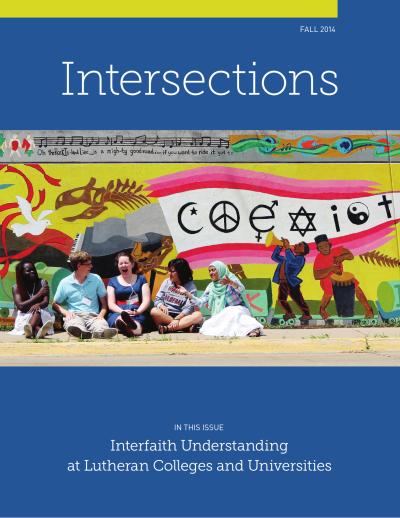 Article
Well, Well…Plumbing Our Depths, Telling Our Stories
Ann Boaden
No. 40 · Fall 2014
Beginning with a college visit that turned into a grieving mother’s confidence about her daughter’s last moments, Boaden uses John 4’s well of living water to argue that an interfaith education worthy of the name requires Lutherans to plumb the depths of their own tradition’s wells — with rituals, stories, and seasons intact — before they can see, respectfully, into the wells from which others drink.
-
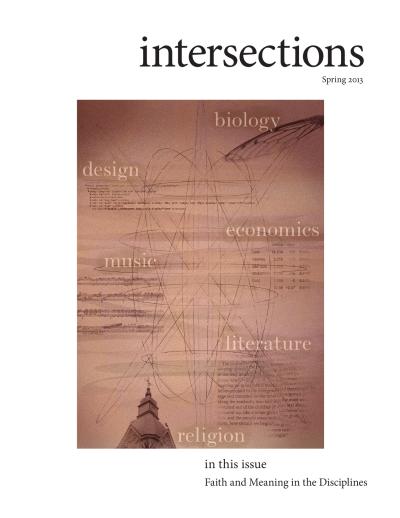 Article
Singing Faith
Adam Luebke
No. 37 · Spring 2013
Luebke describes the Waldorf College Choir as a community of faith whose daily devotions, century-long lineage from F. Melius Christiansen, and disciplined wrestling with sacred repertoire—from Fauré’s Requiem to African-American spirituals to Romans 8 sung backstage—form students spiritually as they form them musically, so that fully grasping what they sing becomes a discovery of why they sing.
-
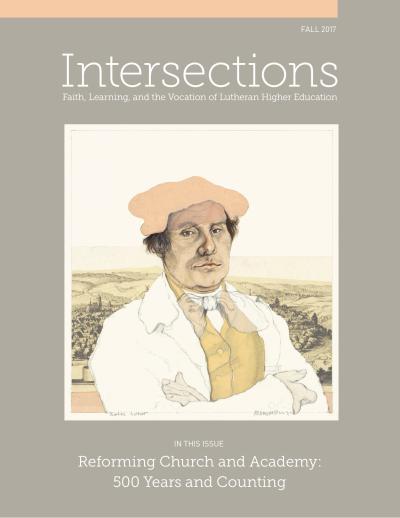 Article
In the Beginning of the Reformation Was the Word
George Connell
No. 46 · Fall 2017
Drawing on a Concordia faculty pilgrimage to German Luther sites, Connell appropriates John’s prologue to frame the Reformation as a movement about words — the printed page, the university classroom, the Marburg confession, the Wartburg translation, Bach’s music, and the dining-room conversations of Table Talk — while soberly noting that words can wound as well as heal.
-
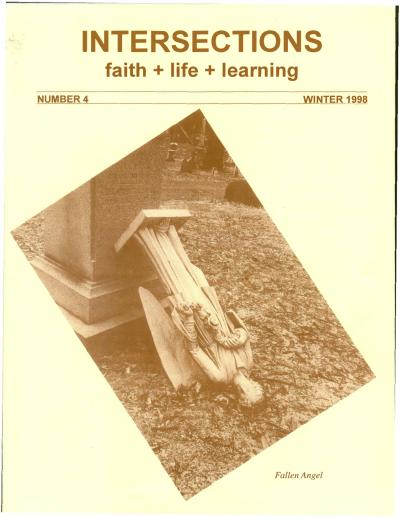 Article
The Skeptical Theologian's Dictionary
Carl Skrade, Spencer Porter
No. 4 · Winter 1998
Porter and Skrade offer selections from a mock-lexicon of theological terms: answer, church, faith, God, grace, hope, justification, love, prayer, sin, soul, and theology, among others. Each entry begins with a standard definition and then unsettles it—answer reminds the reader that in theology and poetry the questions matter more than their answers; church alternates between “the mystical Body of Christ” and ordinary human gatherings whose machinery often obscures the gospel; God is the One whose name we are told not to take in vain and yet whose name we keep using; prayer is communion with God yet often degenerates into a list of demands. The form’s irony exposes the gap between the language of theology and its lived realities—a sober, witty corrective for Lutheran classrooms and chapels alike.
-
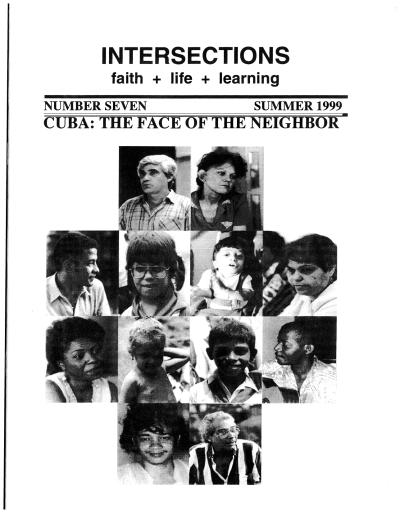 Reflection
Meditation—Band Chapel Service, St. Olaf College
Erik Haaland
No. 7 · Summer 1999
Haaland, a St. Olaf senior, offers a brief Band Chapel meditation that defines art as “the expression of what is deeply human through the manipulation of the physical world” and defends worship—architecture, stained glass, music, eloquence—as an art form requiring our best and most sincere efforts. When the God we worship and the salvation we proclaim do not seem near, artful worship offers not propositions but something real and tangible to hold on to.
-
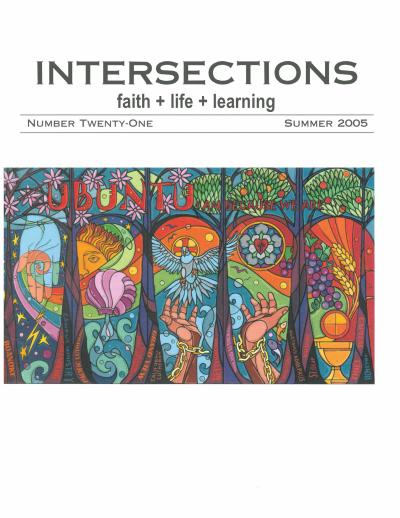 Poem
Poem
Sprigs of Mint
Caitlin McHugh
No. 21 · Summer 2005
McHugh meditates on three light green mint stalks dying in a plastic cup of water in her window frame’s shadow, drawing a parallel between the neglected mint, the “tainted papers” of her unread journals, and the time that both holds her back and drives her forward.