Imaging the Journey … of Contemplation, Meditation, Reflection, and Adventure
By Mark C. Mattes and Ronald R. Darge. Minneapolis: Lutheran UP, 2006. Pp 120. $40.00 (Hardbound). ISBN 1-932688-14-5
In the book, Imaging the Journey … of Contemplation, Meditation, Reflection, and Adventure, the meditations of Mark C. Mattes and the photographs of Ronald R. Darge invite their readers to slow down and consider the beauty that is all around them. The large book (11 x 11) is arranged around seven crucial themes: A spirituality of communication, the newness of the new life, fragmentation and wholeness, ministry as service, renewal in the midst of conflict, vocation, and Alpha and Omega. Mattes, professor of religion and philosophy at Grand View College (Des Moines, IA), provides rich meditations built upon a distinctly Lutheran perspective. Darge, an ELCA pastor and instructor in religion and creative photography also at Grand View College, offers striking photographs which perfectly complement the words of Mattes. That is not to say that the photographs are in any way secondary to the written reflections. In fact, the words and pictures work together to create a space for meditation that alone neither element could achieve. The balance between the heard and the seen is brought together with corresponding short prayers by Ronald Taylor, provost of Grand View College.
Also published in 2006, Mattes served on a team of editors to produce The Grand View College Reader (see below). In that volume, Mattes offered a number of selected writings by N.F.S. Grundvtig. Grundtvig profoundly influenced the original founders of Grand View College. It is fitting, therefore, that several of the meditations were influenced by Grundtvig. In the October 2007 issue of Church and Life, Mattes writes, “While not all the meditations are influenced by Grundtvigian thinking, several are, and they have been good venues by which to introduce students in introductory religion courses into the thinking of N.F.S. Grundtvig.” Readers of Imaging the Journey will certainly also appreciate the introduction (or re-introduction) to the thinking of this powerful Danish theologian.
While each page of this book offers a number of memorable images and quotable lines of devotion and reflection, it is in his writing on vocation that Mattes is at his finest. For example, Mattes observes, “We are far more interdependent on each other than we recognize. The fact that we have never met the farmers who have raised our daily bread does not mean that we have no connection to them. Quite the opposite is true. Even in such anonymity we are dependent on their good graces and sense of responsibility.” It is with such striking and vivid language that readers are invited to consider their own vocation and their own relationship with a community that is much larger and more interdependent than we can even imagine.
A review of Imaging the Journey will, by necessity, focus of the written portion of the text. It is impossible to describe through words the photographs which grace each meditation. It is possible, however, to convey the power delivered by each image. Readers will find that each picture encourages meditation in fresh ways. In addition, many of the images will “stick with” the reader long after the book has been closed.
This book will appeal to a wide variety of readers, but will certainly find a home in the home, church, or workplace of those who desire to grow in their spirituality. In addition, this book would work well for couple, family, or small group devotions. Let us hear the call from Mark C. Mattes and Ronald R. Darge and image the journey!
The Grand View College Reader
Edited by Mark Mattes, Evan A. Thomas, Kathryn Pohlman Duffy, and Ronald Taylor. Minneapolis: Lutheran UP, 2006. Pp 134. $12.00 (paper). ISBN 1-932688-17-X
This volume presents the history, heritage, and values of Grand View College (Des Moines, IA), while emphasizing both the college’s rich traditions and bright future. The writers explore the core values of the founders and how those values have shaped the college’s liberal arts program.
In the first section, Foundations, readers are provided a thorough overview of the college’s history and values. Thorvald Hanson, professor emeritus of sociology, explains that “Grand View College is the result of the educational endeavors of Danish-Americans who were deeply influenced by the teachings of the churchman educational philosopher, theologian, historian, and linguist, N.F.S. Grundtvig (1783-1872).” Hanson provides a helpful and detailed review of Grundtvig’s view of education and Mark C. Mattes, professor of philosophy and religion, offers selected writings from Grundtvig on education, culture, and religion. After this glimpse of the College’s founders, readers are invited to consider “Symbols and Folklore of the Past Speaking Today.” Mattes, with English professors Norma Bolitho and Solveig Nelson, and 2007 graduate Matthew Nemmers, takes readers on a virtual tour of the Grand View campus. The authors describe the symbols of Grand View’s heritage and provide a “list that decodes some of those symbols and interprets that folklore.” This chapter proves to be a perfect “travel guide” for visitors. Next, associate professor of philosophy and religion, Kenneth Sundet Jones, explores the Lutheran identity of the college. Jones concludes that, “When a Lutheran college sends you out into the world, it doesn’t just do it for your own benefit. [It] sends you out to be of good use to the world God has given you.” Campus pastors, LeAnn Stubbs and Jack Mithelman, follow with an overview of campus ministries. They explain that various programs engage students with the “big questions of life” in a “safe environment where students are encouraged to ask and wrestle with questions and wait upon the answers; doing this enables us to grow as human beings and as people of faith.” The first section concludes with a history of student life at Grande View by Evan A. Thomas, professor of history. This chapter serves not only as a history of the college, but also as in insightful look at American social history. For example, we are provided with a glimpse at how both World War I and World War II impacted student life.
The second section, Creativity, includes eight chapters exploring the variety of creative expression found at the college. Kevin Gannon, assistant professor of history, and Amy Getty, associate professor English, begin with an overview of the liberal arts tradition at Grand View. The authors emphasize that one of the goals of a liberal arts education is to teach students not what to think, but how to think. They show the importance of this in the classroom and the world. After the introduction to the liberal arts, seven different examples of “creativity” are explored. Included are the music programs, the health, physical education, and sport programs, folk dancing, the visual arts, images by current art faculty, “onstage” productions, and Grand View College’s heritage of healing. It is here that the beauty, care, and quality of this book might be most evident. Readers are treated to eight color images that challenge and comfort. It is clear from this section that the students, faculty, and staff of Grand View College are working to integrate creative thinking and artistic expression into the daily life of their liberal arts education.
The final section, Vocation, includes four reflections. Gannon builds upon his previous description of the liberal arts by exploring multiculturalism. He explains that, “At present, Grand View College is an institution that presents a dual nature: it reflects the reality of urban diversity while continuing to embrace the core values of its Danish Lutheran, Folk-School heritage.” It is in this dual nature that Grand View finds its vocation as an institution and where the vocations of the students are nurtured. Professor of sociology, Ammertte C. Deibert, follows with a description of “A Vocation of Peace and Justice.” He describes Grand View College’s commitment to “deep learning,” and notes that this type of education “facilitates continuous intellectual growth and promotes inquiry which looks beyond the individual self toward wider spheres of social interdependence.” He concludes that as students contemplate such issues, they are also encouraged to consider that in their own vocations, they might choose deeper relationships advocating peace and justice. Steven Snyder, professor of humanities, contributes a short article titled, “With a Little Help from our Friends.” Snyder reminds current students and those who have completed their educations of the importance of relationships made in college. The book concludes with the “President’s Reflections” by Kent Henning. President Henning offers what might serve as both an ideal address on the opening day of classes and a moving address at commencement. Here, he balances what Grand View College provides its students with what the students contribute to the college. While the book is written primarily for the Grand View College community, it will also be of interest to others who are interested in how specific core values shape an educational institution.
-
 Editorial
From the Publisher
Arne Selbyg
Selbyg notes that, while a stated purpose of Intersections over its twelve years and twenty-six issues has been the intersection of faith, learning, and teaching, surprisingly few articles have addressed how Lutheran faculty teach and why — and credits the editor for assembling essays from authors whose teaching has benefited from the ELCA Wittenberg Center, on the eve of the City of Wittenberg’s “Luther Decade” leading up to the 2017 Reformation anniversary.
-
Editorial
From the Editor
Robert D. Haak
Haak introduces the issue with the question of whether “our Lutheranism” should have any discernible effect on how we operate as Lutheran colleges, and proposes a working list of “Lutheran” values that characterize our institutions — complexity, real evil, suffering as part of human experience, the centrality of discourse, transcendent values, attention to place, institutional self-criticism, and unity over division — inviting campuses to extend the conversation begun by Simmons, O’Hara, and the Wartburg colleagues.
-
Article
Lutheran Higher Education and the Public Intellectual
Ernest L. Simmons
Simmons argues that college faculty and administrators are, like it or not, public intellectuals, and that Lutheran higher education’s dialectical understanding of Christ and culture is well suited to support four functions of the public intellectual: articulating constructive critique of received social explanation (especially the “collage identity” described by Renate Schacht); presenting a transcendent theological perspective through the theology of the cross that takes seriously God’s hiddeness, the presence of ambiguity, and the reality of suffering; pursuing the common good amid the demise of the “commons” through H. Richard Niebuhr’s “Christ and Culture in Paradox”; and educating for citizenship through Christian vocation by connecting the practical and existential dimensions of the question “Why are you here?”
-
Article
The Vocation of a Lutheran College—Living the Legacy of the Reformation in the Twenty-first Century
Sabine U. O'Hara
O’Hara reflects on Luther’s understanding of education as Bildung — “becoming in the image of God” — through four key aspects: education must be relevant, education demands engagement with the community, education requires attention to place, and education demands engagement with the world. Drawing on her German upbringing, her work as president of Roanoke College, and on Darrell Jodock and Dietrich Bonhoeffer, she argues that Luther’s vision of a well-educated citizenry as the priesthood of all believers calls Lutheran colleges to messy, interdisciplinary, communal scholarship in service to the neighbor.
-
Article
Lutheran Heritage Across the Curriculum: Reflections from a Faculty/Staff Development Seminar
Cynthia Bane, Fred Waldstein, Kathryn A. Kleinhans, Penni Pier
Four Wartburg College colleagues share fruits of the 2006 Lilly-funded “Discovering and Claiming Our Callings” faculty/staff development seminar in Wittenberg, Eisenach, and Neuendettelsau. Kleinhans frames the curriculum and books used; Bane (psychology) finds Lutheran convictions about the value of humans, the affirmation of creation, and the universality of sin congruent with her discipline; Pier (communication arts) reads Luther as a model of dialectical rhetoric that gives educators permission to challenge students with uncomfortable ideas; and Waldstein (political science) reflects on the paradox of humility and self-confidence in Luther and on the Luther-Melanchthon collaboration as a model for the seminar group’s own work.
-
Article
No Child Left Behind Meets Philip Melanchthon: A Reflective Conversation
Kathy Book
Inspired by Tim Lull’s My Conversations with Martin Luther, Book imagines an interview with Philip Melanchthon in the cobblestone courtyard of the University of Wittenberg, in which the Praeceptor Germaniae reflects on his pedagogy (Socratic questioning, brevity and example, declamations, repetition, and interdisciplinary connections), his graded curriculum from primer to university, and his collaboration with Luther on the responsibility of community, parents, and government for the education of all children — and finds his vision strikingly resonant with the No Child Left Behind legislation of 2006.
-
 Article
Sustaining Sustainability
Baird Tipson
No. 36 · Fall 2012
Tipson—former Provost of Gettysburg College, President of Wittenberg University, and President of Washington College—reads Romans 12:2 (“be not conformed to this world…”) against Victor Ferrall’s Liberal Arts at the Brink and the contemporary financial reality of small Lutheran colleges. He tells three case-study stories from Washington College’s Center for the Environment and Society—the Chino Farms partnership, the Chesapeake Semester, and the acquisition of the work boat Callinectes—to show how presidents must engage “the world” to secure resources for sustainability work without being conformed to it.
-
 Reflection
The Long Pilgrimage of 2020-21
Kara Baylor
No. 52 · Fall 2020
Drawing on Martha Stortz’s definition of pilgrimage as “intentional dislocation, for the sake of transformation, where the body teaches the soul,” Baylor invites students and educators worn out by the 2020-21 academic year to ask what is essential, to listen to what their bodies are telling their souls, and to be more open to the transformations the dislocation might still yield.
-
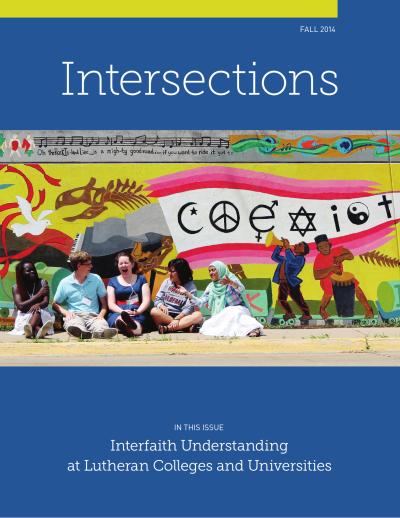 Article
Well, Well…Plumbing Our Depths, Telling Our Stories
Ann Boaden
No. 40 · Fall 2014
Beginning with a college visit that turned into a grieving mother’s confidence about her daughter’s last moments, Boaden uses John 4’s well of living water to argue that an interfaith education worthy of the name requires Lutherans to plumb the depths of their own tradition’s wells — with rituals, stories, and seasons intact — before they can see, respectfully, into the wells from which others drink.
-
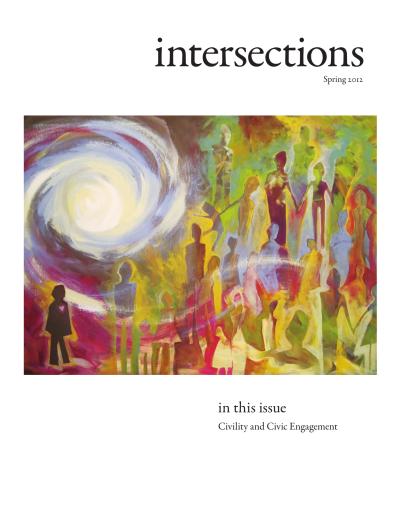 Article
Critical Engagement in Public Life: Listening to Luther's Troubling Questions
Samuel Torvend
No. 35 · Spring 2012
Torvend narrates the medieval “spiritual/temporal” division and the neo-platonic devaluation of the body that shaped the world into which Luther was born, then traces the disruptive questions Paul’s letters provoked in Luther: about indulgences, the two estates, vocation, and the public reach of baptism. He argues that Luther’s reform — expressed in Kirchenordnungen, social welfare reform, public schools, and writings on lobbyists, usury, and monopolies — carries a “genetic encoding” of public engagement that Lutheran colleges should reclaim against the temptations of holy apathy and Christian nationalism.
-
 Response
Response to Robert Benne
Baird Tipson
No. 17 · Summer 2003
Tipson responds to Robert Benne’s comments in the previous issue about his review essay of The Future of Religious Colleges, affirming their fundamental agreement that the Enlightenment epistemology dominant in higher education poses the most serious threat to the vitality of Lutheran colleges. Using the example of lecturing on early Mormon history and the Book of Mormon, he concedes that the methodological “solvent” of Enlightenment historiography acts on Christian as well as Mormon faith claims, and concludes that while H. Richard Niebuhr’s “inner” and “outer” history and Walter Brueggemann’s approach in The Theology of the Old Testament are comforting to believers, they do not offer an epistemology that can stand alongside the Enlightenment model in evaluating truth claims in the academy.
-
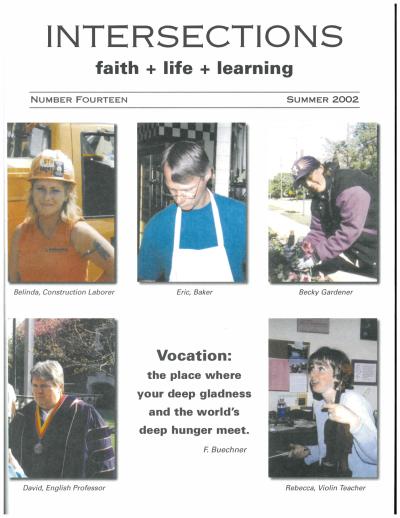 Article
Vocational Discernment: A Comprehensive College Program
Darrell Jodock
No. 14 · Summer 2002
Jodock, whose Gustavus Adolphus was one of twenty colleges to receive a Lilly “Theological Exploration of Vocation” grant in 2000, defines vocation not as occupation but as a self-understanding that nests the self in community. Reading Robert Putnam’s Bowling Alone on the collapse of secondary communities alongside Luther’s ethic of community benefit and five Lutheran principles (graciousness, Christian freedom, community, God active in the world, the theology of the cross), he walks through Gustavus’s three-level design—a definition of vocation open to other faith traditions, “middle principles” drawn from Sharon Parks’s Common Fire, and a long menu of programs coordinated by a new Center for Vocational Reflection—hoping that, in the language of Holocaust studies, graduates will be “resisters” and “rescuers” rather than bystanders.