You may have heard, maybe repeatedly, that the Lutheran church has had a strong focus on education since the days of Martin Luther. That is why there are 28 colleges and universities in the United States that are related to the ELCA, eight ELCA seminaries, and thousands of Lutheran early childhood education centers, schools, and campus ministry sites at other colleges and universities. That is also why many Lutherans care deeply about public schools and about other education opportunities and issues.
During 2004 a task force appointed by the ELCA Division for Church in Society was asked to lay the groundwork for a Social Statement on Education, a statement that establishes official ELCA policy on educational issues. The plan is that a draft of such a statement will be debated in congregations and other church and educational forums in 2006 for consideration and adoption at the ELCA Churchwide Assembly in 2007. In order to seek input for that draft, the Task Force has now published a study document. The document sets forth the biblical and theological principles in which the Lutheran views of education should be anchored, reviews the current situation, and challenges the church to take a stand on numerous educational issues, issues which affect everyone from infancy to adulthood.
Now is the time for you to study that document and give your reactions, so that the people who will draft the statement will know what Lutheran educators, and others with ties to the Lutheran educational institutions, think is important, and what they think is right. You can get a copy of the study document from the ELCA Division for Church in Society, Director for Studies, 8765 W. Higgins Road, Chicago, IL 60631, or by sending an e-mail to John.Stumme@elca.org. You may also find it on the ELCA DCS Web site, but since it is more than a hundred pages long, you may prefer to get a printed copy instead of downloading it and printing it yourself.
Living in God’s amazing grace,
Arne Selbyg
Director, ELCA Colleges and Universities
-
 Editorial
From the Editor
Tom Christenson
Christenson introduces an issue featuring “young and old, angry and encouraging, prophetic and hopeful” voices unified by the assumption that Christians engaged in thinking and educating will ask hard questions: how to raise concerns about militarism and the new American “imperialism,” what a Lutheran law school will say about training a new generation of attorneys, and what Lutheran colleges communicate to undergrads about vocation. Such faithful criticism, he argues, is part of who Lutheran institutions are.
-
Article
Mars, Mammon—and Other Options
Carl Skrade
In a wide-ranging public lecture from a Capital University Philosophy and Religion department series on “The Empire, Its Religions, and Some Alternatives,” Skrade distinguishes the military from militarism (using Oxford and Chalmers Johnson definitions), catalogs evidence of contemporary U.S. militarism—budget allocations, arms sales, the military-academic complex, post-1945 interventions, overseas bases, and Bush-era profiteering through Bechtel and Halliburton—and traces its roots in resource greed, racism, right-wing religiosity, and Augustinian incurvatus in se ipsum. After surveying the financial and human costs through testimony from Jonathan Shay’s Achilles in Vietnam, Samuel Hynes’s The Soldier’s Tale, Dalton Trumbo’s Johnny Got His Gun, and Staff Sergeant Jimmy Massey, he applies Vincent Ferraro’s seven principles of just war to Gulf II, reads Matthew 5:43-48 as a call to indiscriminate care, and proposes a www.religiousleft.org website to host a Christian alternative to Mars and Mammon.
-
Article
Leading Students to Distinguish Between Career and Vocation: Reflections from a Lutheran Law School
Steven C. Bahls
Bahls, writing as former dean of the Capital University Law School, argues that most law students and many legal educators confuse vocation with career—asking “what kind of lawyer do you want to be?” rather than “who do I want to be?” Drawing on John O. Mudd’s five attributes of a well-prepared lawyer and Susan Daicoff’s empirical research on lawyer dissatisfaction and the “amoral professional role,” he turns to Ernest L. Simmons’s and Darrel Jodock’s articulations of Luther’s understanding of vocation and proposes five steps—reflection, assessment, vision, integrative thinking, and reassessment—along with explicit leadership from law school deans, engagement of career services offices, and leadership within the profession (illustrated by Capital’s joint venture with the Columbus Bar Association).
-
Article
Luther's Theology of Learning: Discovering the Vocation of Today's Small Lutheran Liberal Arts College
Eric Childers
In an excerpt from his Wake Forest University Divinity School senior thesis, Childers profiles six students hand-picked by presidents and chaplains at Concordia College (Moorhead), Lenoir-Rhyne College, and Muhlenberg College—Nathan Gossai, Amy Nelson, Alison Schmidt, Ryan Sigmon, Julie Christianson, and Jeffrey Slotterback—as a living testament to Luther’s theology of learning. He then draws on Solberg, Mark R. Schwehn (in Paul J. Dovre’s The Future of Religious Colleges), Robert Benne, Ernest Simmons, Mark Noll, Richard Hughes, and James Burtchaell to argue that Lutheran colleges have not yet fully articulated their own theology of education and that their vocation is to embrace, engage, and galvanize a Lutheran tradition of learning rooted in the liberal arts, Scripture, the Confessions, and confident ecumenism.
-
Book Review
Review of Educating for Shalom: Essays on Christian Higher Education
Tom Christenson
Christenson reviews Nicholas Wolterstorff’s Educating for Shalom: Essays on Christian Higher Education (Eerdmans, 2004), edited by C.W. Joldersma and G.G. Stronks. After recounting his own early prejudice against Wolterstorff’s Reason Within the Bounds of Religion and his subsequent conversion through Art in Action, he focuses on two threads: Wolterstorff’s expansive reading of shalom—not merely peace but justice, community, communal responsibility, and delight—as the overall goal of Christian collegiate education, and the influence of Abraham Kuyper’s claim of “privileged cognitive access” for Christian inquirers, which Wolterstorff demonstrates rather than declares.
-
 Article
From Alien to Citizen
Arne Selbyg
No. 29 · Spring 2009
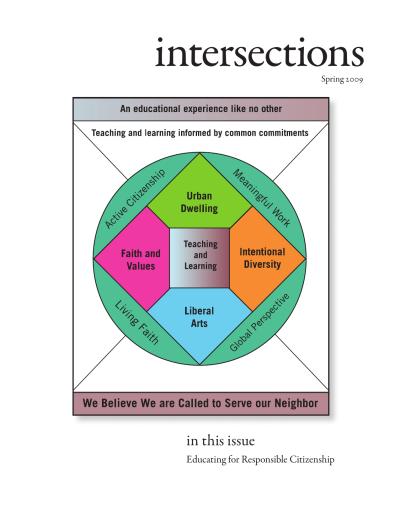
Selbyg reflects on three experiences of being educated for citizenship—growing up in Norway under the legacy of Lutheran pastors and public school teachers who resisted the Nazi occupation, arriving in America as a resident alien, and becoming a naturalized American citizen—and proposes the jazz ensemble as a better metaphor for American society than the melting pot, one in which different citizens learn skills, study other instruments, and dialog with one another in service to the common music.
-
 Editorial
From the Publisher
Arne Selbyg
No. 27 · Spring 2008
Selbyg, retiring this summer as Director for ELCA Colleges and Universities, reflects on his decade serving as spokesperson between the church and its twenty-eight colleges and universities, and argues that the link between the colleges and the church has grown stronger over the last ten years — sustained by supportive church leaders like Presiding Bishop Mark Hanson, the annual Vocation of a Lutheran College conference, and a Lutheran theology of higher education whose principles (questioning authority, returning to the sources, including the excluded, serving the neighbor) remain a strong basis for operating colleges and universities in the twenty-first century.
-
 Editorial
From the Publisher
Arne Selbyg
No. 26 · Fall 2007
Selbyg notes that, while a stated purpose of Intersections over its twelve years and twenty-six issues has been the intersection of faith, learning, and teaching, surprisingly few articles have addressed how Lutheran faculty teach and why — and credits the editor for assembling essays from authors whose teaching has benefited from the ELCA Wittenberg Center, on the eve of the City of Wittenberg’s “Luther Decade” leading up to the 2017 Reformation anniversary.
-
 Editorial
From the Publisher
Arne Selbyg
No. 25 · Spring 2007
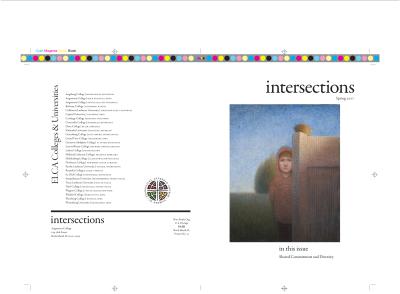
Selbyg notes that most papers in this issue grew out of a pan-Lutheran conference organized by the Association of Lutheran College Faculties in fall 2006 rather than the annual Vocation of a Lutheran College conference, and argues that the ELCA’s ecumenical posture—truthful but open to learning from others—is a good foundation for institutions of higher education whose faculty likewise profess while remaining subject to change based on new research and insights.
-
 Editorial
From the Publisher
Arne Selbyg
No. 24 · Fall 2006
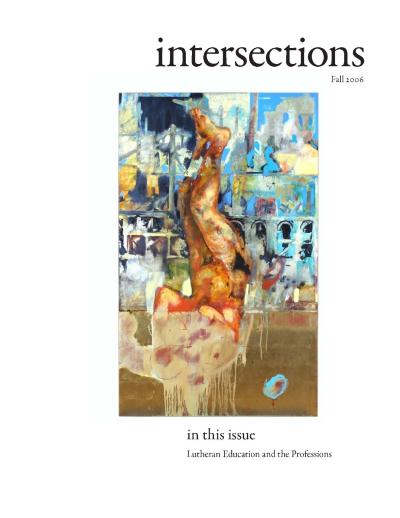
Selbyg situates this issue in the ongoing ELCA conversation about education that began with the 2005 conference and is feeding into the second draft of the ELCA Social Statement on Education, previews the 2007 conference (“The Vocation of a Lutheran College — Engaging the World”) at Augustana College, Rock Island, and lifts up Luther’s insistence that the church and its members contribute to their wider communities rather than retreat into self-centered enclaves.
-
 Editorial
From the Publisher
Arne Selbyg
No. 23 · Summer 2006
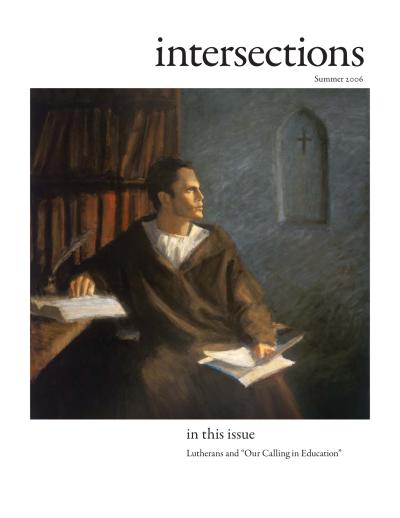
Selbyg features articles based on presentations at the 2005 Vocation of a Lutheran College conference focused on the upcoming ELCA Social Statement on Education, and urges members of the ELCA higher-education community to download the first draft (“Our Calling in Education”) from the ELCA website and submit feedback to the Task Force on Education before the October 15 deadline. He worries that the sexuality social statement on a 2009 timeline will draw more attention than the education statement, but reminds readers that, for Martin Luther and for those who work in Lutheran higher education, education is as important as sex.
-
 Book Review
Old and New Ideas of the Liberal Arts: A Review of Claiming Our Callings
David Crowe, Katie Hanson
No. 41 · Spring 2015
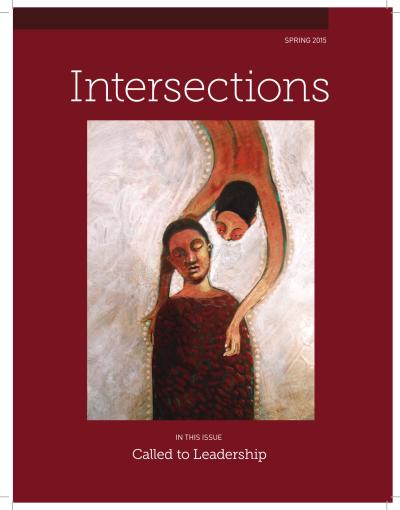
Crowe and Hanson review Claiming Our Callings: Toward a New Understanding of Vocation in the Liberal Arts (Oxford 2014), a collection of thirteen essays by St. Olaf faculty edited by Kaethe Schwehn and L. DeAne Lagerquist. They commend the book’s thoughtful, sincere engagement with consumerism, sustainability, Buddhist meditation, and Lutheran-Bonhoefferian theology — and recommend it for any liberal arts campus pulled between idealistic mission and career-minded pressure.
-
 Article
Service Beyond the Comfort Zone
Kathryn Wolford
No. 18 · Fall 2003
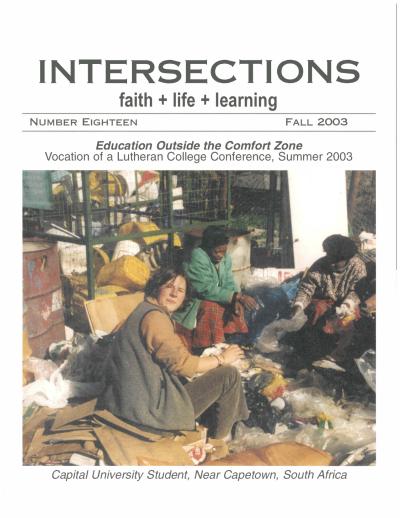
Wolford names economic globalization and the growth of civil society as the two issues shaping Lutheran World Relief’s mission, illustrating with the Guatemalan storekeeper undercut by subsidized “gringo” chickens, fair-trade coffee and chocolate campaigns, and Charles Onyango-Obbo’s warning about anti-terrorism laws in fragile African democracies. Drawing on Darrell Jodock, Art Simon, and the Good Samaritan, she frames the global vocation of Lutheran colleges as inviting students past comfort zones of race, class, ethnicity, and ideas through service-learning that links mercy and justice, and closes with a concrete LWR partnership invitation including site visits, internships, fair-trade campus campaigns, and the “A Place for Peace in Colombia” advocacy program.
-
 Article
Calling Economists
Lynn Hunnicutt
No. 37 · Spring 2013
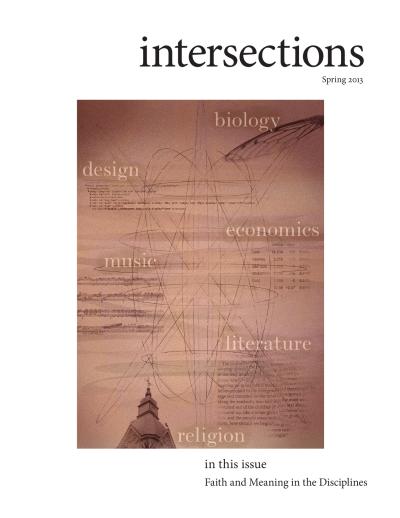
Reading Luther’s Whether Soldiers, Too, Can Be Saved alongside Adam Smith’s Theory of Moral Sentiments and Wealth of Nations, Hunnicutt asks whether economists, too, can be saved—and whether economics can host a serious conversation about vocation. She traces her own move from Utah State to Pacific Lutheran University and its Wild Hope Center for Vocation, and turns to Deirdre McCloskey and George DeMartino as economists whose work makes room for vocation and the common good within the discipline.
-
 Article
Hope in a Period of Economic Decline
Rebecca Judge
No. 32 · Spring 2010
Judge reads the 2008-2009 recession against the panic-free 1982 downturn and argues that this panic comes from the genuine surprise of a generation that had been told—by George Will and others—that business cycles had been tamed by deregulation, globalization, and Greenspan. Drawing on Luther’s “Trade and Usury” and Large Catechism, Paul Tillich, Stephen Marglin, Karl Polanyi, and Larry Summers, she critiques the “crude utilitarianism” of Homo economicus and benefit-cost analysis, finding hope in the possibility that this recession will renew a national conversation about moral obligation to neighbor in a market whose “raging bull” has broken out of its squeeze chute.
-
 Article
Changes
W. Robert Sorensen
No. 21 · Summer 2005
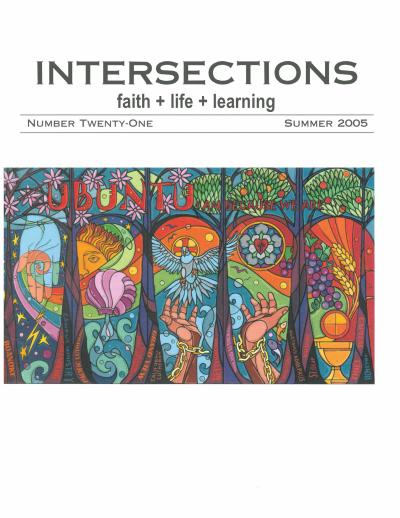
Writing as former executive director of the Division for Higher Education and Schools, Sorensen places the DHES within the threefold movement of Luther’s Reformation—university, church, and individual piety—and recounts how the Division cohered its work with colleges, universities, campus ministries, and schools around Joseph Sittler’s definition of education as “movement into a larger world.” Drawing on Huston Smith’s “primordial tradition,” the Namibian student program, work in India and Palestine, and the Bergendoff series of publications, he raises a twofold concern about the proposed merger of DHES into a Division for Vocation and Education: whether the new structure will signal the core significance of education in the heritage and life of the church, and whether it can carry forward the effectiveness and scope of DHES’ work.
-
 Response
“My Wife, We Have Not Come to the End of All Our Trials, but a Measureless Labor Yet”: The Lutheran Argument in Colleges
Steven Paulson
No. 2 · Winter 1997
Paulson of Concordia College responds to Bouman by invoking Penelope’s unreasonable patience for Odysseus and asking whether Bouman’s five “principles” deliver the “continuities of conflict” that MacIntyre’s account of a living tradition demands. He argues that the proper Lutheran “continuity of conflict” is the praxis of proclamation—Christ crucified as “a stumbling block to Jews and folly to Gentiles”—which is given outside the institution’s walls and which colleges and universities, as socially embodied arguments, “can’t like” because it places truth beyond their control. The Lutheran problem, he concludes, is not the Enlightenment or Post-Modernism but the “old Adam,” the Odysseus still unsure of his identity.