Ethical Leadership for a Changing World: A Shared Calling from Cradle to Career
Cory Newman
Evangelical Lutheran Education Association
Janelle Rozek Hooper
Evangelical Lutheran Church in America
Intersections No. 62 · Fall 2025
A recent ELCA Barna-funded survey found that parents are looking for shared values when it comes to their children’s education. The “ask” was to parents of young children as it relates to early learning centers, but the answer of “shared values” reverberates in our Lutheran higher education as well.
Those shared values, stemming from our baptismal vocation, are what make for ethical leaders. And now more than ever, we recognize these must be cultivated from the earliest ages through the highest levels of education. Yet until recently, our educational ministries have operated in surprising isolation. At the 2025 Vocation of Lutheran Higher Education Conference, a college president learned that there are 1,200 Lutheran schools and early learning centers across the ELCA. Their surprise revealed more than an awareness gap—it highlighted our untapped potential to develop ethical leaders across the entire educational continuum.
This discovery emerged during conversations between NECU attendees and the ELCA’s Program Director for Ministry with Children, Janelle Hooper. As part of her role, Hooper also serves as a board member for the Evangelical Lutheran Education Association (ELEA), which supports weekday education programs for children from birth through 12th grade in ELCA congregations. While Hooper led her workshop, what became clear was that our institutions don’t just share a Lutheran identity—we face identical challenges in preparing ethical leaders for our rapidly changing world.
United by Common Challenges
Both ELCA colleges and early learning centers grapple with identical challenges in today’s changing world. Most significantly, we’re both hiring increasing numbers of non-Lutheran directors, staff, and faculty to broaden our leadership diversity. Yet neither sector consistently provides “Lutheran identity onboarding” for these crucial team members. We speak of being “rooted in Lutheranism” while leaving staff to discover what that actually means in practice.
Cultivating Communities of Curiosity
Higher education faculty expressed a desire for students who arrive on campus to be more comfortable questioning their faith as part of spiritual growth. Meanwhile, early childhood educators are perfectly positioned to nurture these “communities of curiosity” from the earliest ages. Imagine the possibilities of intentional rubrics used by campus pastors like Lisa Kramme at Midland Lutheran, with the school’s observatory for stargazing reflection, that build from preschoolers similarly lying in wonder beneath star-covered ceilings.
A Call for Connection
As we face an increasingly complex world requiring ethical leadership at every level, the time has come to bridge the awareness gap between our educational ministries. Creative programming could flow both directions—bringing college innovation to early learning and early childhood wonder to higher education. Our shared mission demands intentional partnership. When college presidents and early childhood directors discover their common ground, when faculty and preschool teachers share best practices, when students and children experience seamless Lutheran formation from cradle through career, we fulfill our calling, as President Pribbenow says, to be “small to our students and big for the world.”
To explore partnership opportunities between your institution and ELEA, contact Cory Newman or Janelle Hooper, or visit elcaschools.org.
-
 Editorial
From the Publisher
Lamont Anthony Wells
5 min audio
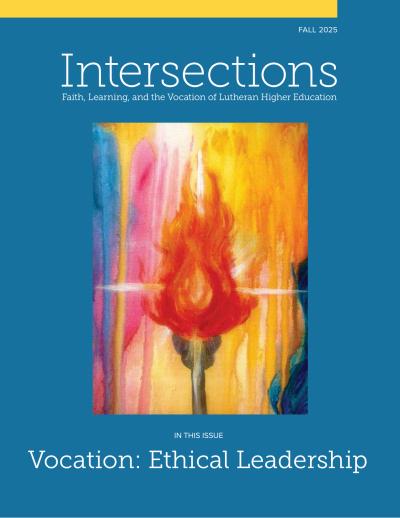
Wells frames the issue as a record of the 2025 VLHE Conference at Augsburg under the theme “Ethical Leadership in a Changing World,” arguing that vocation is never solitary but a collective, public witness of ethical formation, theology and care, flourishing and belonging, and leadership rooted in God’s grace.
-
Editorial
From the Editor
Colleen Windham-Hughes
5 min audio
Windham-Hughes plays on the shared Latin root of “education” and “seduction” (ducere, to lead) to warn against the No-saying seductions of giving up or condemnation, and to call educators to the riskier Yes of showing up to build third-space communities of truth-telling and hope.
-
Article
Wake Up Running! A Call to Ethical Leaders in Quest of Democratic Space
Walter Earl Fluker
44 min audio
Abridged from his VLHE keynote, Fluker draws on Habakkuk and Octavia Butler’s Parable of the Sower to call a new generation of ethical leaders to “wake up running” toward democratic futures, packing their runaway bags with love-filled-justice, grace-filled-empathy, and hope-filled-resiliency for the soul-filled work the moment requires.
-
Article
Building a Third Space in the Age of AI: A Conversation with Dr. Walter Earl Fluker
Elizabeth Kubek
11 min audio
Prompted by AI chatbots being marketed to students as a safer alternative to messy human relationships, Kubek interviews Fluker on how Howard Thurman’s vision of common consciousness, somaesthetics, and nature-rooted learning offers educators a “third space” alternative to AI’s hall of mirrors.
-
Article
Ethical Leadership: Rooted, Open, Generative, and Mindful
John Arthur Nunes
25 min audio
As he prepares to teach an Ethical Leadership First Year Seminar at California Lutheran, Nunes organizes his pedagogy around three mutually-reinforcing “turns” — inward, outward, and intellectual — grounded in Luther’s mandatum dei and larvae dei, Bonhoeffer’s estates, and Howard Thurman’s call to hear “the sound of the genuine” in oneself.
-
Article
What is Required of You?: Higher Education Leadership in a Moral Key
Paul C. Pribbenow
15 min audio
Drawing on Micah 6:8 and Stephen Carter’s “etiquette of democracy,” Pribbenow describes the three things Augsburg requires of every incoming student — show up, pay attention, and do the work — as a democratic social ethic that prepares students for engaged citizenship in a fractured public life.
-
Article
What Does Ethical Leadership in a Changing World Require?
Kristina Frugé
5 min audio
Frugé argues that ethical leadership in a changing — perhaps ending — world means cultivating trustworthy communities through patient, co-created relationship work, drawing on her experience stewarding the writing community behind Hungry for Hope: Letters to the Church from Young Adults.
-
Article
Fostering Moral Imagination and Inclusivity: The Role of Ethical Leadership in ELCA Colleges and Universities Amid Societal Challenges
Lamont Anthony Wells
12 min audio
Wells argues that “moral imagination” — the capacity to envision ethical alternatives, empathize across difference, and respond creatively to injustice — is the heart of ethical leadership in NECU institutions, and that anchoring leadership in this principle positions Lutheran higher education to cultivate socially responsible citizens.
-
Reflection
VLHE—Wednesday Morning Sacred Pause
Ann Rosendale
8 min audio
Rosendale draws on Esther 4:14 and the Lutheran practice of holding death and resurrection together — with “and” as the hardest word — to argue that the calling of Lutheran higher education for “just such a time as this” requires us to remember and name out loud that ours are places where God is at work.
-
 Editorial
From the Publisher
Arne Selbyg
No. 27 · Spring 2008
Selbyg, retiring this summer as Director for ELCA Colleges and Universities, reflects on his decade serving as spokesperson between the church and its twenty-eight colleges and universities, and argues that the link between the colleges and the church has grown stronger over the last ten years — sustained by supportive church leaders like Presiding Bishop Mark Hanson, the annual Vocation of a Lutheran College conference, and a Lutheran theology of higher education whose principles (questioning authority, returning to the sources, including the excluded, serving the neighbor) remain a strong basis for operating colleges and universities in the twenty-first century.
-
 Institutional Focus
Letters to the Editor
No. 7 · Summer 1999
The journal’s first letter to the editor: Pastor John L. Vaswig of Spokane, a Pacific Lutheran University alumnus and member of the PLU Board of Regents, writes after reading James Tunstead Burtchaell’s The Dying Light: The Disengagement of Colleges and Universities from Their Christian Churches to ask whether church-related institutions, in their effort to be open and tolerant, have abandoned a compelling word of hope and forgiveness in Jesus Christ.
-
 Reflection
Finding Words That Matter (Proverbs 1:20-21; 4:10-13)
Harvard Stevens Jr.
No. 21 · Summer 2005
In a brief homiletic reflection on Proverbs, Stevens addresses Lutheran educators as “merchants of wisdom” competing with a crowded contemporary marketplace of internet, cable TV, and rap music alongside “Hedonism 101,” “Advanced Voyeurism,” and “Pure Escapism.” Recounting an evening with a Carthage student poetry club, he shares the poem wisdom whispered to him there and offers thanks for the high calling to teach “words that matter.”
-
 Article
Community-Building On Campus and Beyond
Krista E. Hughes
No. 54 · Fall 2021
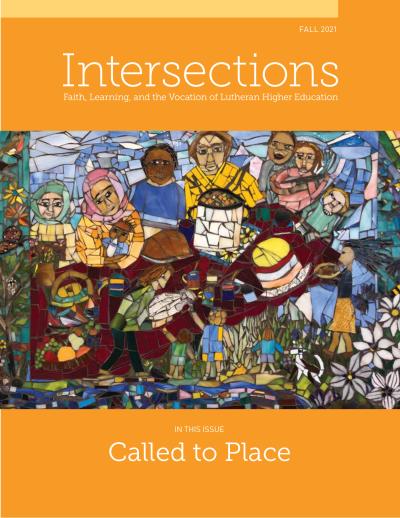
Hughes describes Newberry College’s effort to build a “culture of community” that mirrors South Carolina’s demographics while reckoning with the institution’s founding ties to slavery — and names the challenges and promising city-college collaborations that shape this ongoing work.
-
 Editorial
From the Publisher
Arne Selbyg
No. 25 · Spring 2007
Selbyg notes that most papers in this issue grew out of a pan-Lutheran conference organized by the Association of Lutheran College Faculties in fall 2006 rather than the annual Vocation of a Lutheran College conference, and argues that the ELCA’s ecumenical posture—truthful but open to learning from others—is a good foundation for institutions of higher education whose faculty likewise profess while remaining subject to change based on new research and insights.
-
 Editorial
From the Publisher
Mark Wilhelm
No. 55 · Spring 2022
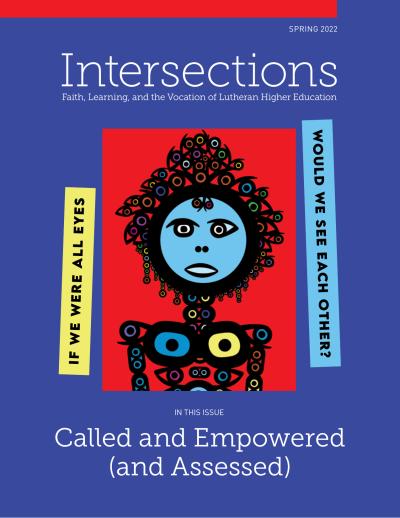
Wilhelm announces his planned retirement on January 31, 2023, after serving as the founding executive director of the Network of ELCA Colleges and Universities, and gives thanks for the privilege of helping NECU articulate a shared vision for Lutheran higher education in twenty-first-century North America.