Two years ago I oversaw the creation and mailing out of a questionnaire for ten-year alumni/alumnae of the university where I teach. We asked them a number of questions including asking them to rank the importance of our stated learning goals, asking them to assess the kind of job the university had done in teaching these goals, and where, if at all, they had learned the skills, attitudes and knowledge the goals talked about. Many of the outcomes of the questionnaire were surprising. One of the surprising patterns of response was the large numbers of students who said that they learned these essential skills, attitudes and knowledge in programs and experiences they had outside the classroom and outside the domain (physically speaking) of the university. These things had been learned best, or most thoroughly, or most memorably, in practica, internships, travel-study occasions, service-learning projects, or in unprogrammed intersections between their lives, their part-time jobs, and their classroom studies.
The responses to this questionnaire taught us at least two things: 1) to take off-campus experiences more seriously as part of the learning agenda of students; 2) to see that learning matters most that coincides with the personal development of students.
Last summer’s Vocation of a Lutheran College Conference focused on education and global outreach, as all the papers in this issue of INTERSECTIONS testify. Global study programs, particularly those that are service-connected or where students get to live with the native populations, are life-changing. I only wish every one of our students could have such experiences.
Tom Christenson
October, 2003
-
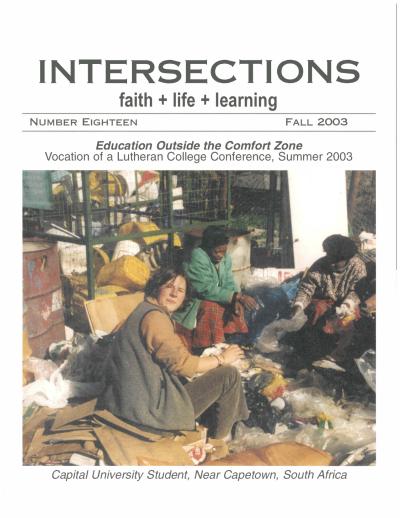 Editorial
From the Publisher
Arne Selbyg
Selbyg reports that the ELCA Church Council’s new strategic directions include the charge to “assist this church to bring forth and support faithful, wise, and courageous leaders whose vocations serve God’s mission in a pluralistic world,” and assures readers that Intersections, the Vocation of a Lutheran College conferences, and related programs will remain among the tools by which the churchwide organization reaches its strategic goals.
-
Article
"The Earth is the Lord's And the Fullness Thereof": Six Theses Regarding Global Education at the Colleges of the Church
Christopher M. Thomforde
Thomforde surveys the breadth of global education across ELCA colleges—Susquehanna, Bethany, St. Olaf, Luther’s international students, Concordia’s language villages—and then frames its future around six theses: global education is a theological enterprise that teaches the First Commandment through dialog, wonder, and disillusionment; it necessitates coming to terms with “the stranger” and “hospitality” (drawing on Diana Eck); it is in, for, and against the world; it nurtures vocation and forms L. DeAne Lagerquist’s “cosmopolitan citizens”; it requires sympathetic engagement of faculty, staff, and administration in the spirit of pioneers like Ansgar Sovik; and it calls the ELCA colleges to exercise the gift of administration to bring greater clarity and collective coordination to the portfolio of programs offered across the twenty-eight institutions.
-
Article
Service Beyond the Comfort Zone
Kathryn Wolford
Wolford names economic globalization and the growth of civil society as the two issues shaping Lutheran World Relief’s mission, illustrating with the Guatemalan storekeeper undercut by subsidized “gringo” chickens, fair-trade coffee and chocolate campaigns, and Charles Onyango-Obbo’s warning about anti-terrorism laws in fragile African democracies. Drawing on Darrell Jodock, Art Simon, and the Good Samaritan, she frames the global vocation of Lutheran colleges as inviting students past comfort zones of race, class, ethnicity, and ideas through service-learning that links mercy and justice, and closes with a concrete LWR partnership invitation including site visits, internships, fair-trade campus campaigns, and the “A Place for Peace in Colombia” advocacy program.
-
Article
Educating for Peace: 21st Century Models for Thinking Globally and Acting Locally
Janet E. Rasmussen
Rasmussen opens with a rabbinic story about the one-step distance between East and West and describes Pacific Lutheran University’s four-phase “Global Education Continuum”—Introductory, Exploratory, Participatory, Integrative—developed with Teagle Foundation support and grounded in Perry, Bennett, and Musil. She illustrates intentional global/local partnership through three case studies: Barbara Temple-Thurston’s Trinidad-and-Salishan initiative; the China Partners Network with the Amity Foundation, Good Samaritan Hospital, and PLU’s Wang Center; and Ann Kelleher’s three-institution “Norway in Namibia” partnership with Hedmark University College, the University of Namibia, NAMAS, and the Ondao mobile schools for the Himba people. She closes with Daloz, Keen, Keen, and Parks’s Common Fire research and Lee Knefelkamp’s call to be “communities of peace.”
-
Article
The Search for a Just Peace in a Globalized World
Munib A. Younan
Younan, Lutheran Bishop in Jerusalem, grounds Palestinian Christian identity in Incarnation theology and a Lutheran theology of grace and the cross, then surveys the Evangelical movement’s nineteenth-century legacy in the Middle East—the 1864 Arabic Bible, ELCJ schools, women’s ordination, and the Middle East Council of Churches. Engaging Edward Said’s critique of Samuel Huntington, he calls for international and local mutual-recognition agreements (including the Jerusalem Lutheran-Anglican agreement and a Lutheran-Reformed agreement in the Middle East), four marks of interfaith dialogue, and a sharp distinction between Lutheran “Evangelical” identity and the Dispensationalist evangelistic Right whose Israel-Palestine scenarios he names a heresy. He closes by proposing concrete scholarship, faculty exchange, and sabbatical partnerships between U.S. Lutheran colleges and the ELCJ’s churches, schools, and Dar al-Kalima Lutheran Academy.
-
 Article
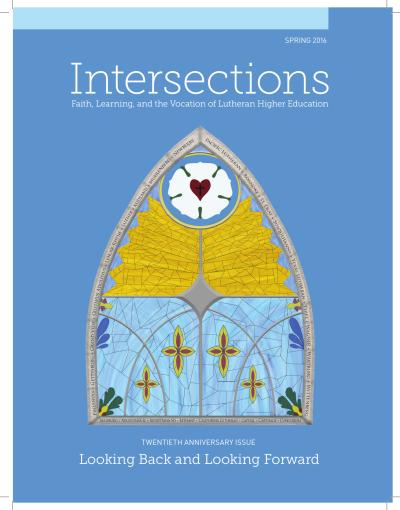
The Vocation of Intersections on its Twentieth Birthday
Jason A. Mahn, Robert D. Haak, Tom Christenson
No. 43 · Spring 2016
The three editors of Intersections — Bob Haak, Jason Mahn, and Tom Christenson (in spirit, following his death in 2013) — trace the twenty-year vocation of the journal itself: its 1996 birth at Capital University; its coming-of-age years of debate over institutional markers, two-kingdoms theology, and Lutheran identity; the ascendancy of “education for vocation” as the central marker of Lutheran higher education; and its ongoing identity in relation to a changing ELCA and to the broader cultural conversation about purpose, wholeness, and the vocation of higher education.
-
 Article
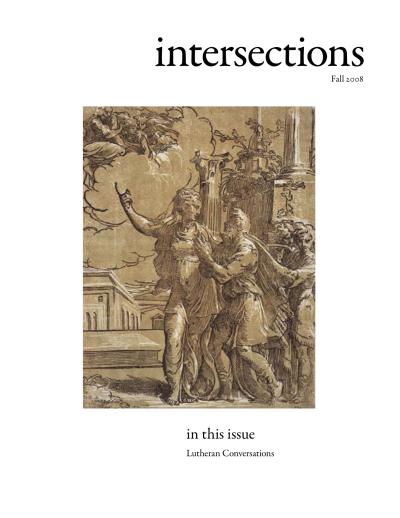
Point / Counterpoint: What It Means to be a "College of the Church"
Robert Benne, Tom Christenson
No. 28 · Fall 2008
Moderated by Wartburg College pastor Larry Trachte and introduced by Kathryn Kleinhans, this Wartburg campus conversation between Robert Benne (Roanoke College) and Thomas Christenson (Capital University) probes what it means to be a college of the church—Benne emphasizing ethos, vocation, and the Christian intellectual tradition over against secularization and generic education, and Christenson lifting up persistent vocational questions, the gift of difference, and induction into a community of discourse—and finds large common ground around hiring for mission, pedagogy that asks deep questions, and the courage to claim a living religious tradition while inviting everyone to the banquet.
-
 Article
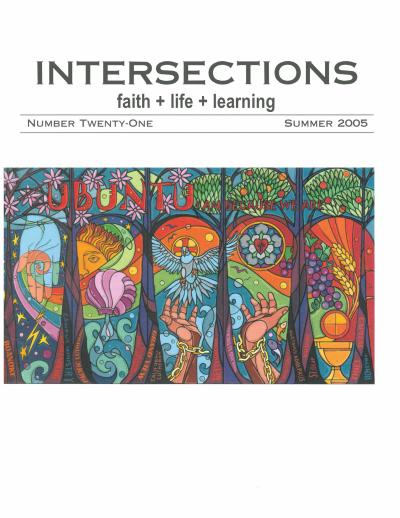
Education as a Christian (Lutheran) Calling
Tom Christenson
No. 21 · Summer 2005
Christenson opens with an imaginative reconstruction of early Christian communities as radically egalitarian, pacifist, communitarian gatherings within the Roman Empire and argues that such communities are natural homes for the educational vocation. Naming two temptations for contemporary Christian higher education—the parochial Bible school and “Generic U”—he uses his friend Sig Rauspern’s tree metaphor to insist that a university is Christian in its trunk and roots rather than in grafted-on branches. Drawing on Wendell Berry, Jacob Bronowski, Walter Wink, Douglas John Hall, and his own Gift and Task of Lutheran Higher Education, he names faithful criticism, engaged suspiciousness, simul justus et peccator, and a fallible, love-related Lutheran epistemology as the particular gifts Lutherans bring to the Christian educational calling.
-
Editorial
From the Editor
Tom Christenson
No. 21 · Summer 2005
In his valedictory letter as outgoing editor, Christenson recounts the 1994 origins of Intersections, when he took the idea to Naomi Linnell and Jim Unglaube at DHES and persuaded the council of presidents to launch the journal on a shoestring with printing paid by DHES and everything else by Capital University. He summarizes the issue’s contents—papers from the 2004 Vocation of a Lutheran College Conference plus two commissioned pieces from former DHES directors Bob Sorensen and Leonard Schulze—and thanks the student copy editors and Capital’s presidents and provosts who sustained the publication.
-
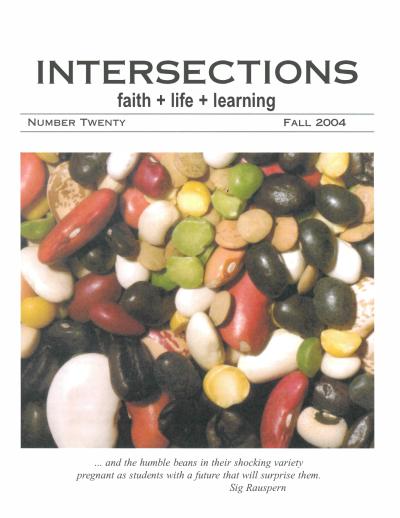 Book Review
Review of Educating for Shalom: Essays on Christian Higher Education
Tom Christenson
No. 20 · Fall 2004
Christenson reviews Nicholas Wolterstorff’s Educating for Shalom: Essays on Christian Higher Education (Eerdmans, 2004), edited by C.W. Joldersma and G.G. Stronks. After recounting his own early prejudice against Wolterstorff’s Reason Within the Bounds of Religion and his subsequent conversion through Art in Action, he focuses on two threads: Wolterstorff’s expansive reading of shalom—not merely peace but justice, community, communal responsibility, and delight—as the overall goal of Christian collegiate education, and the influence of Abraham Kuyper’s claim of “privileged cognitive access” for Christian inquirers, which Wolterstorff demonstrates rather than declares.
-
Editorial
From the Editor
Tom Christenson
No. 20 · Fall 2004
Christenson introduces an issue featuring “young and old, angry and encouraging, prophetic and hopeful” voices unified by the assumption that Christians engaged in thinking and educating will ask hard questions: how to raise concerns about militarism and the new American “imperialism,” what a Lutheran law school will say about training a new generation of attorneys, and what Lutheran colleges communicate to undergrads about vocation. Such faithful criticism, he argues, is part of who Lutheran institutions are.
-
Editorial
From the Publisher
Mark Wilhelm
No. 43 · Spring 2016
Wilhelm announces the new Network of ELCA Colleges and Universities — established in 2015 and convened for its first Board of Directors meeting in February 2016 — as a missional collaboration between the churchwide organization and the twenty-six ELCA colleges and universities, replacing former churchwide units lost to budget reductions and offering a stronger, more viable vision of Lutheran higher education.
-
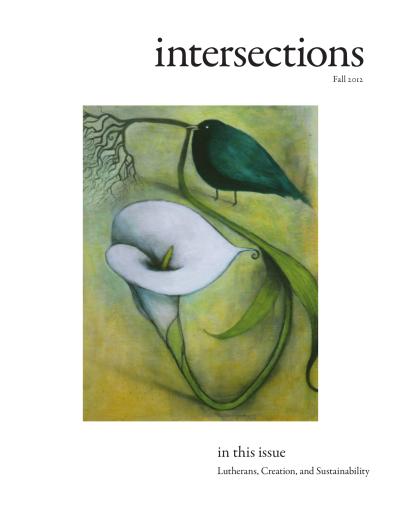 Institutional Focus
Farming and Eating Locally: An Interview with Garry Griffith about Augustana's Farm2Fork Program
Garry Griffith
No. 36 · Fall 2012
Griffith, Director of Dining at Augustana College (Rock Island), describes the Farm2Fork program’s shift from pre-packaged food to fresh produce sourced from local farms (beginning with Jim Johansen of Wesley Acres in Moline), the Augie Acres campus garden tended by students in learning-community courses, the bio-diesel conversion of used fryer oil for greenhouse heat and farm equipment, and the stewardship calling that grounds these efforts in Augustana’s Lutheran identity.
-
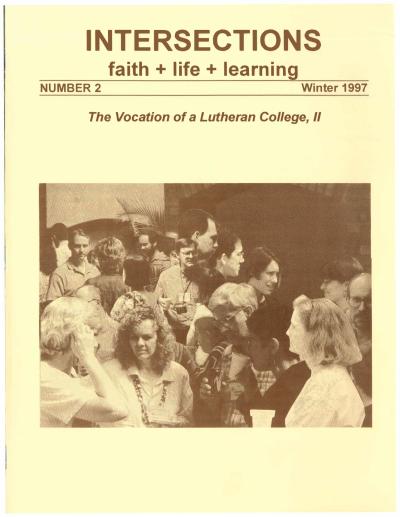 Response
Feeling at Home: Dimensions of Faculty Life
Jane Hokanson Hawks
No. 2 · Winter 1997
Hawks of Midland Lutheran College responds to Bouman by reflecting on her path from a Lutheran childhood through the BSN at St. Olaf and thirteen years at four non-church-related institutions to her present home at Midland, where teaching at a Lutheran institution finally feels “right.” Bouman’s framing of the five themes as the Lutheran argument about what it means to be human helped her ad-hoc committee articulate the spiritual role in Midland’s new faculty mentoring program (recently funded by the Lilly Foundation), and grounds her work as a nurse educator confronting the daily humanness of grief, joy, ethical dilemmas, and care across cultural and religious difference.
-
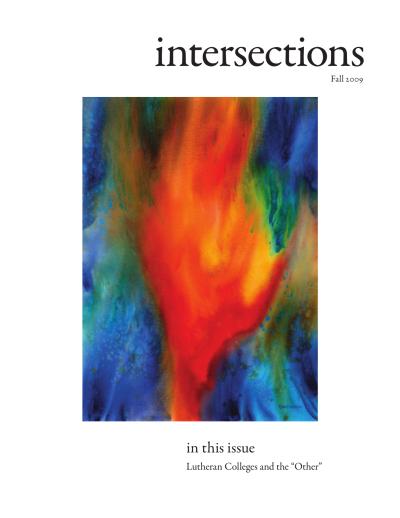 Article
Lutheran Colleges: Past and Prologue
Paul J. Dovre
No. 30 · Fall 2009
Dovre offers a reminiscence rather than a research paper, drawing on Aristotle’s ethos, logos, and pathos to trace fifty years of change at Midwestern Lutheran colleges through the key issues of survival, respectability, faithfulness, and relationship to the church — from the dependence of the 1950s through the independence of the late twentieth century to the partnership of the 2000s — and identifies key variables (the student marketplace, faculty formation, and the identity/diversity paradox) for shaping the identity and mission of Lutheran colleges into the future.
-
 Article
Learning and Teaching as an Exercise in Christian Freedom
Tom Christenson
No. 6 · Winter 1999
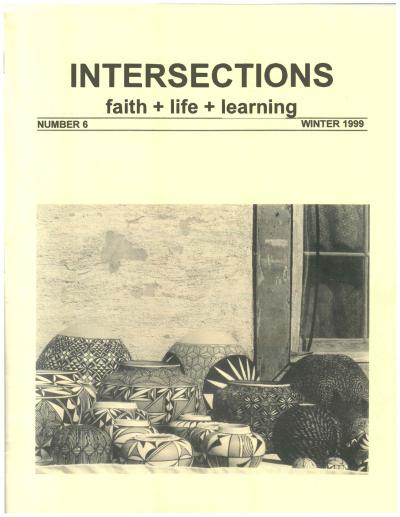
Christenson, the 1998 Wittenberg keynote, argues that what makes our institutions Lutheran is not the percentage of Lutherans served or employed, ethnic celebration, or self-conscious difference, but a theologically informed vision of the educational task framed by the linked ideas of gift, freedom, and vocation. Drawing on Joe Sittler, Wendell Berry, David Orr, Harold Kushner, John Updike, Frederick Buechner, and Luther’s On the Freedom of a Christian, he reframes the liberal arts as four “liberating arts”—critical/deconstructive, embodying/connecting, melioristic/creative, and arts of enablement and change—and closes with his mother’s “end-of-the-month soup” as an image of vocation in a particular place.
-
 Article
"Our Calling in Education": An Educator's Perspective
Cheryl Budlong
No. 23 · Summer 2006
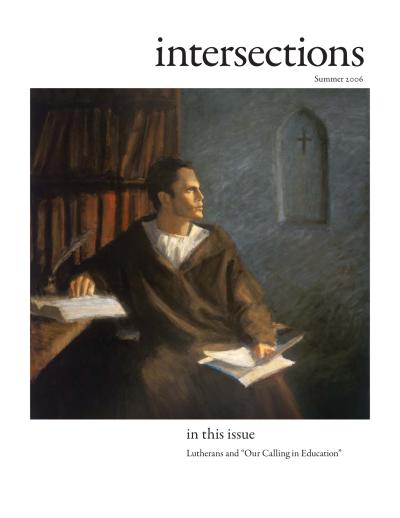
Budlong, Professor of Education at Wartburg College, asks educators to reexamine their ‘mental models’ of what education itself means in light of the rapidly expanding literature on how young people learn. Drawing on Malcolm Gladwell, Eric Jensen, Ruby Payne, Judith Harris, Robert Slavin, and the AACTE’s Leading a Profession retrospective on the AACTE agenda 1980–2005, she calls on Lutheran educators to articulate vocation intentionally in their classrooms and to ground curricular and pedagogical reform in Wartburg’s focus on Discovering our Calling.