Martin Luther, Vocation, and Church Colleges: Nurturing Future Leaders for Faith and Community
Intersections No. 14 · Summer 2002
Did you know that thirteen of sixteen newly elected bishops in the Evangelical Lutheran Church in America received their undergraduate degree from a Lutheran college or university? Did you know that two of the sixteen are from the PLU class of 1971! Others coming from ELCA schools include graduates of Augustana (Sioux Falls), Concordia (Moorhead), Gettysburg, Gustavus Adolphus, Luther, Newberry, and St. Olaf. 75% of those who make up the new Conference of Bishops (or 49 out of 65) will be products of our Lutheran schools.1 These kinds of numbers are not confined to bishops or pastors. Many leaders in business, in government, in the medical field, in education, and in community service are likewise products of a church related college or university.
Educating for Lives of Service
The basis premise of my lecture is this: Our ELCA colleges and universities are training grounds of future leaders for our church and community. Why do I say that? Because of the principles of Lutheran higher education upon which our learning enterprise is based. One of those is Luther’s doctrine of vocation which was the inspiration for PLU’s motto “educating for lives of service, inquiry, leadership, and care”. A place like Pacific Lutheran University is unique because we are not just about the business of educating students to receive a degree or providing them with skills to be successful in their future occupations, but we are also preparing them to live meaningful lives that will be filled with purpose. Our church colleges offer a value-added education that enriches mind, body, and spirit. Our genuine hope is that the graduates of our schools will leave our institutions with a greater sense of service and a belief that they can and will make a difference in their community and in the world. And many have and are doing so today.
One of the major contributions of the Protestant Reformation in the sixteenth century was Luther’s doctrine of the Priesthood of All Believers. Building on imagery found in first Peter, chapter two, Luther believed that all Christians—not just those who were ordained or belonged to holy orders—were called in their baptism to be priests. This meant that all believers were to share the good news of Jesus Christ and to be “little Christs” to their neighbor. For Luther, a person’s primary vocation (or calling) as a Christian was to serve God and neighbor in all arenas of life—at home, at work, at school, at church, or in the community. Every Christian, then, was to live out their faith in daily life using their particular gifts and talents in service to God and others.
Martin Luther sought to reform a whole medieval class system that elevated some jobs or stations above others. In his 1521 writing, On Monastic Vows, Luther rejected the notion that priests and monks held a superior vocational status. In a society that believed those who chose religious orders were somehow more holy or closer to God, Luther argued that butchers or bakers were also blessed with a holy calling—using the tools of their trade to serve the neighbor in need. He once made the scandalous claim that a washer woman and a bishop were of equal status before God as long as both were faithful to their calling to serve Christ and others in their daily life and work. Hence Luther’s comment: “if everyone served his or her neighbor, then the whole world would be filled with divine service.”2
Luther also sought to distinguish between vocation (one’s calling to serve) and station (the place where one lives out one’s calling). Luther believed that each station (e.g. teacher, politician, banker) was established by God to serve the needs of human beings in society. Each station is equally necessary for human life and as such each had the potential of being a place for divine service. Luther broke with the tradition that one is born into a particular station or was destined to remain there for life. His writings suggest that advancement to any station must be possible for those who obtain the proper education and training. Reflecting on the reformer’s influence on changing societal norms, Hans Schwarz concludes “Luther’s teaching on vocation is still able in our own day to help counter the individualistic and self-centered striving for one’s own advantage, and to allow us to rediscover the fact that our work is meant to serve the common good.”3
(Let me illustrate this further with a short video clip from a new drama called “Holy Odors” written by Pastor John Trump. It is about Luther’s teaching on vocation and features theater students from Pacific Lutheran University where the play premiered this past February. To set the stage: a co-ed is in the university library studying for a class on Martin Luther. She falls asleep and suddenly a figure from the past appears and begins to talk with her.)
Paths Unknown: Developing Vocations of High School and College Youth
This past year, several of our institutions collaborated on a major project called “Paths Unknown: Where is God Leading Me?” Focusing on the theme of vocation and discernment, the program was billed as an innovative way to help Lutheran high school and college age youth explore their future using the latest in web-based and interactive video technology.
Five educational institutions in the Western Mission Cluster agreed to partner together in this project. Staff from California Lutheran University, Luther Seminary, Pacific Lutheran Theological Seminary, Pacific Lutheran University, and Trinity Lutheran College were joined by representatives from the ELCA Division for Ministry, the Faith and Life Forum, and Fishers Net. Together we formed a project team to develop the format, content, and delivery system that would enable us to share resources on vocation and discernment with youth across the Western half of the United States.
The team agreed on several hoped for outcomes:
To help youth understand Luther’s concept of vocation and make connection between their baptism and call to ministry in daily life.
To assist them in discerning God’s plan for their life and ministry.
To make them aware of the need and opportunity for full time church related service.
To recruit youth for our church colleges (that integrate faith and values with learning).
To recruit youth for seminary and the ordained ministry.
Multiple delivery systems were considered to be imperative because of the scope of the project. A dedicated web site was developed by FALF board member Boyce Lawton of Wofford College; and continues to be available as a resource that is maintained by the Faith and Life Forum. The address is: godleading.com. The web site was designed to contain a variety of resources for youth workers and/or individual youth and adults such as a) a list of books and films on the topic of discernment and call; b) an introductory piece about Martin Luther and his theology of vocation; c) a self-graded quiz on the topic of vocation; d) a spiritual gifts inventory; and e) a sample course outline for using these web-based materials for a class, workshop, or retreat.
An online virtual forum was held in January and February 2001 as a way to introduce youth to the topic of vocation, discernment, and call. Participants were asked to log on to the web site at least three times a week when new items for discussion were posted including articles by author Alan Briskin, by Rolland Martinson and Mary Hess of Luther Seminary and by Jane Strohl of Pacific Lutheran Theological Seminary. Every Wednesday night an open chat room was provided so that individuals could discuss issues in real time with each other. In addition, several threaded discussions were offered by way of bulletin boards on the web site. These were places where people could post a question or a comment; others could come and see what had been posted and respond if they chose to. Participating in the online forum were over three hundred persons from forty states and Canada and Mexico.
Virtual Forum Thesis Statement:
Every Christian has a ministry! According to First Peter 2:9–10, all followers of Jesus—you and me!—are gifted and called to share the good news of God’s love in all arenas of life. That means we are challenged to live out our faith in daily life—at home, at school, at work, or wherever we find ourselves. In baptism, we are called to use our gifts in service to God and others. Some are called to provide leadership in the church (such as a pastor or lay worker) while others serve in the wider community. But all are gifted and all are called. Join us in discovering how God is calling you to use your gifts!
Youth in Washington, Minnesota, and California (locations of sponsoring schools) were also given the opportunity to participate in a one day interactive video workshop. The workshops included small group discussion and discernment, a panel of youth and adults who shared their vocation journey, a newly written play by FALF board member Pastor John Trump on the topic of Christian vocation called “Holy Odors”, a “live” hook up with seminary professors who spoke on the topic of discernment and call, and a renewal of baptism service. Those who attended gave the conference high marks. Among the responses of the participants were these comments:
“The panel discussion and small groups were really helpful, and the play was great.”
“It was helpful knowing there are others like me.”
“It brought me closer to God and cleared up a lot of things that were questioned.”
“It was a reminder of how grace has played a huge role in my life.”
“It was great to talk with future pastors and seminary professors about the Christian’s daily life and ministry.”
A follow-up to the Paths Unknown project is planned including updating the web site with additional resources and developing an online course that will include archival video streaming of some of the presentations from the one day workshops. We are working with several ELCA divisions to explore the possibility of developing two tracks—one for youth and one for adults. If your college or university would like to be included as a sponsor of the course as well as have a hotlink from our web site to your schools web site, please let me know. We are looking for new partners and I believe we can all benefit as well as have a greater impact on the youth we serve if we choose to work together.
Conclusion: Colleges That Make a Difference
What are we doing on our campuses to identify, mentor, and nurture future leaders for church and community? Some of your schools are currently participating in the Lily Foundation vocation and leadership initiative. Some are finding ways to engage faculty, staff, and students in conversation around key principles of Lutheran higher education such as vocation. There is much being done, there is much left to do. We are left with this challenge. How can we help all of our faculty and staff at our respective schools recognize and claim this important mission of instilling in our youth a sense of vocation? How can we assist them in developing a sense of their calling to use their gifts to serve others and to make a difference in our world?
The Reclaiming Lutheran Student Project has already made a significant contribution to our self-understanding as church-related institutions. It has confirmed that our Lutheran colleges do indeed make a difference in the lives of our students. Commissioned by the Lutheran Educational Conference of North America (LECNA) in 1999, a national survey was conducted of the parents and alumni of both Lutheran and public flagship colleges and universities. Results of the research gave strong evidence of the claims that our Lutheran colleges make in there areas:
A commitment to good teaching and a personalized learning experience. Compared with students at flagship public institutions, students at PU and other Lutheran schools were more likely to attend small classes and have a majority of their classes taught by professors.
A strong sense of community and the value of involvement beyond the classroom. Again, a greater number of our students had a sense of community on campus and were also encouraged to live lives of service in the wider community.
The integration of faith and values into the college experience. Overwhelmingly students at a Lutheran college or university discovered opportunities to explore matters of faith and values compared with only a small minority of students at public flagship schools. Students at our church colleges developed moral principles to guide their actions and a majority are now active in church and religious activities.
It would seem now more than ever the colleges of the church are needed to prepare men and women for leadership in a new century of mission.
Endnotes
1. Source: Report by Arne Selbyg, ELCA Division for Higher Education and Schools (June 28, 2001).
2. Martin Luther, sermon on Matthew 22:34, Predigten des Jahres 1532, WA 36, 340.12f.
3. Hans Schwarz, True Faith in the True God: An Introduction to Luther’s Life and Thought (Minneapolis: Augsburg, 1996), p. 140.
-
 Editorial
From the Publisher
Arne Selbyg
Writing on behalf of the publisher, Sue Edison-Swift names vocation as one of the precious gifts Lutheran theology offers education, reflects on her first ELCA Vocation of a Lutheran College conference, and asks readers to gift future issues of Intersections with feedback—notes on what they read and skipped, and how they ended up with a copy.
-
Editorial
From the Editor
Tom Christenson
Christenson argues that whether or not the conversation is funded by the “Lilly lottery,” vocation should just be part of who we are and what we do at ELCA colleges, and proposes three low-cost conversations—among faculty (twenty dollars of wine, in vino veritas), with students throughout their four years, and with alumni—explaining why this issue is deliberately “fatter” than usual and inviting feedback on other single-topic issues.
-
Article
Vocational Discernment: A Comprehensive College Program
Darrell Jodock
Jodock, whose Gustavus Adolphus was one of twenty colleges to receive a Lilly “Theological Exploration of Vocation” grant in 2000, defines vocation not as occupation but as a self-understanding that nests the self in community. Reading Robert Putnam’s Bowling Alone on the collapse of secondary communities alongside Luther’s ethic of community benefit and five Lutheran principles (graciousness, Christian freedom, community, God active in the world, the theology of the cross), he walks through Gustavus’s three-level design—a definition of vocation open to other faith traditions, “middle principles” drawn from Sharon Parks’s Common Fire, and a long menu of programs coordinated by a new Center for Vocational Reflection—hoping that, in the language of Holocaust studies, graduates will be “resisters” and “rescuers” rather than bystanders.
-
Article
Renewing a Sense of Vocation at Lutheran Colleges and Universities: Insights from a Project at Valparaiso University
Marcia Bunge
Bunge, director of the process for writing Valparaiso’s nearly two-million-dollar Lilly grant on the Theological Exploration of Vocation, argues that contemporary culture’s reduction of vocation to either paid work or self-fulfillment requires Lutheran institutions to renew attention to a rich theological concept rooted in Luther’s expansion of vocation beyond the priesthood. She outlines eight low-cost “doorways”—caring adults, prayer, worship leadership, music and the arts, service, cross-cultural experience, church camps and wilderness, study and reflection—and describes Valparaiso’s two-program structure: a Campus-Wide Program weaving vocation into Freshman Core Courses and chapel life, and a Church Vocations Program for students considering full-time ministry. She closes with four troubling questions for any institution carrying out such a grant: what faith traditions can learn from one another, how to involve parents, whether faculty and staff have space to reflect on their own vocations, and whether daily institutional practices—family policies, treatment of low-paid staff, environmental responsibility, obligations to the wider community—actually reflect a commitment to love of neighbor.
-
Article
Holy Odors
John P. Trump
A one-act play by John P. Trump, premiered at Pacific Lutheran University, in which Maggie, a senior studying Reformation history in the library stacks, falls asleep over the Apology of Augsburg and dreams a 16th-century pickled-herring merchant—Herr Leonard Kopp, the man who smuggled Katie von Bora and eight other nuns out of the convent—into existence to argue that her call to archaeology (“digging up old bones”) is as holy as ordained ministry, with Luther’s joke that the church burns incense to insulate priests from the “holy odors” (not holy orders) of everyday life.
-
Article
Of Fathers and Feminism: How One Lutheran Woman Came to a Vocation
Karla G. Bohmbach
Bohmbach, a recently tenured Susquehanna University feminist biblical scholar one month shy of forty, traces her vocation back through a Vacation Bible School injury, an LCMS upbringing in which only men could preach or preside, her father’s contradictory message that she could do anything while modeling a church that limited women, St. Olaf’s revelation of a Lutheran female face, and a Duke graduate seminar on the History of Feminist Thought with Carol Meyers. Her published feminist work on biblical daughters and on the concubine of Judges 19 is read alongside Kathleen Norris’s account of word-bombardment in church, Michel Tournier on childhood as “ardent confusion,” and her own recent participation as both student and teacher in an Authorized Lay Worship Leaders Program.
-
Reflection
Discerning Vocation: Personal Recollections
Tom Christenson
Christenson recalls growing up two blocks from Concordia College, Moorhead, where his father—known to students as “Doc”—was the steam engineer, and afternoon wanderings past walrus-moustached biologists, Harpo-Marx-haired theologians, and a math professor who wrote proofs with one hand and erased them with the other. He came to see the campus as “an asylum for child-like minds building towers of intellectual blocks and then knocking them down,” and traces his philosophical bent back to a high school physics teacher who, asked why Bernoulli’s principle was true, finally growled, “Christenson, you’re nothing but a damn philosopher.”
-
Book Review
Alister McGrath: Glimpsing the Divine: The Search for Meaning in the Universe
Don Braxton
Braxton reviews Alister McGrath’s Glimpsing the Divine (Eerdmans, 2002), commending its twelve articulate, lavishly photographed meditations as a fine introduction to Western spirituality but criticizing its conservative neo-Barthian confessionalism, its Eurocentric treatment of non-Western traditions as “taillights” to Christianity’s “headlights,” its one-sided host-guest engagement with the natural sciences, and its metaphysical dualism. In a section added for ministerial readers, he contrasts McGrath’s self-contained confessionalism with H. Richard Niebuhr’s call to respond to all things as if to God’s actions upon us, and argues that in an era of rival fundamentalisms exclusivity must become a thing of the past.
-
 Book Review
The Prophetic Vocation and the Nature(s) of College: Reimagining College with Jim Farrell
Peder Jothen
No. 39 · Spring 2014
Jothen reads the late Jim Farrell’s The Nature of College as a prophetic critique of the dual nature(s) of college—its socio-cultural “normal” and its ecological habitat—and argues that Farrell’s call to model an “Anthropocene Responsibility” resonates with the prophetic dimension of Lutheran higher education. He proposes a re-imagined “About St. Olaf” that names vocation, ecological dependence, and personal involvement as the operative goods of college.
-
 Response
Renewing Our Journey: Some Thoughts on Pursuing the Truth
John Rehl
No. 1 · Summer 1996
Rehl, a Capital University graduate pursuing doctorates in theology at Chicago and in economics at Wisconsin, takes up Schwehn’s invitation to think again on the nature of truth. He sets aside truth as information, as object, and as mere words; recasts the church-related college’s task as a renewed emphasis on classroom teaching (Kierkegaard’s teacher as midwife) and on brave, articulate professors. He calls for moral education in courage, discipline, patience, and love, illustrates the costs of the fact-value split with examples from economics, and argues that we honor Lutheran heritage not by preserving it as a museum piece but by testing it—Luther’s theology of the cross over a theology of glory—and by preparing students for a world of Untruth, strengthened (with Julian of Norwich) by the promise that they will not be overwhelmed.
-
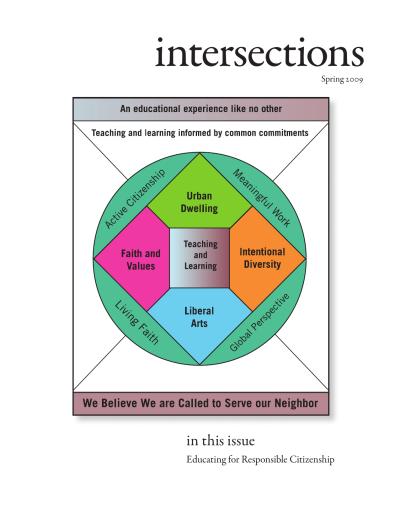 Editorial
From the Publisher
Mark Wilhelm
No. 29 · Spring 2009
Wilhelm introduces essays from the 2008 Vocation of a Lutheran College Conference held at Luther College under the theme “Educating for Responsible Citizenship,” previewing contributions from Paul Pribbenow on dual citizenship at Augsburg, Wanda Deifelt on Luther College’s engagement with civic vocation, Jose Marichal on the promise and peril of digital citizenship, and Arne Selbyg on his three experiences of being educated for citizenship.
-
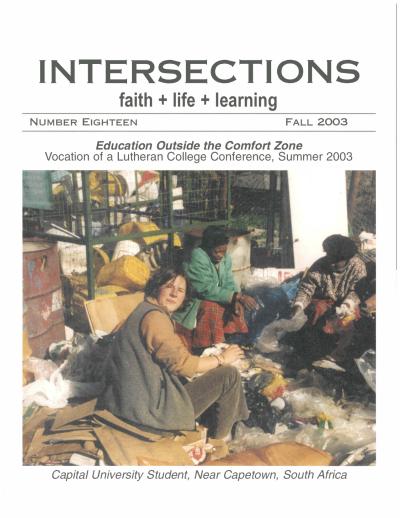 Article
The Search for a Just Peace in a Globalized World
Munib A. Younan
No. 18 · Fall 2003
Younan, Lutheran Bishop in Jerusalem, grounds Palestinian Christian identity in Incarnation theology and a Lutheran theology of grace and the cross, then surveys the Evangelical movement’s nineteenth-century legacy in the Middle East—the 1864 Arabic Bible, ELCJ schools, women’s ordination, and the Middle East Council of Churches. Engaging Edward Said’s critique of Samuel Huntington, he calls for international and local mutual-recognition agreements (including the Jerusalem Lutheran-Anglican agreement and a Lutheran-Reformed agreement in the Middle East), four marks of interfaith dialogue, and a sharp distinction between Lutheran “Evangelical” identity and the Dispensationalist evangelistic Right whose Israel-Palestine scenarios he names a heresy. He closes by proposing concrete scholarship, faculty exchange, and sabbatical partnerships between U.S. Lutheran colleges and the ELCJ’s churches, schools, and Dar al-Kalima Lutheran Academy.
-
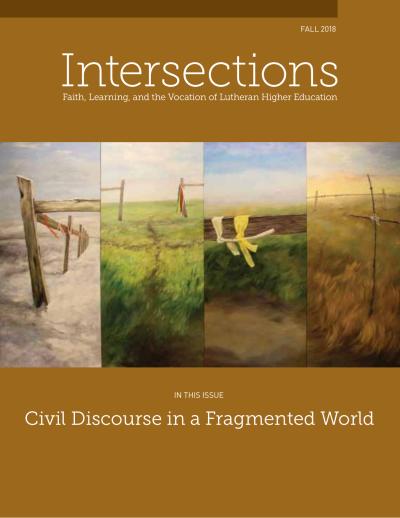 Article
Vocation and Civil Discourse: Discerning and Defining
Lynn Hunnicutt
No. 48 · Fall 2018
Hunnicutt draws on Rabbi Amy Eilberg’s reading of Moses’ calling to identify four features of vocational discernment — attention, wonder, communal consciousness, and humility — and argues that these same qualities are also key aspects of civil discourse, so that forming students for vocational discernment is simultaneously forming them for civility.
-
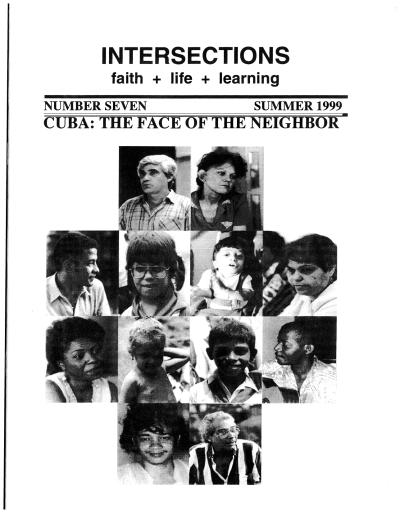 Article
How Can We Keep From Singing?
Robert Scholz
No. 7 · Summer 1999
Scholz, professor of music at St. Olaf, responds to Tom Christenson’s “Freedom of a Christian” by walking through his own Nunc dimittis for the St. Olaf Christmas Festival, an Elderhostel choir of singers aged 60 to 95, and the four liberating arts (enablement and change, melioristic, embodying, and critical) as they shape conducting, composition, and music education. He defends the fine arts and folk traditions over “contemporary Christian” soft pop-rock and taped accompaniments, citing Luther’s preface to Georg Rhau’s Symphoniae iucundae and the family of God’s need to interact in song against the virtual community of TV evangelism and the Crystal Cathedrals of the air.